MEVROUW NATHALIE NYPELS – pink bedding floribunda rose - Leenders
Imagine stepping out after rain into a front garden filled with soft, shell-pink clusters of blooms, the air carrying a strong, sweet, tea-like fragrance that feels both feminine and serene. ‘Mevrouw Nathalie Nypels’ settles quickly into small London-style spaces, coping well with typical British showers and blustery spells as it forms a low, bushy border. Its semi-double flowers offer accessible pollen for visiting bees, supporting biodiversity without asking you for complicated pruning or spraying. As an own-root rose it builds naturally from roots to sturdy shoots, then to a full three-year display, regenerating well if ever cut back and avoiding the graft problems that can shorten a rose’s life. In a rain-aware town garden with heavier soil it responds well to modest drainage improvements, making it a reassuringly durable, easy-going choice for busy households.
Usage options
| Target area |
Reasoning |
| Front-garden bedding strip in a terraced street |
The compact 50–70 cm habit forms a neat, low hedge or edging, ideal along a short front path or behind a low wall, with clusters of pastel pink flowers softening brickwork through summer for the time-pressed city homeowner. |
| Rainwater-aware urban border on heavier soil |
This rose copes well with typical British rain and wind when planted in a slightly raised bed with improved drainage, giving reliable flowering above clay or compacted soil for the sustainability-minded urban gardener. |
| Small family garden flower bed |
The bushy, spreading shape and medium maintenance needs make it simple to manage among perennials, rewarding modest care with regular flushes of blossom that children and adults notice from the patio for the busy family owner. |
| Pollinator-supporting mixed planting |
Semi-double clusters leave stamens partly visible and accessible, offering light forage alongside herbs or wildflower-style companions, so you can add gentle colour while still considering visiting insects as a nature-aware balcony keeper. |
| Large container on balcony or paved front |
In a 40–50 litre peat-free pot with regular watering, its compact size, self-cleaning blooms and glossy foliage create a soft pink focal point where ground planting is limited, suiting the space-conscious urban resident. |
| Low-maintenance edging in communal or park planting |
Uniform height, repeat flowering and good self-cleaning keep beds looking tidy with fewer visits for deadheading, making it a practical choice for shared spaces that still want a feminine, welcoming look for the grounds-care planner. |
| Long-term own-root rose feature |
Supplied on its own roots, it ages steadily without graft union issues, regrows well from hard pruning and maintains shape over many seasons, giving enduring value rather than short-lived impact for the long-view garden investor. |
| Scent-focused seating corner |
The strong, fruity, tea-like perfume carries well around a bench or small terrace, especially on still evenings, so even a single group planting can provide a noticeable, calming fragrance for the relaxation-seeking garden beginner. |
Styling ideas
- Pastel-Edged Path – Line a short front path with a single row at 35–40 cm spacing, underplant with dwarf Heuchera for foliage contrast – ideal for townhouse owners wanting soft, pretty structure.
- Rain-Garden Ribbon – Create a slightly raised, free-draining strip to catch roof run-off, weaving plants with similar needs such as low Ajuga between the roses – suited to eco-conscious urban gardeners.
- Scented-Seating Nook – Group three plants near a bench and mix with lavender or nepeta so fragrance and pollinator activity combine – perfect for beginners seeking a relaxing evening retreat.
- Pretty-Pot Statement – Plant one rose in a 40–50 litre container with trailing Gypsophila repens spilling over the rim – designed for balcony or paved-forecourt gardeners short on soil.
- Soft-Edge Hedge – Use a double staggered row at 35 cm spacing to mark a boundary, blending in low grasses for movement – good for families who want gentle screening without heavy pruning.
Technical cultivar profile
| Parameter |
Data |
| Name and registration |
Current trade name ‘Mevrouw Nathalie Nypels’, a floribunda bedding shrub rose from the Bed rose group; a feminine given name, unregistered but long established in commerce and exhibitions. |
| Origin and breeding |
Bred by Mathias Leenders in the Netherlands, 1919, from the cross ‘Orléans Rose’ × Rosa foetida bicolor; first distributed by Hazlewood Bros. Pty. Ltd. in Australia in 1922. |
| Awards and recognition |
Holds the RHS Award of Garden Merit (1993), indicating reliable garden performance, sound health and good ornamental impact under typical UK conditions when reasonably well cultivated. |
| Growth and structural characteristics |
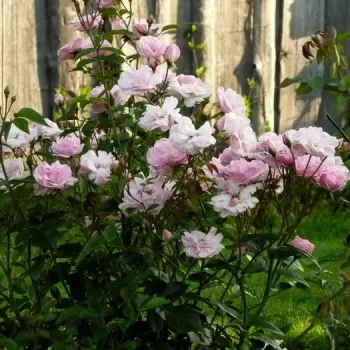
Compact, bushy, spreading shrub to around 50–70 cm in height and spread, with dense, slightly glossy dark green foliage and moderate prickles, forming a low, full, bedding-style outline. |
| Flower morphology |
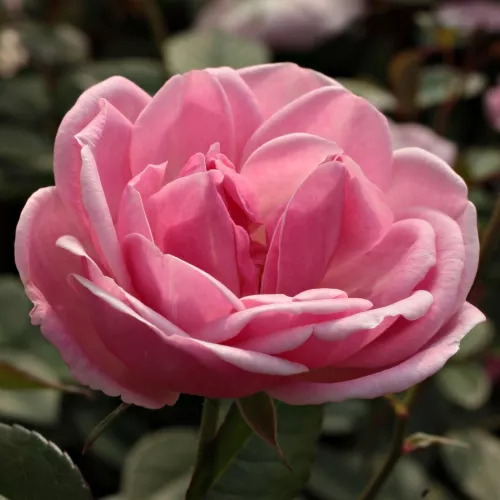
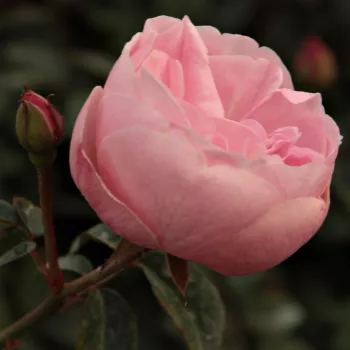
Semi-double, cup-shaped, cluster-flowering blooms with 13–25 petals, medium-sized at roughly 4–7 cm across, repeating through the season with generous second flushes after the main flowering. |
| Colour data and phenology |
Soft pastel pink flowers, RHS 65C outer and 56C inner, with pearlescent white edges; colour lightens in strong sun yet remains fresher in cooler spells, fading towards very pale pink at the centre. |
| Fragrance and aroma |
Notably strong perfume with a sweet, tea-like character and fruity overtones, perceptible at close range and around small seating areas, adding sensory value beyond the visual display of the bedding. |
| Hip characteristics |
Produces small, globose orange-red hips, roughly 7–11 mm diameter, in moderate quantity; hips add late-season interest and a minor contribution to wildlife value when flowers are not deadheaded. |
| Resistance and winter hardiness |
Hardy to about -21 to -18 °C (RHS H7, USDA 6b, Swedish zone 3); disease resistance is medium, so benefits from good air circulation and standard rose care in humid or high-pressure seasons. |
| Horticultural recommendations |
Best in well-prepared, moderately fertile soil with reasonable drainage; plant 35–65 cm apart depending on use, water during prolonged dry spells and prune lightly to maintain shape and repeat flowering. |
MEVROUW NATHALIE NYPELS offers compact, long-flowering, fragrant bedding on its own roots, giving durable charm with modest care for gardeners who appreciate softly feminine colour and dependable performance.