Deep crimson‑purple base colour with a silver‑white edging and delicate pale flecking. - flowerbed floribunda rose - mild, subtle-scented rose - delicately sweet fragrance
– Striking purple blooms with silvery‑white flecks.
– Reliable repeat flowering for a long season.
– Bushy, compact habit for beds and pots.
– Medium disease resistance with strong foliage.
– Mild, delicately sweet fragrance for close planting.
– Special feature: Awarded Gold Standard (UK) for all‑round garden performance.
Natural diversity – Clear professional advice
eleanorROSE® ORIGINAL 2-litre own-root potted rose
19,00 £
Unfortunately, we are currently unable to ship to the United Kingdom; we only deliver to countries within the European Union. For more information, please contact us!
5(7038)
LET'S CELEBRATE – purple-white bedding floribunda rose - Fryer
With its playfully streaked flowers and naturally bushy habit, Let’s Celebrate brings a gentle sense of balance to compact London front gardens and shared family spaces, where dependable planting has to cope with damp spells and rainfall-heavy weather on heavier soils and exposed streets. This floribunda’s semi-double blooms offer accessible centres for bees, while its repeat-flowering habit keeps colour coming from early summer well into autumn, giving a long, uplifting season of colour without constant deadheading. Grown on its own roots, it settles steadily, building a resilient framework that shrugs off typical urban winds and keeps your planting looking good year after year. In its first year it concentrates on strong roots, the second year brings fuller shoots, and by the third you can expect the complete display that makes this Gold-Standard-tested rose a reliable, low-fuss choice for modern, rainwater-conscious gardens.
Let’s Celebrate shows several opening stages side by side.
Let’s Celebrate shows a semi-double bloom with 13–25 petals and a partly visible centre.
Freshly opened bloom of Let's Celebrate with purple-violet petals and silvery-white edging.
Let's Celebrate shows its purple-lilac and white streaked flowers in full bloom.
Usage options
Target area
Reasoning
Small front-garden feature rose
The compact, bushy habit (around 75–105 cm high) is ideal where space is tight, creating a defined focal point without overwhelming a modest front garden, while own-root growth supports a long-lived, reliable structure for busy urban beginners
Flowerbed and mass planting
Freely branching clusters give good repeat flowering across the bed, with 40 cm spacing allowing a dense, colourful carpet; own-root durability means beds knit together over the years with minimal replacement for low-maintenance households
Large containers and roof terraces
Performs well in sizeable pots (ideally 40–50 litres) where the root system has room to develop, providing upright colour and light fragrance on balconies and terraces, with own-root resilience helping it recover from occasional watering lapses for time-poor gardeners
Rainwater-friendly, sustainable planting
Suited to rain-collecting front gardens where water from downpipes can soak into improved soil rather than hard paving, supporting healthy roots and steady flowering while helping manage frequent British rain in compact plots for eco-conscious homeowners
Pollinator-supporting mixed border
Semi-double flowers with partially visible stamens provide moderate pollen access, pairing well with nepeta, lavender or sage to extend nectar availability, and a long blooming season keeps the border active for wildlife-minded gardeners
Cut flowers for informal arrangements
Medium-sized, cup-shaped blooms with purple, lilac and silvery-white streaking make characterful stems for small jugs indoors; regular cutting encourages new flowering shoots while the shrub’s own-root base restores growth each season for creative home florists
Clay and chalk-tolerant family borders
Once established in improved, well-drained planting holes, the robust root system copes with typical UK clay or chalky soils and breezier, exposed sites, providing dependable colour in real-world gardens rather than idealised conditions for practical homeowners
Informal low hedge or boundary line
Planted at 35 cm intervals, the dense foliage and repeated clusters form a colourful, semi-formal line that softens paths and driveways; own-root plants knit together into a stable, regenerating hedge that responds well to light shaping for family-front gardens
Styling ideas
Urban welcome strip – Line a narrow terraced-house front border with Let’s Celebrate underplanted with Carex flacca ‘Blue Zinger’ for all-season texture – ideal for city households turning paving into planting.
Rain-kissed ribbon – Combine with Stipa tenuissima ‘Pony Tails’ along a raingarden swale to catch downpipe water, allowing movement and colour after showers – for eco-conscious front-garden renovators.
Balcony jewel pot – Plant a single shrub in a 40–50 litre container with trailing thyme at the rim for scent and pollinator appeal – perfect for balcony gardeners wanting drama from one easy pot.
Celebration bed – Mass plant in a rectangular bed and edge with low Artemisia schmidtiana ‘Nana’ for silver contrast and a relaxed, party-like drift of colour – suited to families who enjoy outdoor gatherings.
Soft boundary hedge – Create a low, flowering divider along a path, weaving in lavender or dwarf sage for fragrance and bee support – good for homeowners seeking gentle structure without hard fencing.
Technical cultivar profile
Characteristic
Data
Name and registration
Floribunda bed rose registered as FRYraffles, marketed as LET'S CELEBRATE – purple-white bedding floribunda rose - Fryer; exhibition name Let’s Celebrate in the shrub rose category.
Origin and breeding
Bred by Gareth Fryer in the United Kingdom in 2011, with Fryer’s Roses as breeder and initial distributor; formally registered in 2021 and introduced commercially after 2021.
Awards and recognition
Holder of the UK Gold Standard award from the 2011 Gold Standard Rose Trials, indicating strong garden performance and reliability under independent trial conditions.
Growth and structural characteristics
Medium-sized, bushy shrub reaching about 75–105 cm high and 50–75 cm wide, with dense, slightly glossy mid-green foliage and moderate prickliness, suitable for bedding, edging and containers.
Flower morphology
Semi-double, cluster-flowered, cup-shaped blooms with roughly 13–25 petals, medium size (about 4–7 cm), carried in repeating flushes that provide a generous second flowering wave in summer.
Colour data and phenology
Deep crimson-purple base with silvery-white edging and flecks, softening to pinkish-lilac and cream tones as blooms age; ARS medium code, RHS 75A and 155D, with moderate colour retention and attractive streaking.
Fragrance and aroma
Delicately sweet, mild fragrance that adds a gentle scent without overpowering nearby seating areas; subtle enough for front doors and balconies while still noticeable at close range.
Hip characteristics
Produces small, spherical orange-red hips about 6–10 mm across in limited numbers, adding a modest touch of late-season interest without significantly affecting repeat flowering performance.
Resistance and winter hardiness
Rated H7 and hardy to around –21 to –18 °C, with good resistance to powdery mildew and black spot and medium susceptibility to rust, generally reliable across UK garden conditions.
Horticultural recommendations
Suited to beds, hedging, containers and terraces; plant 35–65 cm apart depending on use, in improved, well-drained soil, with occasional rust checks and routine pruning to maintain shape and flowering.
LET'S CELEBRATE – purple-white bedding floribunda rose - Fryer offers long-season colour, compact easy care and resilient own-root growth for lasting structure; an excellent candidate if you are refining a small, sustainable garden.
Flower Colour Description:
Deep crimson‑purple base colour with a silver‑white edging and delicate pale flecking.
Closed Bud:
Dark purple-crimson bud with a silvery-tipped apex.
Newly Opened Flower:
A narrow silvery-white border runs along the outer edge of the purple-violet petals.
Full Bloom:
Irregular silvery‑white streaks and spots appear on the purple surface.
Before Fading:
The purple tone softens to a pale rosy-lilac, and the white markings become creamier.
Colour Fading Description:
As the bloom opens, the deep crimson‑purple tone moderately fades to a pinkish‑lilac, the silvery‑white markings strengthen into streaks and spots, then become slightly creamy.
Pollinator Attraction:
Semi-double, 13–25-petalled flowers moderately attract pollinators because the partly filled form can partially obscure the stamens and reduce their accessibility to visiting insects.
Pollinator-Friendly Rating:
Its semi-double (13–25 petals) flowers only partially cover the stamens, moderately attracting pollinators, and are therefore moderately pollinator-friendly.
Maintenance Requirement:
Maintenance requirement medium; generally requires little intervention, but occasional plant protection against rust may be necessary.
Our product is a rose grown with pharmaROSA®’s unique cultivation technology!
2-litre, own-root, potted rose.
With a shoot system appropriate to the season.
With a root system that thoroughly permeates the growing medium.
Quality compliant with the requirements of the E.N.A. (European Nurserystock Association).
Supplied in unique packaging that prevents damage.
Can be planted during frost-free periods.
True-to-variety rose bush with a unique identifier.
The pharmaROSA® own-root potted rose is a well-rooted plant that supports reliable establishment when planted and cared for properly, so it can be planted whenever the soil is not frozen.
Crop overview: several varieties and growth stages in a short crop section.Shoot system: intensive growth of fresh basal shoots on a young plant.Root system: demonstration of a vigorous root system permeating the growing medium, by removing the pot.Balance: mature plant with root system and shoots in harmony with each other.
Information about the videos
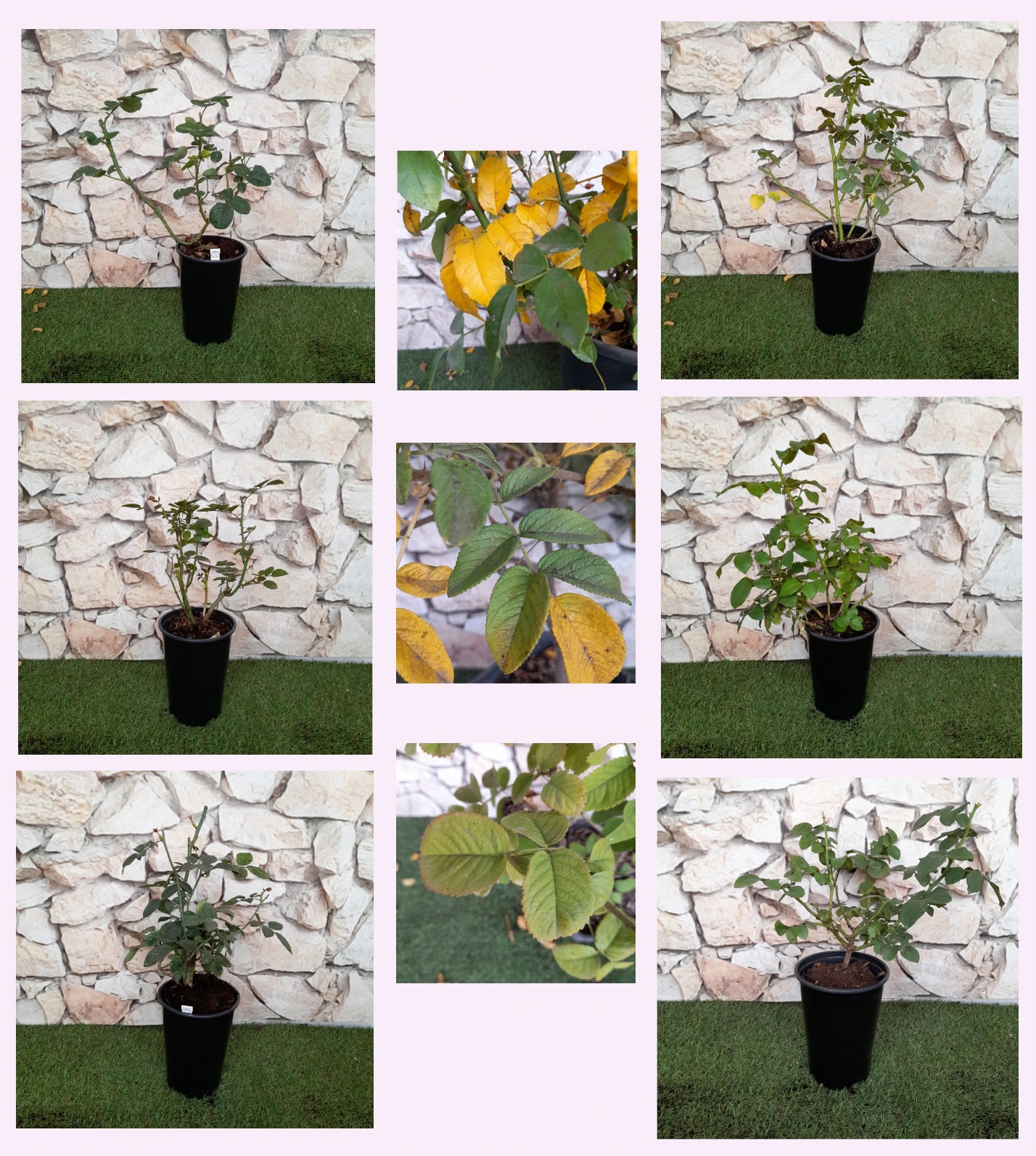
The video series is not a “seasonal showcase”; it illustrates the essence of pharmaROSA® own-root cultivation in a tangible way: how the plant is built up, what the root system is like and how the shoot system regenerates. The recordings were therefore made at different times and with plants at various stages of development, so mixed foliage levels and differing stages of growth may appear in the videos. They are not a ‘sample’ of the batch dispatched, but a visual explanation of how the technology works. The current condition of the rose available to order — typical for the given period and similar to what you can expect to receive in the parcel — is shown in the upper part of the product page.
Pages for private customers Garden roses for the family garden, with minimal care → ORIGINAL® Premium garden roses – instant impact, a truly showpiece garden → EXTRA® Pages for professionals and private customers Roses for public spaces – large areas, sustainable maintenance → NATURAL® Roses for projects – hedge and row planting, fast implementation → RAPID® For professional partners only Production – propagation material for garden roses, wholesale → NEONATAL®
Company details
PharmaRosa Ltd. Company registration number: 01-09-717479 VAT number: 13075314-2-43 Plant health registration no.: HU130721 Bank account (IBAN): HU85117631891388688400000000 BIC (SWIFT): OTPVHUHB Bank name: OTP Bank Nyrt.