MARJOLAINE – apricot-coloured bedding Floribunda rose - Sauvageot
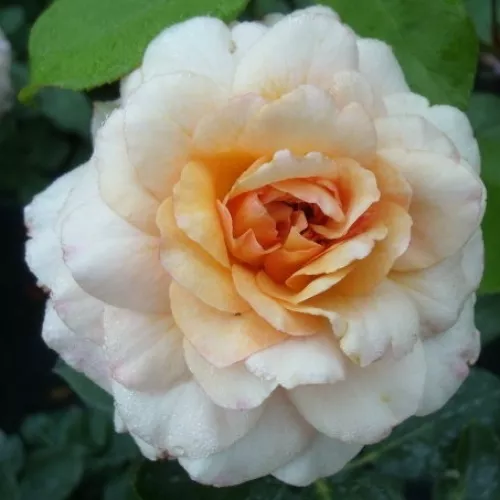
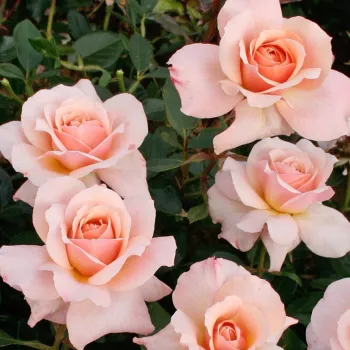
With its softly apricot, very double blooms and compact habit, MARJOLAINE slips effortlessly into small city front gardens and neat flowerbeds, bringing a sense of calm balance to everyday spaces. Planted in good topsoil over improved drainage, it copes reliably with cool, damp British spells and blustery showers, so you can enjoy a refined display without fuss. As an own-root shrub, it offers reassuring long-term longevity and the ability to regrow strongly if ever cut back hard, giving you a stable feature for years. Its upright, moderate height suits narrow borders and formal lines, while the XL clusters of pastel blooms add generous impact from early summer onwards. Medium maintenance needs mean simple deadheading and an occasional health check are usually enough to keep it looking fresh. In a large 40–50 litre container or directly in the ground, its glossy dark foliage and elegant, high-centred flowers create a quietly luxurious look. Year by year it settles in, with roots establishing first, then stronger shoots, and by the third season a full ornamental display that rewards patient, sustainable gardening.
Usage options
| Target area |
Reasoning |
| London terraced-house front garden |
The compact, upright shrub form suits narrow, street-facing beds, creating a calm, ordered frontage without overwhelming the space. Simple pruning and occasional deadheading are usually enough to keep it neat for the busy homeowner. |
| Small family flowerbed |
Medium height and rounded growth allow children and adults to enjoy the large, very double flowers at eye level, while the own-root habit gives a reassuringly long-lived focal point in an everyday family garden for the relaxed gardener. |
| Rainwater-friendly urban planting strip |
Planted in improved soil above free-draining sub-base, it partners well with gravel and perennials, giving structure and colour while coping with spells of heavy rain and wind typical of exposed, built-up streets for the sustainability-minded urbanite. |
| Low hedge or boundary line |
Regular 35–40 cm spacing creates a soft, flowering boundary that reads as a continuous pastel ribbon for most of summer, with medium maintenance needs and manageable thorns making routine care straightforward for the time-pressed beginner. |
| Large container on balcony or patio |
In a 40–50 litre peat-free pot, the dense dark foliage and XXL blooms give a refined “mini-rose-garden” effect in very little ground space, ideal where paving dominates but you still want seasonal romance for the compact-space renter. |
| Formal bed with repeated planting |
Uniform height and floribunda-style clusters make it excellent for repeating along paths or around lawns; consistent shape and colour create a composed, elegant rhythm with minimal shaping cuts for lovers of structured design. |
| Mixed pastel border with perennials |
The peach–cream colour harmonises beautifully with lavender, catmint and soft grasses, softening hard edges and adding depth without clashing, while its self-cleaning habit reduces time spent grooming for the style-conscious planner. |
| Park or shared residential planting |
Reliable repeat flowering and own-root resilience mean it tolerates occasional neglect yet returns each year, gradually building into a stable, ornamental mass of colour and foliage for those managing communal spaces. |
Styling ideas
- Pastel Welcome – Line a short front path with MARJOLAINE and soft-blue nepeta for a dreamy, feminine entrance that stays tidy and welcoming – ideal for terrace owners wanting gentle kerb appeal.
- Balcony Nook – Grow one plant in a 50 litre pot with trailing thyme and dwarf grasses to create a compact “garden corner” even on a paved balcony – perfect for renters craving a private retreat.
- Romantic Ribbon – Repeat MARJOLAINE along a low front fence, interplanting with lavender for scent and bees, to form a soft, continuous pastel ribbon – suited to those who like subtle, coordinated schemes.
- Elegant Grid – Use square spacing in a small formal bed, underplanting with low sage, to build a structured pattern of apricot domes and aromatic edging – attractive for fans of classic, ordered planting.
- Calm Contrast – Pair its glossy dark leaves and apricot blooms with pale gravel and simple box shapes for a modern, low-clutter courtyard – for urban gardeners favouring calm, minimalist design.
Technical cultivar profile
| Property |
Data |
| Name and registration |
Floribunda bed rose from the NIRPESPACE collection; registered as SAUniber, marketed as Marjolaine, with American Rose Society exhibition name Marjolaine for shows and listings. |
| Origin and breeding |
Bred by Bernard Sauvageot for NIRP International in France around 2000, with parentage not publicly documented; introduced to the market in 2000 via NIRP International distribution. |
| Growth and structural characteristics |
Upright, medium-height shrub reaching about 75–105 cm high and 50–70 cm wide, with dense, glossy dark green foliage and moderate prickles, forming a compact, well-filled flowering bush. |
| Flower morphology |
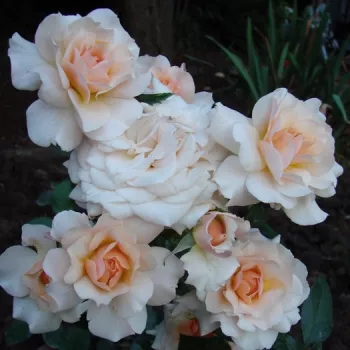
Very double, XL-sized, high-centred blooms with over 40 petals, borne mainly in clusters; remontant with a generous second flush, though some spent blooms require manual removal for best appearance. |
| Colour data and phenology |
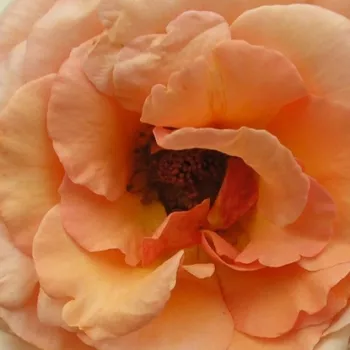
Pastel peach and salmon tones dominate, with deeper orange-salmon inner petals; flowers open light salmon-orange then fade through peach to pale cream, maintaining a warm, soft impression as they age. |
| Fragrance and aroma |
Fragrance is mild and understated, offering a gentle, restrained rose scent rather than a strong perfume; primarily chosen for visual effect rather than for intense aromatic garden performance. |
| Hip characteristics |
Occasionally develops small, ellipsoid red hips about 6–10 mm across, adding discreet seasonal interest in late season without significantly reducing overall repeat-flowering ornamental impact. |
| Resistance and winter hardiness |
Hardy to approximately −21 to −18 °C (RHS H7, USDA 6b, Swedish zone 3) with medium resistance to black spot, mildew and rust; benefits from good air movement and routine monitoring in humid seasons. |
| Horticultural recommendations |
Best planted in sunny beds or large containers, 35–65 cm apart depending on use; prefers improved, well-drained soil, regular watering in drought, and light pruning plus periodic pest and disease checks. |
MARJOLAINE offers compact structure, generous double blooms and long-term own-root reliability, making it a thoughtful choice for small, easy-care gardens where you value steady beauty over many seasons.