MARGUERITE HILLING – pink park rose - Hilling
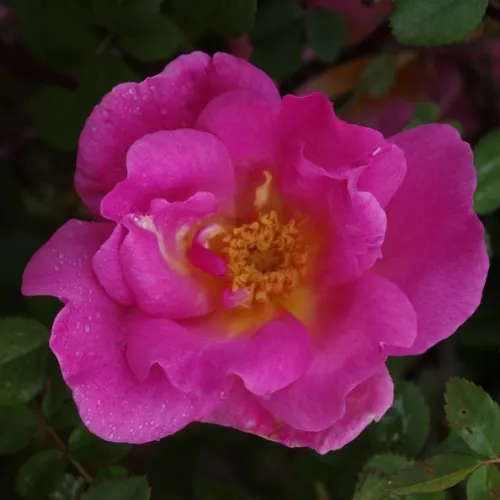
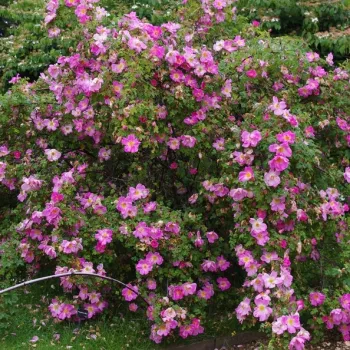
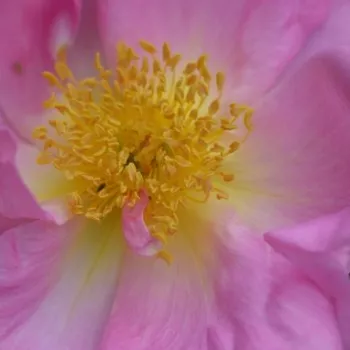
Stepping past raindrops in a London front garden, Marguerite Hilling offers airy pink flowers that welcome bees, cope well with blustery conditions and lend an easy sense of balance to small urban spaces. Its semi-double blooms open wide to reveal golden stamens, inviting pollinators while gently perfuming the air with a soft, rosy fragrance after showers. This established park-shrub classic forms a bushy, mid‑green backdrop that matures steadily, giving you reliable height and structure without constant clipping or fuss. As an own‑root rose it settles in securely and can regenerate from the base, building long-term resilience rather than needing frequent replacement. Plant once into improved clay or chalky soil with good drainage and you gain a long-lived, medium-maintenance shrub that responds simply to rainwater and occasional feeding. Ideal for those who prefer sustainable, low-input planting, it will gradually knit into hedges, wildlife-friendly borders or statement shrubs in narrow spaces. Think in seasons rather than weeks as roots establish, stems extend and the full garden presence unfolds over three years of quiet growth, relaxed flowering, durable structure and enduring colour.
Usage options
| Target area | Reasoning |
|---|
| Front garden focal shrub |
The strong, bushy habit and mid‑green foliage give instant structure, while successive waves of soft pink flowers draw the eye from pavement to front door with very little shaping or routine pruning, suiting busy homeowners. |
| Bee-friendly family border |
Semi-double, open blooms repeatedly expose pollen-rich stamens that are easy for bees and hoverflies to reach, extending feeding opportunities through the season without needing complex deadheading, ideal for the wildlife-conscious gardener. |
| Low-input flowering hedge |
Its tall, slightly arching growth and moderate prickles create a soft, informal screen that needs only occasional trimming once established, offering privacy and long-lived ornamental value with minimal intervention for the time-poor planter. |
| Rain-aware urban front garden |
Well-suited to typical town plots that experience frequent rain and brisk winds, it thrives in improved clay or chalk with good drainage, working neatly alongside permeable paving for those planning a sustainable city garden. |
| Mixed shrub and perennial border |
Its mature size anchors combinations with lavender, sage or nepeta, while own-root vigour allows it to fill gaps gradually over several seasons, giving a dependable framework that supports evolving plantings for the design-led amateur. |
| Naturalistic or cottage-style scheme |
The relaxed, slightly arching shape and gently fading pink flowers echo traditional cottage gardens; as an own-root shrub it regrows well from the base, so it integrates gracefully into informal, long-lived plant communities for the romantic planter. |
| Partial-shade side garden |
Tolerant of partial shade, it continues to flower and hold its foliage where many roses sulk, making use of narrow, between-house strips or side paths that need colour but receive limited sun for the space-maximising owner. |
| Deep container on balcony or terrace |
In a 40–50 litre peat-free container with consistent moisture and drainage, its vertical presence, repeat flowering and own-root durability offer a long-term rose solution for paved spaces, appealing to the container gardener. |
Styling ideas
- Terrace-hedge – Line a narrow front boundary with a loose row of Marguerite Hilling, underplanting with hardy geraniums to soften the base – ideal for privacy-seeking families.
- Bee-border – Mix with nepeta, lavender and single-flowered perennials to create a long-season nectar corridor – perfect for wildlife-focused beginners.
- Cottage-arch – Let the shrub rise behind a path-side arch clothed in clematis or honeysuckle, echoing classic cottage charm – suited to romantic traditionalists.
- Urban-screen – Combine with ornamental grasses and evergreen shrubs for a soft, wind-tolerant street-side screen that needs only occasional shaping – good for low-maintenance city dwellers.
- Balcony-feature – Grow one plant in a large 50 litre pot with trailing thyme at the rim for scent and groundcover – appealing to space-limited balcony owners.
Technical cultivar profile
| Parameter | Data |
|---|
| Name and registration |
Marguerite Hilling is a Hybrid Moyesii shrub rose sold as a park-shrub type; an unregistered sport of ‘Nevada’, known in the UK under this long-established commercial name. |
| Origin and breeding |
Originated in the United Kingdom as a sport of ‘Nevada’, bred and first introduced by T. Hilling & Co., Chobham, around 1959, later widely adopted as a reliable garden shrub. |
| Growth and structural characteristics |
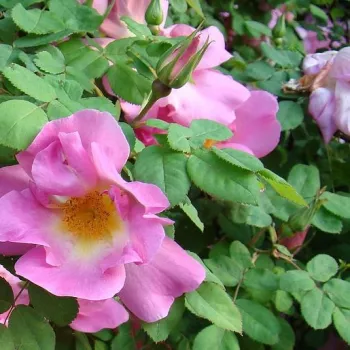
Forms a tall, bushy shrub 200–280 cm high and 170–250 cm wide, with dense, slightly glossy mid‑green foliage and only light prickliness, giving substantial yet approachable garden presence. |
| Flower morphology |
Semi-double, flat, cluster-borne flowers with 13–16 petals, medium sized at about 4–7 cm across; blooms fall fairly cleanly, though occasional deadheading refines appearance and encourages further display. |
| Colour data and phenology |
Vivid mid-pink flowers (ARS Mp; RHS 65B–65C) open bright then gently fade to pastel with paler, almost whitish petal edges, giving a softly changing effect through repeated flowering flushes. |
| Fragrance and aroma |
Presents a mild, pleasant rosy scent best appreciated at close range, adding a subtle layer of sensory interest without overwhelming nearby seating or small enclosed courtyard spaces. |
| Hip characteristics |
Occasionally sets small spherical hips 14–22 mm across, colouring dark red to nearly black, which can contribute autumn interest and informal wildlife value if spent flowers are left in place. |
| Resistance and winter hardiness |
Hardy to about –32 °C (RHS H7; USDA 4b), showing good black spot resistance with moderate tolerance of mildew and rust, and coping well with heat given supplementary water in long dry spells. |
| Horticultural recommendations |
Best in improved, well-drained soil with sun to light shade; space generously for air flow, water in droughts, and shape prune after flowering to maintain form and encourage well-ripened new wood. |
Marguerite Hilling offers tall, long-lived structure, repeat pink flowering and pollinator-friendly blooms on a durable own-root shrub, making it a thoughtful, low-effort choice for future seasons in your garden.