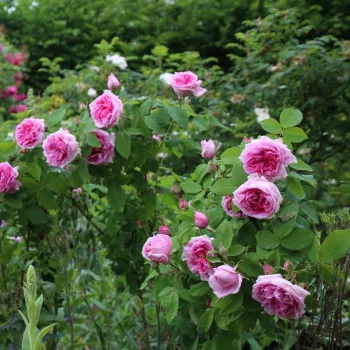
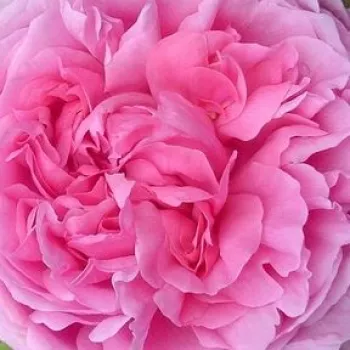
MADAME BOLL – pink historic Portland rose
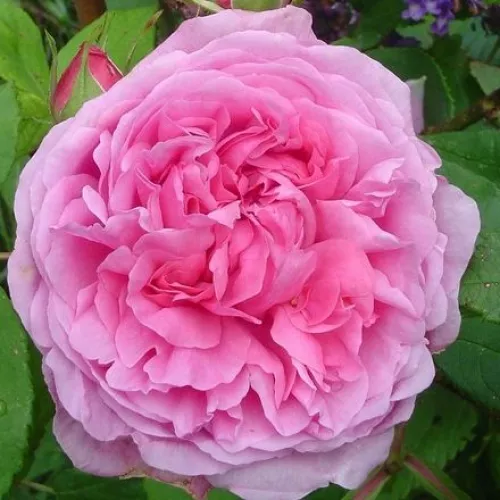
Step out after rain and let Madame Boll wrap your front garden in a sweet, far‑carrying damask fragrance, its compact, upright habit perfectly suited to narrow London terraces and spaces where you manage wetter soils and stronger winds with thoughtful planting for drainage and resilience. As a remontant Portland rose it flowers generously in flushes, giving you romantic, mid‑pink rosette blooms from early summer well into autumn, ideal for cutting and for enjoying at the doorstep. Dense, mid‑green foliage clothes the plant from base to tip, helping it sit confidently among perennials, while its own‑root constitution promises a long‑lived, regenerating structure that settles in steadily over several seasons, with roots first, then stronger shoots, and by year three a full, reliable garden presence.
Usage options
| Target area | Reasoning |
|---|
| Rain‑aware front garden in a terraced street |
The compact, upright shrub fits neatly beside paths and railings, while its tolerance of typical British showers and breezes works well where you are managing heavier, slower‑draining street soils and downpipe run‑off near the house; ideal for the time‑pressed urban beginner |
| Low‑maintenance historic rose feature |
Once established, its own‑root growth forms a durable framework that can be gently refreshed by periodic light pruning, avoiding the need for graft management and helping the plant recover well from winter or accidental damage; reassuring for the relaxed family gardener |
| Season‑long, romantic flower bed |
The remontant habit gives repeat flushes of large, fully double rosette blooms, offering a long season of colour and scent with only moderate dead‑heading, allowing smaller borders to feel “in flower” for much of the summer; perfect for the busy homeowner |
| Cut‑flower corner by the front path |
Strongly scented, long‑stemmed blooms make excellent indoor flowers, and regular cutting naturally encourages fresh growth and further buds, so one plant can anchor a simple picking area without complicated pruning routines; attractive for the creative hobby‑gardener |
| Partial‑shade side return or courtyard |
This cultivar accepts some shade, so in side passages or courtyards that receive only part‑day sun it still flowers reliably, offering structure and fragrance where many modern roses falter; a practical option for the space‑limited town resident |
| Informal flowering hedge |
Planted at recommended spacing, its dense, mid‑green foliage and moderate prickles create a soft but effective boundary, while successive waves of pink rosettes add period charm without strict clipping, making it suitable for the informal boundary‑planner |
| Container near the front door (40–50 L+) |
In a large, well‑drained peat‑free container it forms a stable, own‑root specimen whose height and spread are easy to keep in check, giving years of colour and scent on balconies or paved frontage without redesigning the whole garden; convenient for the mobile renter |
| Mixed perennial border with classic accents |
Its steady, compact framework and dense leaf canopy allow harmonious mixing with perennials like lady’s mantle or verbena, adding a reliable vertical accent that matures gracefully over several seasons rather than needing frequent replacement; appealing to the sustainability‑minded planner |
Styling ideas
- Terrace‑Romantic – Pair Madame Boll by a wrought‑iron gate with lavender and nepeta to echo its damask perfume and compact habit – for urban homeowners wanting classic charm in narrow front gardens.
- Rain‑Garden – Set her slightly raised in a gravel‑mulched bed that guides roof run‑off towards moisture‑tolerant perennials, using her dense foliage as a soft focal point – for city gardeners managing wetter, heavier soils elegantly.
- Historic‑Border – Combine with Alchemilla mollis and blue globe thistle to contrast frothy lime and cool blue against the full pink rosettes – for enthusiasts seeking a period feel with straightforward care.
- Perfumed‑Path – Plant as a short, loose hedge flanking a front path so repeated flushes of scented blooms greet you daily – for families wanting impact and fragrance from a simple planting line.
- Cottage‑Container – Grow one shrub in a 50‑litre half‑barrel with peat‑free compost and trailing thyme at the rim – for balcony or doorstep gardeners wanting long‑lived, movable colour.
Technical cultivar profile
| Parameter | Data |
|---|
| Name and registration |
Historic Portland shrub rose marketed as MADAME BOLL, also known as Boll, part of the historic rose collection; unregistered cultivar used under a long‑established trade name for garden and exhibition use. |
| Origin and breeding |
Bred by Daniel Boll in the United States in 1858 from ‘Baronne Prévost’ × ‘Portlandica’, introduced to commerce by Joseph Boyau in France in 1859, representing early remontant Portland breeding. |
| Growth and structural characteristics |
Compact, upright shrub to around 85–125 cm high and 75–115 cm wide, with dense, mid‑green, slightly glossy foliage and moderate prickles, forming a tidy, self‑supporting bush suited to beds, hedging and containers. |
| Flower morphology |
Large, very double rosette blooms with over 40 petals, mainly solitary on stems; remontant with an abundant second flush, providing generous flowering periods for cutting and garden display across the season. |
| Colour data and phenology |
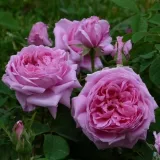
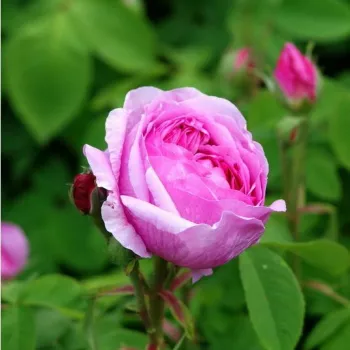
Vivid medium pink flowers with a subtle silvery sheen; buds deep pink, opening to mid‑pink, then paling towards soft creamy pink in strong sun, with cooler weather intensifying colour and maintaining period charm. |
| Fragrance and aroma |
Very strong, far‑reaching damask rose scent with a sweet, classic character, noticeable on still, humid days and ideal for planting near entrances, seating areas or paths where fragrance can be fully appreciated. |
| Hip characteristics |
Hip set is generally sparse due to the very double flowers, but occasional egg‑shaped, orange‑red hips 12–18 mm may develop, adding discreet seasonal interest without being a primary ornamental feature. |
| Resistance and winter hardiness |
Hardy to approximately −26 to −23 °C (RHS H7, USDA 5b, Swedish zone 4), with moderate resistance to black spot, mildew and rust; benefits from good air circulation and timely care in humid, high‑pressure seasons. |
| Horticultural recommendations |
Best in fertile, moisture‑retentive but well‑drained soil; regular watering in dry spells and moderate feeding support remontant flowering, with light annual pruning to shape and dead‑heading to encourage repeat flushes. |
MADAME BOLL offers a compact, long‑flowering, powerfully fragrant historic rose on its own roots, giving durable structure and regenerating growth for smaller front gardens and containers; a thoughtful choice if you value charm with manageable care.