LJUBA RIZZOLI® – dark red hybrid tea rose – Dot
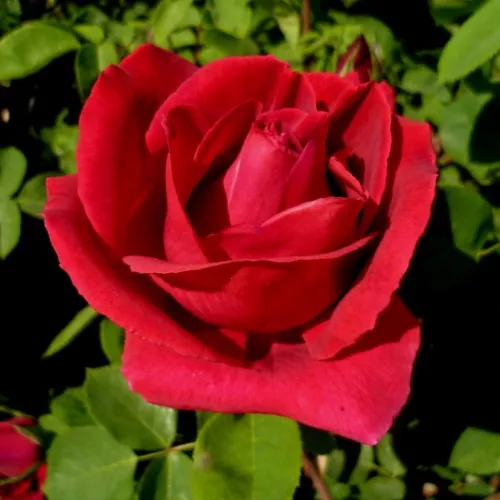
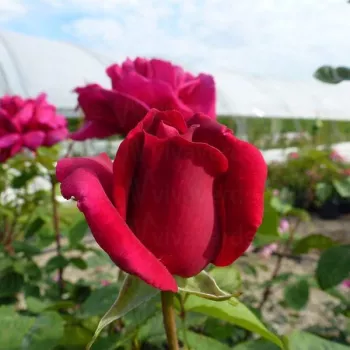
Step out after rain and meet velvet petals glowing in a deep, steady red that holds its colour even under unsettled British skies, with foliage that shrugs off wind and wet as if designed for exposed, changeable weather. This elegant hybrid tea brings an easy rhythm to a busy life: plant once, then simply enjoy its fragrance, its reliable repeat flowering, and its quietly robust health. Upright, dense growth makes it a natural choice for narrow London front gardens or as a focal point in a compact border, where every bloom earns its space. As an own‑root rose, it builds longevity and resilience in the background, rewarding you with a calm, sustainable presence. Give it good drainage and rain-friendly soil preparation, and expect a gentle evolution – roots establishing in year one, strong new shoots in year two, and full ornamental impact by year three – providing enduring balance in your family garden.
Usage options
| Target area |
Reasoning |
| Small London front garden feature rose |
The compact, upright habit and deep, velvety red flowers create an immediate focal point without overwhelming a modest front space, ideal beside a path or gate where you pass daily, perfect for the busy urban garden owner. |
| Cutting patch or mixed cutting border |
Large, classic hybrid tea blooms on strong, straight stems are well suited to vases and indoor arrangements, allowing you to harvest armfuls of richly coloured flowers through the season, appealing to the homeowner who enjoys homegrown bouquets. |
| Low‑maintenance family garden rose bed |
With naturally good resistance to common fungal diseases, this rose supports an easy-care approach, reducing the need for spraying or constant intervention, reassuring for the beginner wanting uncomplicated success. |
| Long-season colour in a narrow border |
Reliable repeat flowering, including a generous second flush, keeps deep red blooms appearing from early summer well into autumn, sustaining interest in slim beds for the garden owner seeking prolonged display. |
| Sustainable, long-lived garden investment |
As an own-root plant, it slowly builds a strong framework that can regenerate from its base, supporting decades of ornamental value and stability, attractive to the planner looking for long-term planting. |
| Rainwater-conscious planting on heavier soils |
Performs well where careful soil preparation improves drainage on heavier or clay-leaning ground, fitting front gardens that handle frequent rain while staying healthy, helpful for the city gardener managing wet conditions. |
| Structure and privacy in a mixed border |
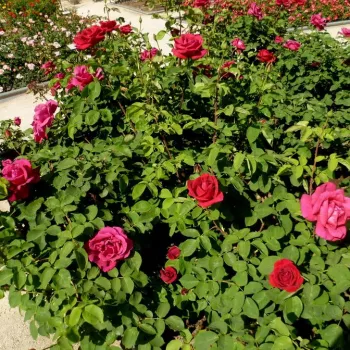
Reaching around 110–150 cm with dense foliage, it contributes height, vertical structure and a subtle screen effect along paths or boundaries, useful for the family wanting gentle enclosure. |
| Large container on terrace or balcony (40–50 L+) |
In a generous pot with good drainage (at least 40–50 litres), it offers upright form, fragrance and repeat flowers at eye level, ideal for terraces where space is limited but impact matters to the urban balcony or patio gardener. |
Styling ideas
- Velvet Entrance – Line a short front path with two or three plants, underplant with low lavender and gravel mulch for fragrance and rainwater soak‑away – for householders upgrading a narrow London frontage.
- Crimson Focus – Use a single shrub as a centrepiece in a small circular bed, ringed with catmint and sage to soften the outline – for beginners wanting an easy, defined feature.
- Evening Terrace – Grow one plant in a 50‑litre container with airy grasses and verbena nearby so scented dark-red blooms catch dusk light – for balcony and roof‑terrace users seeking atmosphere.
- Family Border – Thread several plants through a mixed border with gaillardia and crocosmia for a warm, long-flowering scheme – for families who prefer robust, colourful planting with little fuss.
- Classic Cutting Row – Set a short row at 70 cm spacing in a sunny strip to provide repeat stems for vases – for hobby gardeners keen on homegrown, traditional-style cut flowers.
Technical cultivar profile
| Parameter |
Data |
| Name and registration |
Hybrid tea rose; registered as Ljuba Rizzoli, with Ljuba Rizzoli® as current trade name and ARS exhibition name, classified for garden and cut-flower use in the hybrid tea group. |
| Origin and breeding |
Bred by Simón Dot in Spain and introduced in 1980 via Rose Barni in Italy; hybrid tea type with unknown parentage, developed for classic blooms and reliable garden performance. |
| Growth and structural characteristics |
Upright, bushy shrub 110–150 cm tall and 85–115 cm wide, with dense matte dark green foliage and plentiful prickles, forming a substantial, well-clothed framework for garden or cutting use. |
| Flower morphology |
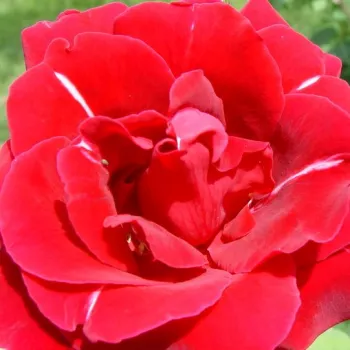
Large, double, cup-shaped blooms typically borne singly, with 26–39 petals; repeat-flowering with a notably abundant second flush, providing strong focal flowers through the main season. |
| Colour data and phenology |
Deep, velvety maroon-red flowers (RHS 187A–187B) that hold colour well; edges lighten slightly before petals fall, while the fully open bloom remains uniformly dark and richly saturated. |
| Fragrance and aroma |
Strong, full-bodied rose scent with a deep, velvety character and subtle raspberry notes; notable for those prioritising fragrance in close seating areas, entrances or cutting gardens. |
| Hip characteristics |
Forms moderate numbers of ellipsoidal red hips around 13–17 mm, providing a discrete late-season accent and modest wildlife interest once the main flowering display has eased. |
| Resistance and winter hardiness |
Rated resistant to black spot, powdery mildew and rust; hardy to approximately −21 to −18 °C (H7, USDA 6b, Swedish zone 3), supporting reliable outdoor performance in most UK regions. |
| Horticultural recommendations |
Suited to low-maintenance planting with 60–110 cm spacing depending on use; prefers well-drained soil improved on heavy ground and benefits from balanced feeding to support repeat bloom. |
Ljuba Rizzoli brings deeply coloured, fragrant hybrid tea blooms with reliable repeat flowering and strong health on a durable own-root framework; consider it if you want a long-lived, low-effort highlight for your garden.