Little Rambler – pink miniature climbing rose
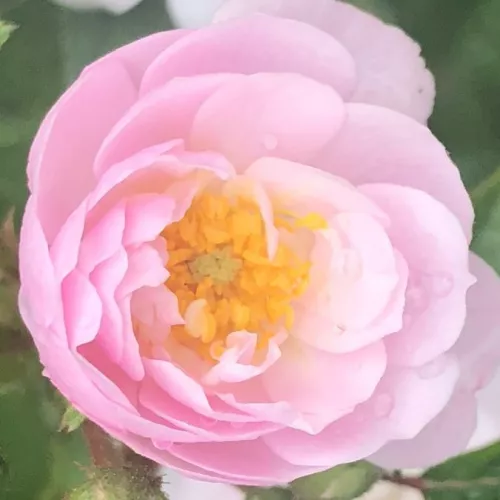
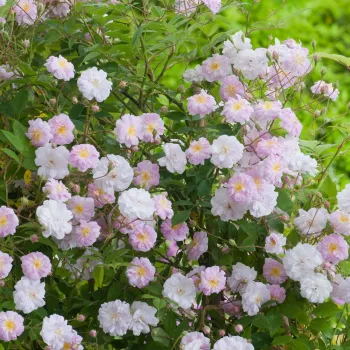
Step into a post‑rain front garden where soft pink clusters of blossoms trail over railings and obelisks, catching the light against healthy dark foliage and creating an easy, uplifting sense of balance. ‘Little Rambler’ is a compact climbing rose that fits perfectly into London terraced‑house fronts and small urban plots, handling breezy, damp conditions and heavier soils where drainage has been thoughtfully improved for wet, changeable weather. Its remontant, cluster‑flowering habit gives a long season of delicate pastels for very little effort, while double, open‑centred blooms welcome visiting pollinators. Own‑root plants settle steadily, building a discreet framework that you can train around downpipes, arches or balconies, then quietly flower on, year after year. In your first season it concentrates on roots, the second on stronger shoots, and by the third it reaches its calm, fully developed ornamental presence.
Usage options
| Target area |
Reasoning |
| Small front gardens and terraced-house railings |
Compact height and spread make ‘Little Rambler’ ideal where space is limited, giving a romantic climbing effect without overwhelming railings or a narrow path. Train on slim supports and let it arch gently for city homes seeking an easy focal point for beginners. |
| Rainwater-conscious urban beds with improved drainage |
This rose copes well with typical British rain and wind when planted in well-prepared soil, using organic matter and grit to improve drainage on heavier ground, suiting sustainable front gardens for urban-owners. |
| Low-maintenance family gardens |
Moderate disease tolerance, sparse thorns and self-cleaning clusters reduce routine tasks to occasional deadheading and light pruning, suiting busy households wanting dependable flowers with minimal effort for time-poor-gardeners. |
| Pollinator-friendly mixed borders |
Abundant, open-centred double clusters with visible stamens provide accessible pollen over a long season, working well beside herbs and perennials as a gentle food source for bees for wildlife-lovers. |
| Long-lived, sustainable planting schemes |
Supplied on its own roots, this cultivar matures gradually into a stable framework, regenerating well after pruning or weather damage and keeping ornamental value for many years, an advantage appreciated by eco-conscious-buyers. |
| Pergolas, arches and obelisks |
Its flexible canes and light, airy clusters are easy to tie in along arches or slim pergolas without creating too much shade, giving a soft, romantic canopy that remains manageable for home-stylists. |
| Large containers on balconies or patios |
In a 40–50 litre peat-free container with regular watering and feeding, ‘Little Rambler’ climbs neatly up trellis, bringing vertical colour where borders are impossible, an attractive option for balcony-gardeners. |
| Relaxed cottage-style or “girly” pastel schemes |
Delicate pink blooms that fade to near white sit beautifully with catmint and daisies, giving a soft, vintage look and tranquil mood aligned with calm, feminine planting palettes for romantic-planting-fans. |
Styling ideas
- Cottage-Arbour – let ‘Little Rambler’ scramble over a slim arch with nepeta and oxeye daisies beneath for a soft, storybook entrance – ideal for nostalgic front-garden dreamers
- Pastel-Railings – train along black metal railings with lamb’s ear at the base to contrast soft pink flowers and silvery foliage – perfect for style-aware city homeowners
- Balcony-Frame – grow in a 40–50 litre pot with a narrow obelisk, underplanting with trailing herbs to maximise vertical colour – suited to compact balcony gardeners
- Calm-Canopy – clothe a light pergola beside a seating area, pairing with catmint to attract bees and soften hard lines – appealing to wildlife-minded families
- Romantic-Bed – weave through a mixed pastel border with airy perennials and grasses to create a feminine, “girly” mood – attractive for gentle, low-fuss planting schemes
Technical cultivar profile
| Parameter |
Data |
| Name and registration |
Miniature climbing rose; registered as CHEWramb, marketed as Little Rambler Climbing rose CHEWramb; exhibition miniature climber in the Climbing rose collection. |
| Origin and breeding |
Raised by Christopher H. Warner in the United Kingdom (1989); parentage (‘Cécile Brunner’ × ‘Baby Faurax’) × (‘Marjorie Fair’ × ‘Nozomi’); introduced by Warner’s Roses in 1994. |
| Awards and recognition |
Certificate of Merit, Great Britain, 1991, recognising early performance and ornamental value in trial conditions prior to wider commercial release. |
| Growth and structural characteristics |
Climbing habit with dense, glossy dark green foliage; sparsely thorned canes; height about 180–260 cm and spread 160–240 cm under typical garden conditions. |
| Flower morphology |
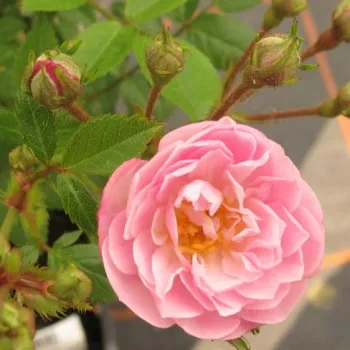
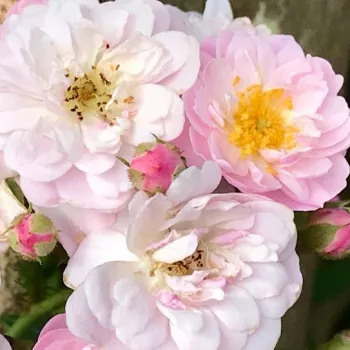
Small, double, cup-shaped flowers (approximately 0.5–1.5 inches) carried in large clusters; around 20–30 petals; remontant with notably abundant second flush flowering. |
| Colour data and phenology |
Pale pastel pink (ARS LP; RHS 65C–65D) on opening, lightening towards petal edges and often fading to creamy near-white tones in full sun as blooms age on the plant. |
| Fragrance and aroma |
Mild, subtly scented rose fragrance with a soft floral character; scent is noticeable at close range on still, humid days but is not overpowering in small spaces. |
| Hip characteristics |
Produces small, spherical red hips, about 4–7 mm in diameter, in moderate quantities after flowering; hips add a discreet autumn accent and light seasonal interest. |
| Resistance and winter hardiness |
Hardy to around -18 to -15 °C (RHS H6, Swedish Zone 2, USDA 7a); moderate resistance to black spot, mildew and rust; benefits from good air flow and hygiene. |
| Horticultural recommendations |
Best on pergolas, fences, obelisks or large containers; plant 185–320 cm apart; tolerates partial shade; moderate maintenance with occasional pest control and pruning. |
Little Rambler offers long-season pastel clusters, pollinator-friendly flowers and enduring own-root resilience, making it a thoughtful choice for relaxed, sustainable family gardens and smaller urban spaces where gentle structure is welcome.