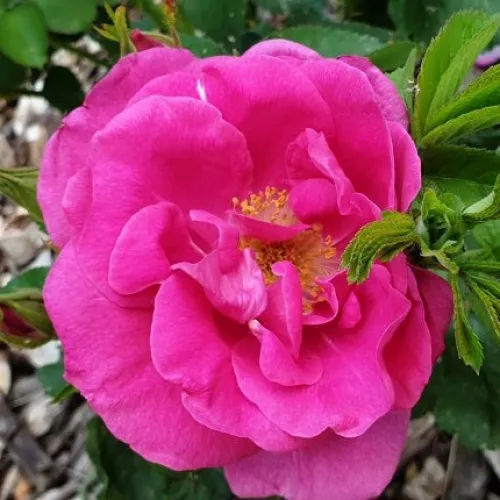
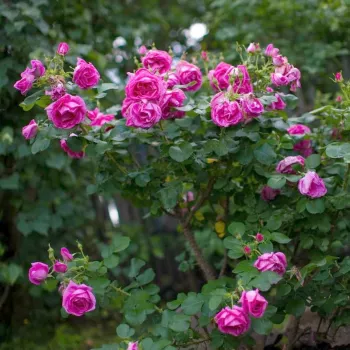
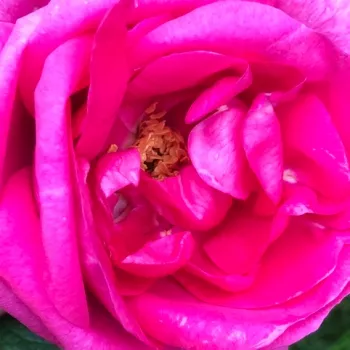
Rich, intense pink base colour leaning towards purple, which gradually lightens as the bloom ages. - park rose - very strong, garden-filling scented rose - spicy, fruity
– Very strong, spicy‑fruity garden fragrance
– Tall, upright shrub with dense foliage
– Large, double, cupped magenta‑pink blooms
– Outstanding winter hardiness down to –32 °C
– Occasional decorative orange‑red hips
– Special feature: Colour shifts from vivid magenta‑pink to soft pastel tones as blooms mature, giving long‑lasting visual interest.
Secure ordering – Characterful choice
eleanorROSE® ORIGINAL 2-litre own-root potted rose
18,50 £
Unfortunately, we are currently unable to ship to the United Kingdom; we only deliver to countries within the European Union. For more information, please contact us!
3.5(5783)
LIDIJA FREIMANE – purple‑pink park rose - Āboliņš
Imagine a London front garden where deep green shrubs glow after rain and richly scented blooms line your path: upright stems carry generous clusters of purple‑pink flowers, bringing a quietly glamorous, subtly girly mood to even compact spaces. Bred from tough Rugosa heritage, this rose forms a long‑lived, resilient structure that copes well with windy, exposed corners and typical British weather swings, even where drainage is imperfect and soils tend towards heavier clay. Large, cup‑shaped blossoms open from crimson buds to velvety magenta and finally to a soft, pastel pink, each wave perfuming the garden with a strong, spicy‑fruity fragrance you notice every time you pass the gate. As an own‑root shrub it matures steadily, with roots first, then fuller shoots, reaching its full ornamental value by about the third year and rewarding patient, sustainable city gardeners with enduring presence.
Lidija Freimane, a double, purple-pink park rose in full bloom.
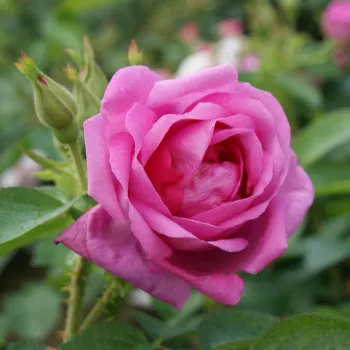
Closed bud of Lidija Freimane, deep crimson-rose pink.
Lidija Freimane produces large, double flowers.
Lidija Freimane has double, cupped flowers with 26–39 petals.
Usage options
Target area
Reasoning
Front‑garden statement shrub
The tall, upright habit and dense foliage give instant presence beside a townhouse doorway, while the magenta‑to‑pastel colour shift adds interest from pavement to front step for busy urban gardeners.
Fragrant narrow path border
Strong, garden‑filling scent and clustered flowers create a scented corridor along slim paths; moderate self‑cleaning means fewer deadheads to remove for time‑pressed beginners.
Rainwater‑friendly clay border
Hybrid Rugosa genetics and robust roots cope with heavier garden soils, helping you green up rain‑catching front beds where drainage is not perfect, ideal for sustainability‑minded owners.
Informal flowering hedge
At 140–210 cm high with dense foliage and many thorns, it forms a protective, flowering screen, softening boundaries while deterring shortcuts, suiting family‑garden households.
Feature shrub in small mixed border
The shifting pink and purple‑leaning tones pair beautifully with cool companions such as Calamintha and lady’s mantle, anchoring compact borders for design‑conscious home gardeners.
Long‑term structural planting
Hardy to around –30 °C with woody, upright canes, it is a sound long‑term framework rose that settles in and improves year on year for owners planning ahead.
Low‑maintenance specimen in large container
In a 40–50 litre pot or larger, its shrubby habit and moderate self‑cleaning give impact with simple seasonal care, suiting balcony and patio beginners.
Urban green buffer by pavement or drive
Dense, glossy foliage and vigorous growth create a green, noise‑softening buffer that also visually cools hard surfaces after rain, appreciated by environmentally aware residents.
Styling ideas
Terrace‑front elegance – Plant a single shrub near a front door with Calamintha nepeta ‘Blue Cloud Strain’ at its feet to echo the lilac tones – ideal for image‑conscious city homeowners.
Soft hedge line – Run a loose row along a low fence, underplant with lady’s mantle, and let the pastel pinks spill over for a romantic, slightly wild edge – perfect for family gardens.
Rain‑kissed clay border – Use as a backbone shrub in a rain‑collecting bed on heavier soil, mixed with ornamental grasses, for a sustainable, low‑lawn frontage – suited to eco‑focused renovators.
Large patio container – Give one plant a 50‑litre wooden planter with peat‑free mix and trailing herbs around the rim for scent at seating height – great for balcony and courtyard users.
Evening scent corner – Position near a bench with pale perennials that catch twilight light, so the strong fragrance and shifting petal colours stand out after work – made for busy professionals.
Technical cultivar profile
Parameter
Data
Name and registration
Hybrid Rugosa park rose, exhibition category shrub rose; current trade name LIDIJA FREIMANE – purple‑pink park rose - Āboliņš; American Rose Society exhibition name: Lidija Freimane.
Origin and breeding
Bred by Roberts Āboliņš at Iedzeni nursery in Latvia; breeding completed mid‑1960s, introduced and registered in 1978, reflecting cold‑climate shrub heritage suitable for exposed UK sites.
Growth and structural characteristics
Strong, upright shrub 140–210 cm tall and 90–150 cm wide; densely thorned canes with dark green, slightly glossy leaves forming a substantial, opaque structure for hedging or specimen use.
Flower morphology
Large, double, cup‑shaped blooms 7–10 cm wide with 26–39 petals, borne mainly in clusters; remontant with a lighter second flush, benefits from dead‑heading to extend the display.
Colour data and phenology
Crimson‑toned buds open vivid magenta pink (RHS 67A/B), then soften to pastel pink with a lilac sheen; outer petals stay deeper for contrast, giving a two‑tone effect as each flower matures.
Fragrance and aroma
Very strong, garden‑filling perfume with a spicy, fruity character; fragrance is one of the key ornamental features, especially noticeable along paths, seating areas and frequently used entrances.
Hip characteristics
Occasional spherical orange‑red hips, around 20–30 mm, may form despite the double flowers; decorative late‑season accent but not produced in large numbers on most garden‑grown plants.
Resistance and winter hardiness
Extremely hardy (approx. –32 to –29 °C, RHS H7, Swedish zone 5, USDA 4b); disease resistance weaker, with notable susceptibility to black spot and rust, so regular protection is recommended.
Horticultural recommendations
Best in full sun, in well‑prepared, moisture‑retentive but drained soil; spacing 105–200 cm depending on use. Own‑root form can regenerate from the base, supporting long‑term garden value.
LIDIJA FREIMANE offers tall structure, powerful fragrance and enduring presence as an own‑root shrub, making it a thoughtful choice for gardeners who want lasting character with manageable care.
Detailed product attributes
Product Identification Data
Product Name:
LIDIJA FREIMANE – purple‑pink park rose - Āboliņš
Product Type:
eleanorROSE® ORIGINAL - 2-litre own-root potted rose
Flower Colour Description:
Rich, intense pink base colour leaning towards purple, which gradually lightens as the bloom ages.
Closed Bud:
Deep, crimson‑toned pink with a glossy surface and uniform colour distribution.
Newly Opened Flower:
Vivid magenta-pink petals with a subtle lilac edging, in a uniform shade.
Full Bloom:
The central petals lighten to a paler pink, while the outer petals retain a deeper magenta-pink tone.
Before Fading:
Fades to a soft, pastel pink with a delicate lilac sheen on the edges of the petals.
Colour Fading Description:
During opening the vibrant magenta-pink gradually fades to a pale pastel pink, while the outer petal whorl retains the deeper tone for an extended period.
Pollinator Attraction:
Because its strongly double, cup-shaped blooms conceal and limit access to the stamens, this variety attracts relatively few pollinators.
Pollinator-Friendly Rating:
Its double, cupped flowers partly conceal the stamens, therefore limitedly pollinator-friendly, mainly ornamental.
Hip Comment:
Hip formation is expected to be limited due to the double flowers; occasionally producing spherical, orange-red hips 20–30 mm in diameter.
Maintenance Requirement:
Maintenance requirement high; due to poor disease resistance it requires regular plant protection, particularly against black spot and rust.
Primary Uses:
park, specimen, hedge, urban green space
Our product is a rose grown with pharmaROSA®’s unique cultivation technology!
2-litre, own-root, potted rose.
With a shoot system appropriate to the season.
With a root system that thoroughly permeates the growing medium.
Quality compliant with the requirements of the E.N.A. (European Nurserystock Association).
Supplied in unique packaging that prevents damage.
Can be planted during frost-free periods.
True-to-variety rose bush with a unique identifier.
The pharmaROSA® own-root potted rose is a well-rooted plant that supports reliable establishment when planted and cared for properly, so it can be planted whenever the soil is not frozen.
Crop overview: several varieties and growth stages in a short crop section.Shoot system: intensive growth of fresh basal shoots on a young plant.Root system: demonstration of a vigorous root system permeating the growing medium, by removing the pot.Balance: mature plant with root system and shoots in harmony with each other.
Information about the videos
The video series is not a “seasonal showcase”; it illustrates the essence of pharmaROSA® own-root cultivation in a tangible way: how the plant is built up, what the root system is like and how the shoot system regenerates. The recordings were therefore made at different times and with plants at various stages of development, so mixed foliage levels and differing stages of growth may appear in the videos. They are not a ‘sample’ of the batch dispatched, but a visual explanation of how the technology works. The current condition of the rose available to order — typical for the given period and similar to what you can expect to receive in the parcel — is shown in the upper part of the product page.
Pages for private customers Garden roses for the family garden, with minimal care → ORIGINAL® Premium garden roses – instant impact, a truly showpiece garden → EXTRA® Pages for professionals and private customers Roses for public spaces – large areas, sustainable maintenance → NATURAL® Roses for projects – hedge and row planting, fast implementation → RAPID® For professional partners only Production – propagation material for garden roses, wholesale → NEONATAL®
Company details
PharmaRosa Ltd. Company registration number: 01-09-717479 VAT number: 13075314-2-43 Plant health registration no.: HU130721 Bank account (IBAN): HU85117631891388688400000000 BIC (SWIFT): OTPVHUHB Bank name: OTP Bank Nyrt.