Park & shrub rose

90-055-1
90-055-2

Lenadbial

Park - shrub rose

- – Louis Lens

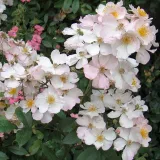
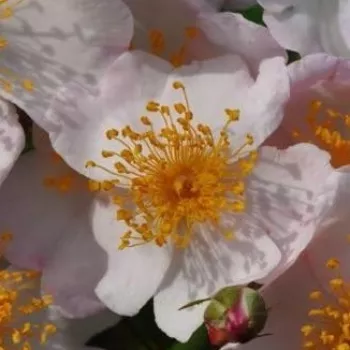
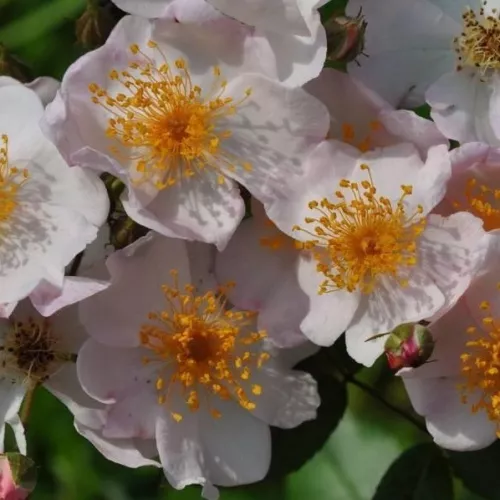
The petals' base colour is a porcelain-like pure white, with a barely perceptible pale pinkish tint at the throat. - park rose - very weak, barely perceptible scented rose - fresh, muscat-like character

– Masses of porcelain‑white, ball‑like blooms.
– Long, repeat flowering from summer to autumn.
– Compact, versatile shrub for beds and hedges.
– Medium disease resistance and hardy to H7.
– Especially attractive to bees and other pollinators.
Special feature: Decorative orange‑red hips extend the season.
Long-term garden plan – Supporting local wildlife
Lenadbial
eleanorROSE® ORIGINAL 2-litre own-root potted rose
20,30 £
Unfortunately, we are currently unable to ship to the United Kingdom; we only deliver to countries within the European Union. For more information, please contact us!
3.5 (5467)
facebook   twitter

LENADBIAL – Matchball white park shrub rose (own-root, 2‑litre)

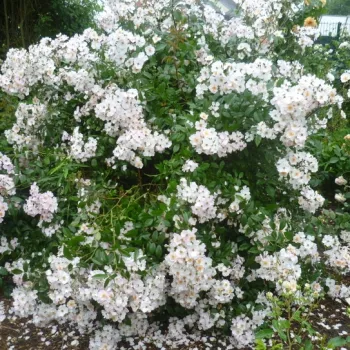
Step towards a front garden that feels both light and quietly structured, as ‘Matchball’ scatters airy white flower clusters like small lanterns along compact, twiggy stems, creating a gentle “girly” welcome in even the tightest London terrace. Its open, single blooms invite bees to linger, with soft muscat notes close-up and neat self-cleaning that keeps maintenance minimal. Own-root planting supports a long-lived, regenerating framework that settles in steadily from roots to full display, while its compact habit suits containers of at least 40–50 litres and small beds where reliable structure matters. Well adapted to typical British clay soils and blustery weather, it is particularly at ease where winds and showers roll in off the coast yet you still want a refined, sustainable display. Over time, the rounded form, fine twigging and modest prickles make it easy to shape as a low hedge, path-liner or relaxed park-style shrub. In season it offers clouds of porcelain-white, pollen-rich flowers followed by discreet orange-red hips for autumn interest, extending its quiet charm. A remontant habit gives good repeat flushes when summer stays moist, while medium disease tolerance pairs well with simple, preventative care rather than complicated spraying routines. This balanced mix of long-term structure, pollinator value and modest care needs makes ‘Matchball’ an appealing choice for busy households, forming part of a greener, rain-aware garden that still feels soft and welcoming. Across its first three seasons it builds from root establishment to fuller shoots and, by year three, a stable, park-like presence.


Usage options

Target areaReasoning
Front garden focal shrub Compact height and spread make ‘Matchball’ ideal for modest front gardens, giving clear structure without blocking windows or paths; own-root growth matures into a durable, balanced framework that fits busy homeowners seeking reliable ease of care for their family garden.
Pollinator-friendly city planting Single, open flowers with readily accessible stamens are highly attractive to bees, encouraging life into small urban plots and rainwater-friendly gravel strips where every nectar source counts for wildlife-aware urban gardeners.
Low, informal hedge The moderately dense, twiggy habit and light prickles allow easy shaping into a low boundary or path edging, delivering a soft, feminine look rather than a harsh barrier that appeals to design-conscious terraced-home owners.
Mixed border with perennials Clouds of porcelain-white clusters sit beautifully among lavender, nepeta or dwarf asters, giving contrast and continuity while self-cleaning flowers keep the border fresh without constant deadheading for relaxed hobby gardeners.
Large container on patio or balcony Its compact, park-shrub habit suits a 40–50 litre container, where own-root resilience helps long-term performance with simple watering routines rather than frequent repotting, a helpful solution for time-pressed balcony owners.
Rainwater-aware clay or coastal sites Performs well in typical British gardens where heavier soils meet unsettled weather, coping with regular wind and showers in exposed streets while rewarding modest drainage improvements valued by sustainability-minded front-garden planners.
Long-term, low-intervention planting Own-root plants age gracefully, regrowing from the base if stems are damaged and keeping the same flower quality year after year, reducing replacement and complex pruning for those prioritising a long-view, low-fuss garden investment.
Wildlife-friendly, naturalistic schemes After flowering, small orange-red hips provide late-season structure and subtle food value, fitting a softer, park-style planting that supports insects and birds with minimal input from nature-oriented beginner gardeners.

Styling ideas

  • Soft-Edge Hedge – Plant a gently curving row 50–60 cm apart for a low, white-flowering boundary with orange-red hips in autumn – ideal for family homes wanting subtle structure.
  • Romantic Mix – Combine with lavender, nepeta and pale pink perennials to frame a path, letting bees drift between the open blooms – suited to urban gardeners favouring relaxed, pollinator-rich schemes.
  • Porch Welcome – Grow one or two shrubs in 40–50 litre containers by the front door, underplanted with thyme or creeping campanula – perfect for busy owners seeking easy, long-lived pots.
  • Rainwise Strip – Line a gravelled, rainwater-accepting front strip with ‘Matchball’ and airy grasses for a light, sustainable look – good for terraced streets managing runoff without losing charm.
  • Park-Corner Nook – Set three plants in a loose triangle with low asters and calamint to create a mini park-style corner – appealing to hobby gardeners who enjoy gentle structure with wildlife interest.

Technical cultivar profile
ParameterData
Name and registration Shrub / Hybrid Musk park rose, registered as LENadbial, marketed as Matchball; ARS exhibition name ‘Matchball’, classified in the Park – shrub rose group for garden and landscape use.
Origin and breeding Bred by Louis Lens in Belgium (1987) from Rosa multiflora var. adenochaeta Ohwi × ‘Kathleen’; introduced and registered in 1990 by Lens Roses, reflecting classic Hybrid Musk shrub character.
Growth and structural characteristics Compact shrub 80–140 cm high and 45–80 cm wide, moderately dense, lightly thorny, with slightly glossy light mid-green foliage; well suited to edging, small hedges and mixed borders in family gardens.
Flower morphology Single, flat flowers 0,5–1,5 inches across, 5–12 petals, carried in large clusters of 10–30 blooms per stem; remontant habit provides an abundant main flush followed by a generous repeat flowering.
Colour data and phenology Porcelain-white petals (RHS 155D outer, 155C inner) with a faint pink throat at opening, then pure white with vivid yellow stamens; fades only slightly creamy, maintaining a clean white effect through most of bloom.
Fragrance and aroma Fragrance is very weak, detectable only close-up, with a fresh, muscat-like nuance; chosen more for visual lightness and pollinator access than strong scent, making it suitable near doors and seating areas.
Hip characteristics Moderately abundant, small spherical orange-red hips around 6–10 mm in diameter; remain after the self-cleaning petals drop, adding discreet autumn colour and wildlife interest without dominating the shrub.
Resistance and winter hardiness Hardy to approximately –21 to –18 °C (RHS H7, Swedish zone 3, USDA 6b); medium tolerance to black spot, powdery mildew and rust, responding well to basic hygiene and balanced watering in most UK gardens.
Horticultural recommendations Use for beds, edging, low hedges, specimen or containers; spacing 50–90 cm depending on effect. Prefers fresh, moderately moist soils with reasonable drainage; medium maintenance, with occasional health checks.

LENADBIAL – Matchball offers compact, repeat-flowering white clusters, excellent pollinator access and durable own-root growth, making it a considered choice for sustainable, small-scale gardens and terraces.
Detailed product attributes

Product Identification Data

Product Name: LENADBIAL – white park rose - Lens
Product Type: eleanorROSE® ORIGINAL - 2-litre own-root potted rose
Cultivar Authenticity: Verified:21.07.2025
Cultivar Quality Rating: premium bronze
Item Number: [1405] 90-055 (14.02.2026) eleanorrose.co.uk

Name and Registration

Meaning of Cultivar Name: The name refers to the English expression "match ball", evoking the ball-like appearance of its masses of flowers.
Original Trade Name: Matchball
Current Trade Name: Lenadbial Park - shrub rose LENadbial
Rose Group: Shrub, Hybrid Musk
Commercial Type: park rose
Commercial Group: Park - shrub rose
Exhibition Category: shrub rose
Collection: Park - shrub rose

Origin and Breeding

Initial Distributor: Lens Roses (Belgium)
Breeder: Louis Lens
Breeding Company / Institution: Lens Roses; Louis Lens Nurseries SA
Breeding Year: Belgium, 1987
Parentage: Rosa multiflora var. adenochaeta Ohwi × ‘Kathleen’ (Musk hybrid, Pemberton 1922)

Growth and Structural Characteristics

Height: 2.6-4.6ft (80-140 cm)
Spread: 1.5-2.6ft (45-80 cm)
Growth Habit: compact
Foliage: The variety has moderately dense foliage, with leaves that have a slightly glossy surface and a light mid‑green shade.
Prickliness: lightly thorny
Self-Cleaning Description: Most spent flowers fall off naturally; the rose hips remain on the plant.
Self-Cleaning Intensity: Self-cleaning: good.

Flower Morphology

Petal Count: 5–12
Flower Fullness: single-flowered
Flower Shape: flat
Flower Size: S (0,5-1,5 in)
Inflorescence Type: clustered, 10-30 flowers/stem
Colour Code: ARS code: W RHS code: 155D (outer), 155C (inner)
Repeat Flowering: It is remontant, producing an abundant second flowering.

Colour Data and Phenology

Colour: white
Flower Colour Description: The petals' base colour is a porcelain-like pure white, with a barely perceptible pale pinkish tint at the throat.
Closed Bud: Matt whitish-green base colour, covered towards the tip with a pale pinkish veil.
Newly Opened Flower: The outer petals are snow-white, the central zone is coloured with a very delicate, soft pink tinge.
Full Bloom: The petals are uniformly bright white and the yellow stamens stand out vividly against the white background.
Before Fading: The petals fade to a translucent white, and a slight creamy hue may appear at the edges.
Colour Fading Description: At opening, the delicate rosy centre fades, the white ground colour remains throughout; just before the flower fades it only becomes slightly creamy.

Fragrance and Aroma

Fragrance Strength: very weak, barely perceptible scented rose
Fragrance Character: fresh, muscat-like character
Pollinator Attraction: The simple flower form (5–12 petals) with accessible stamens makes this rose highly attractive to pollinators.

Pollinator-Friendly Rating: Because of its simple, open flowers, it can be regarded as especially pollinator-friendly.

Hip Characteristics

Hip Shape: globular
Hip Colour: orange-red
Hip Comment: Moderately abundant, 6–10 mm in diameter, spherical, orange-red rose hips.

Resistance and Hardiness

Hardiness (°C): -21–-18 °C
Heat and Drought Tolerance Description: Tolerates heat but prolonged drought reduces flowering; prefers fresh, moderately moist soil.
Disease Resistance: medium
  • powdery mildew – medium
  • black spot – medium
  • rust – medium

Horticultural Recommendations

Recommended Planting Distance: for mass planting 60 cm, for hedging 50 cm, as a specimen 90 cm
Planting Density: square planting 2,8 plants/m², hexagonal arrangement 3,2 plants/m²
Partial Shade Tolerance: suitable for partial shade
Maintenance Requirement: Maintenance requirement medium; occasionally requires pest and disease control.
Primary Uses: flowerbed, edging, park, specimen, hedge, container, cut flower

Comments

Strengths: Long-term garden plan – Supporting local wildlife
Companion Plants: Aster dumosus Apollo - Dwarf aster Lychnis alpina Magenta - Alpine catchfly Calamintha grandiflora Elfin Purple - Large-flowered calamint
Comment: -
LENADBIAL – white park rose - Lens
The petals' base colour is a porcelain-like pure white, with a barely perceptible pale pinkish tint at the throat. - park rose - very weak, barely perceptible scented rose - fresh, muscat-like character
Online rose order - white - Lenadbial - park rose - (2.6-4.6ft (80-140 cm))
Inflorescence: clustered, 10-30 flowers/stem Height: 2.6-4.6ft (80-140 cm) Flower shape: flat Winter hardiness: 6b white - Lens Roses (Belgium) park rose - Flower size: S (0,5-1,5 in) Flower size: S (0,5-1,5 in) - Height: 2.6-4.6ft (80-140 cm) Height: 2.6-4.6ft (80-140 cm) - Flower fullness: single-flowered Lenadbial - Roses in the garden | eleanorROSE® Original - premium bronze Louis Lens

We showcase the external appearance of the roses available for online purchase from our webshop.


Which product type is right for you?


Information

In what condition do we send the rose from our online webshop?

Let us ask ourselves the question: What would I like to use the rose for?
Flower? - Location? - Screening? - Fragrance? - Height? - Breeder? - Rose hip?

Information on buying roses
Methods of payment - Delivery costs - Delivery - Complaints handling

Care guide

Our product is a rose grown with the unique PharmaRosa® cultivation technology!

2 litre, own-root, potted rose.
With shoots appropriate to the season.
With a root system that thoroughly permeates the growing medium.
Quality in line with the requirements of the E.N.A. (European Nurserystock Association).
In unique packaging designed to prevent damage.
Can be planted during frost-free periods.
True-to-name rose plant with a unique identifier.

The PharmaRosa® own-root potted rose is a fully rooted plant that guarantees reliable establishment for you, so it can be planted at any time of the year during frost-free periods.


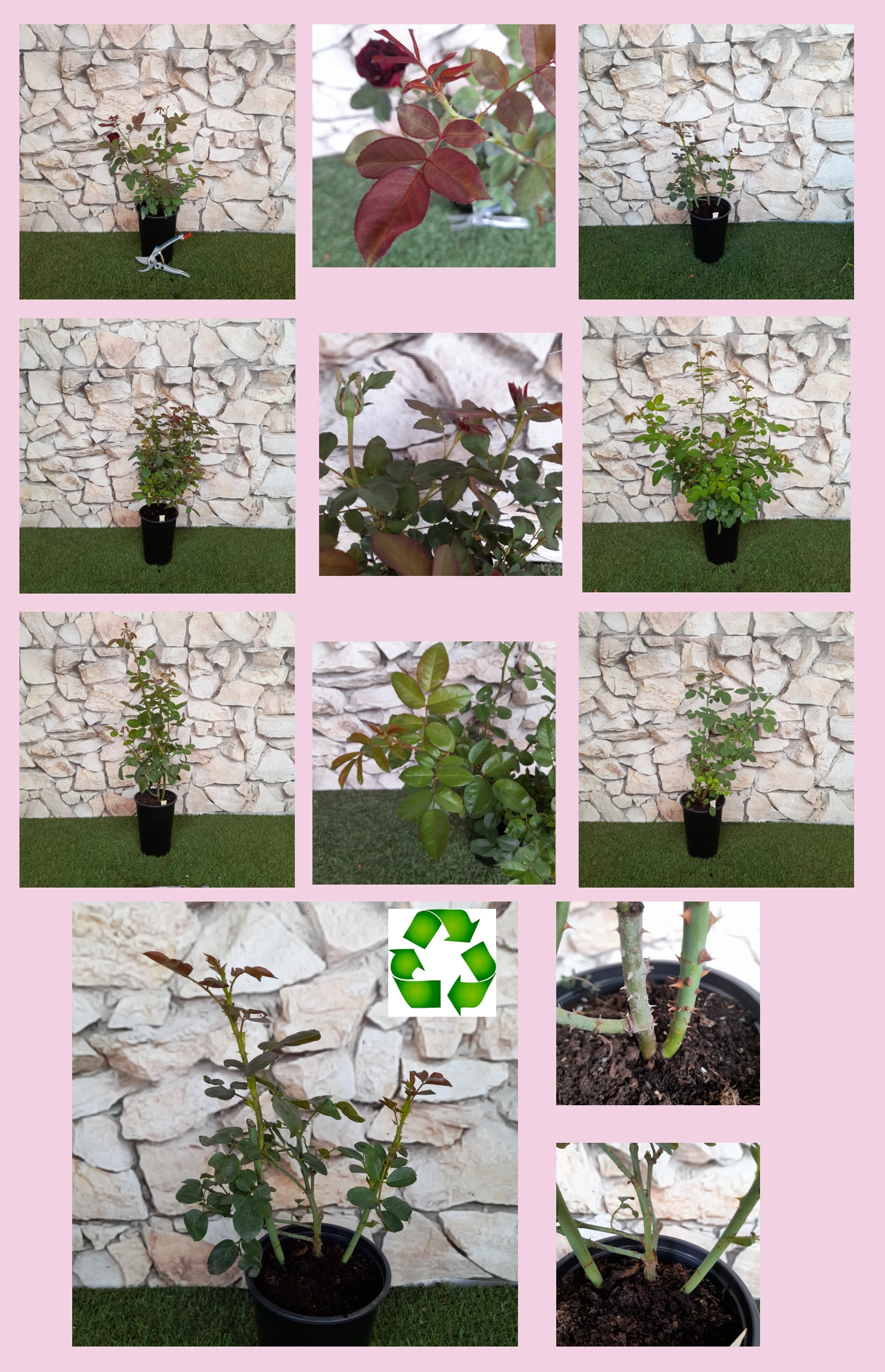
Crop: several varieties at several stages of development in a short crop section.
Shoot system: intensive growth of fresh basal shoots on a young plant.
Root system: demonstration of a vigorous root system that permeates the growing medium, with the pot removed.
Balance: mature plant with the development of the root system and the shoots in harmony.

Information about the videos
This video series is not a “seasonal showcase”, but makes the essence of the PharmaRosa® own-root cultivation tangible: how the plant is structured, what the root system looks like and how the shoot system renews itself. The footage was therefore recorded at several different times on plants at various stages of development, so mixed leaf cover and differing levels of development may appear in the videos. This is not a “sample” of the consignment delivered, but an illustration of how the technology works. The current, season-specific condition of the rose you are purchasing (the state in which you can expect to receive it in the parcel) is shown at the top of the product page.

pharmarosa.atpharmarosa.compharmarosa.depharmarosa.ropharmarosa.sipharmarosa.skpharmarosa.hrpharmarosa.itpharmarosa.frpharmarosa.grpharmarosa.bepharmarosa.dkpharmarosa.nlpharmarosa.iepharmarosa.plpharmarosa.lupharmarosa.ptpharmarosa.espharmarosa.bgpharmarosa.ltpharmarosa.sepharmarosa.lvpharmarosa.eepharmarosa.fipharmarosa.rudarinarose.co.ukpharmarosa.cz

Product types

Pages for private customers
Garden roses for the family garden, with minimal care  → ORIGINAL®
Premium garden roses – instant impact, a truly showpiece garden  → EXTRA®
Pages for professionals and private customers
Roses for public spaces – large areas, sustainable maintenance  → NATURAL®
Roses for projects – hedge and row planting, fast implementation  → RAPID®
For professional partners only
Production – propagation material for garden roses, wholesale  → NEONATAL®

Company details

PharmaRosa Ltd.
Company registration number: 01-09-717479
VAT number: 13075314-2-43
Plant health registration no.: HU130721
Bank account (IBAN):
HU85117631891388688400000000
BIC (SWIFT): OTPVHUHB
Bank name: OTP Bank Nyrt.