LEMON RAMBLER – pale yellow rambler climbing rose - Schultheis
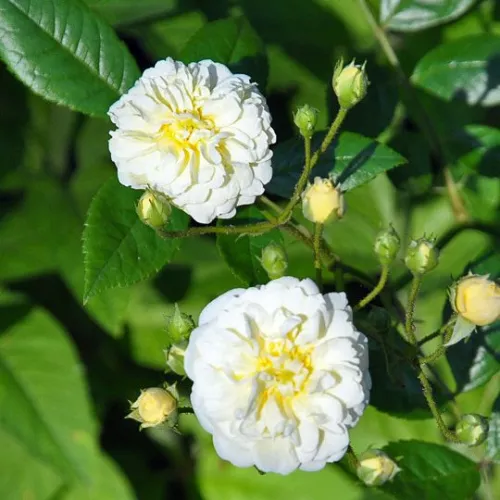
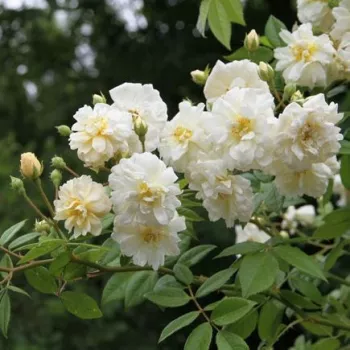
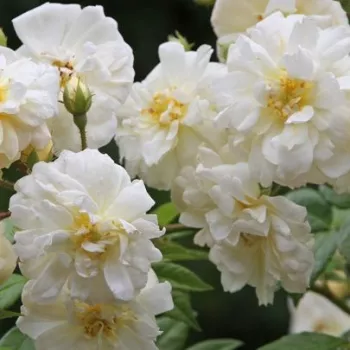
Imagine your front garden washed clean by rain, paths glistening and the fresh, citrus scent of LEMON RAMBLER drifting from soft lemon-cream clusters above you; this graceful rambler brings balance to tight, urban spaces by training neatly on arches, railings and terrace façades while coping well with breezier, wetter weather in exposed British gardens, so you can enjoy reliable flowering from early summer with a generous repeat flush and a surprisingly strong perfume that lingers on damp evenings. Sparsely thorned, glossy foliage and semi-double blooms invite bees where access is easy, yet still look refined enough for a “girly” London front garden. As an own-root rose, it offers reassuring longevity, regenerating from the base if stems are damaged and settling in steadily over the first few years – roots establishing in year one, framework building in year two, and a full, arching display by year three, giving you enduring structure with minimal intervention.
Usage options
| Target area | Reasoning |
|---|
| Front-garden arch or arbour |
Ideal for framing a narrow front path, its controlled climbing habit and repeat flush create a long season of scented, pale yellow flowers without crowding the space, giving structure and romance for busy city homeowners who prefer easy-care. |
| Rain-conscious terrace or coastal fence |
Trained along rails or open fencing, the dense but airy framework copes well with breezy, rain-lashed British weather, helping soften hard boundaries and directing rainfall into planting strips, suiting environmentally minded gardeners who value resilience. |
| Family seating nook or pergola |
Its strongly citrus fragrance and semi-double clusters create a cosy, perfumed canopy over benches or pergolas, bringing a calm, “green retreat” mood for families and hobby gardeners looking for sensory impact with relaxation. |
| Low-maintenance flowering screen |
With steady repeat flowering and a good vertical spread, it forms a soft privacy screen on posts or trellis, reducing the need for constant shaping while still looking refined, helpful for beginners who appreciate quiet reliability. |
| Long-term backbone for small gardens |
As an own-root rambler it ages gracefully, renewing from the base and avoiding weak graft unions, so once established it offers decades of ornamental value, reassuring homeowners who like investing in lasting garden longevity. |
| Pollinator-friendly mixed border backdrop |
The semi-double blooms offer moderate access to pollen while not looking untidy as they age, giving a gentle ecological boost when paired with herbs and perennials, attractive to urban gardeners wanting discreet pollinator support. |
| Clay or chalky soil family garden |
Once planted into improved but free-draining ground, its own-root system knits reliably through heavier soils and tolerates typical British wet spells, including in coastal or rain-exposed plots, encouraging those managing difficult ground to choose confidence. |
| Large container on balcony or terrace |
Grown in a minimum 40–50 litre, peat-free container with a sturdy support, it offers vertical flowers and scent where ground space is absent, suiting balcony and patio owners who want a statement rose with long-season impact. |
Styling ideas
- Lemon-Veil Arch – Train LEMON RAMBLER over a slim metal arch, underplant with lavender and soft pink nepeta for a fragrant “girly” entrance – ideal for London terrace owners wanting romantic structure without clutter.
- Citrus-Cloud Pergola – Let its pale yellow clusters drift overhead on a wooden pergola, combined with white climbing clematis for contrast – suited to families creating a calm, scented seating corner.
- Soft-Screen Fence – Weave stems along a narrow front-garden fence and layer with airy grasses and sage to blur boundaries – perfect for urban gardeners seeking privacy with a light, sustainable feel.
- Balcony-Rose Column – In a 50 litre pot, spiral canes or a slim obelisk and add trailing thyme and sedum at the base – a good choice for beginners wanting vertical colour in compact spaces.
- Pastel-Rambler Walkway – Run it along posts and wires beside a path, with Physostegia and soft pink perennials in front – appealing to hobby gardeners aiming for a gentle, cottage-style route through the garden.
Technical cultivar profile
| Parameter | Data |
|---|
| Name and registration |
Rambler-type climbing rose; registered as SCH8056 and marketed as Lemon Rambler Climbing rose SCH8056, approved exhibition name ‘Lemon Rambler’ in the ARS system. |
| Origin and breeding |
Bred by Christian Schultheis, Rosenhof Schultheis Nursery, Germany; cross of ‘Malvern Hills’ × ‘Penelope’; bred, registered and introduced in 2014 as a modern rambler. |
| Growth and structural characteristics |
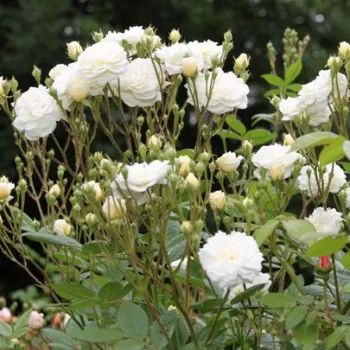
Vigorous climber 240–380 cm high, 120–220 cm spread; dense, glossy mid-green foliage, sparsely thorned canes; best trained on supports such as arches, pergolas, posts or wires. |
| Flower morphology |
Semi-double, cupped flowers with 13–25 petals, medium-sized clusters; repeat flowers reliably with a generous second flush; borne in trusses that decorate the length of trained stems. |
| Colour data and phenology |
Pale creamy-yellow blooms, ARS ly; buds creamy with lemon flush; centres deeper lemon-yellow, fading to buttery cream and silky white margins before petal fall, overall warm soft-yellow effect. |
| Fragrance and aroma |
Strong, fresh citrus fragrance, particularly noticeable in humid evening air; suitable for positioning near doors, paths or seating where the perfume can be appreciated at nose level. |
| Hip characteristics |
Produces moderate quantities of ellipsoid hips, 9–15 mm diameter, ripening to orange-red RHS 33A; decorative in late season and a subtle wildlife resource for birds and invertebrates. |
| Resistance and winter hardiness |
Fully hardy to approximately −21 to −18 °C (RHS H7; Swedish Zone 3; USDA 6b); disease prone, especially to powdery mildew and rust, requiring regular protection under humid or enclosed conditions. |
| Horticultural recommendations |
Best on sunny to lightly shaded supports; avoid stagnant air, ensure good drainage and airflow; monitor and treat for disease; space 165–300 cm depending on use, with thoughtful pruning to renew stems. |
LEMON RAMBLER offers scented repeat flowering, graceful vertical structure and the regenerative security of an own-root rambler rose, making it a thoughtful long-term choice for arches, fences and family gardens.