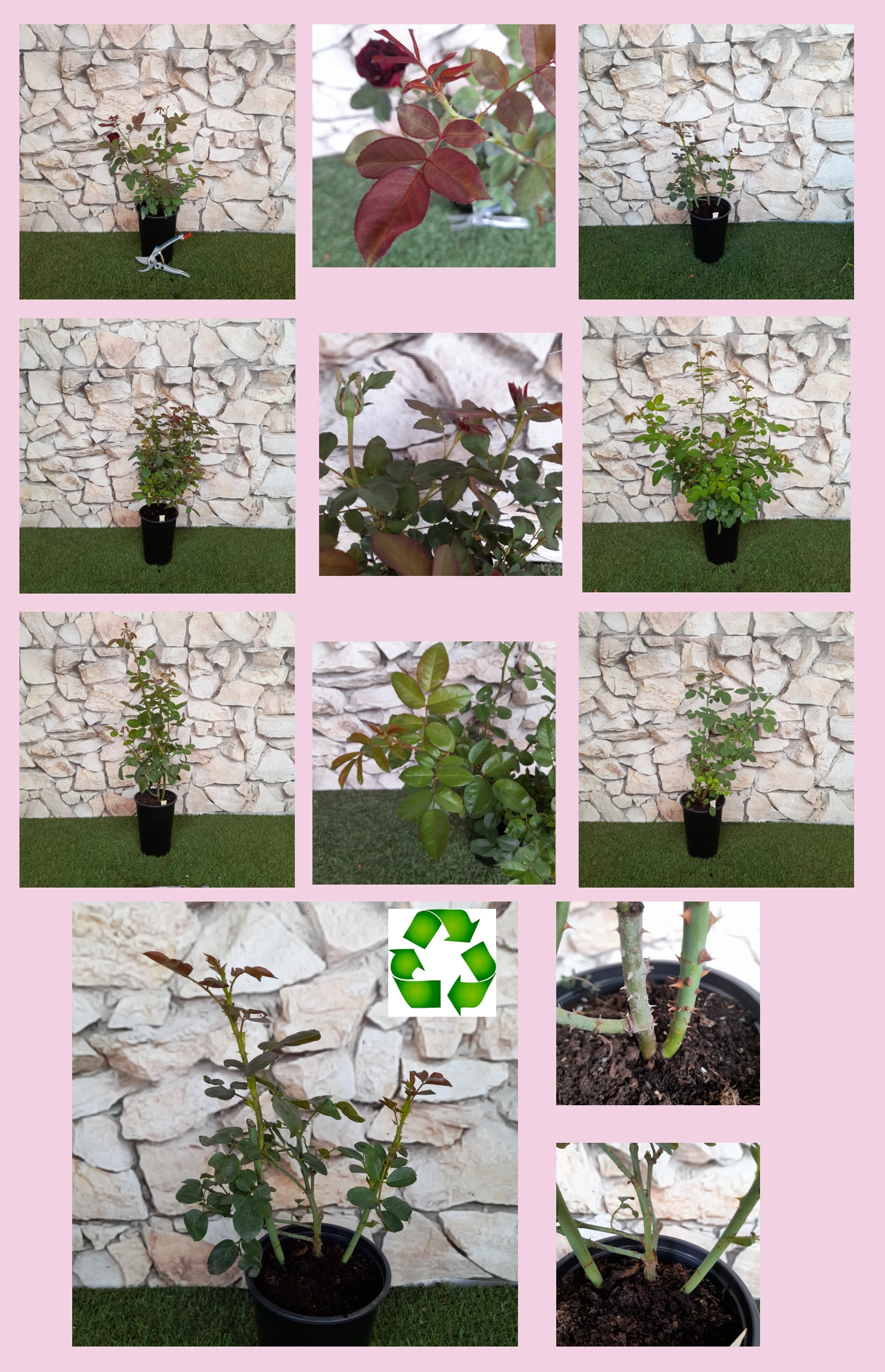
LAETITIA CASTA® – cream-pink tea-hybrid rose – Meilland
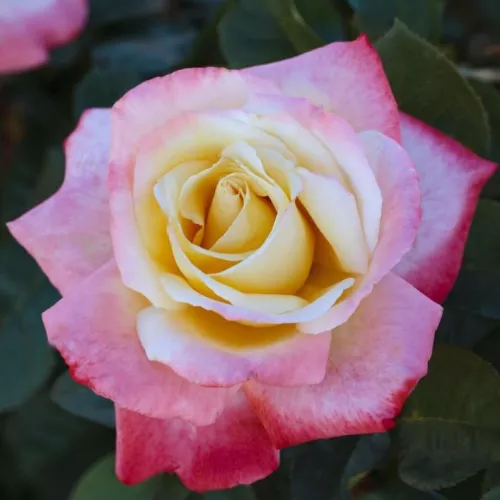
Step through your front gate and this hybrid tea’s high‑centred blooms bring instant elegance, their cream petals edged in soft pink capturing that after‑rain balance you want in a compact, sustainable city garden, naturally coping with damp, heavy soils and changeable British weather. As an own‑root plant it offers reassuring longevity, quietly rebuilding from its base if you ever need to prune harder, and supporting a greener, peat‑free approach with simple mulching and rainwater use. Year by year it settles in – first focusing on roots, then stronger shoots, before maturing into a stable feature with full ornamental value and a relaxed maintenance rhythm that suits busy, small‑space gardeners.
Usage options
| Target area |
Reasoning |
| Front garden specimen by the path |
Ideal as a single focal shrub near your front door, its tall, bushy habit and exhibition-style blooms give a polished look in even the smallest London terrace. Own-root vigour supports a long-lived, reliable structure for busy urban gardeners |
| Cutting patch in a family garden |
Large, high-centred flowers with long, straight stems are bred for vases, so you can cut regularly without weakening the plant. Own-root growth replaces removed shoots steadily, supporting years of home flower arranging for creative home florists |
| Formal hybrid tea row or low hedge |
Consistent height and upright, bushy growth allow a straight line of evenly spaced plants, giving a classic, streamlined look along drives or paths. Own-root plants knit together over time, forming a stable, uniform frontage for structure-loving planners |
| Rainwater-friendly clay or chalky beds |
Performs well in typical British front gardens when drainage is improved with grit and organic matter, making use of stored rainwater instead of mains. Its own-root system adapts steadily to local soil chemistry for sustainability-minded gardeners |
| Balcony or patio container, 50–60 L |
In a large, deep container this rose offers elegant flowers at eye level, especially combined with low herbs or grasses. Own-root form helps it recover from occasional drying or pruning slips, extending the container’s planting life for space-conscious owners |
| Paired with lavender, sage or nepeta |
Soft cream-pink blooms sit beautifully above a haze of lavender or catmint, while aromatic companions help distract from inevitable foliage blemishes. The simple, repeat-flowering rhythm still delivers a refined effect for design-focused beginners |
| Showpiece plant for rose exhibitors |
Bred as an exhibition hybrid tea, it produces classic, pointed buds and symmetrical, double blooms suited to selecting show stems. Own-root stock offers consistency of bloom form and colour over many seasons for ambitious rose exhibitors |
| Feature rose in sheltered coastal gardens |
Works well in a protected spot where dense foliage and strong stems stand up to wind-swirled showers and cooler air, especially when combined with good feeding and regular disease care, making the most of changeable conditions for coastal rose enthusiasts |
Styling ideas
- Front-Door Welcome – Position one rose each side of a short path, underplanted with nepeta to soften the base – ideal for terrace owners wanting a “girly” yet restrained entrance.
- Parisian-Style Bed – Plant three in a triangle within a square bed, edging with low lavender for a couture, perfume-counter feel – suits design-conscious beginners.
- Balcony Showcase – Grow a single plant in a 50–60 L cube pot, with trailing thyme at the rim – perfect for small-space gardeners seeking a tidy, long-lived feature.
- Cutting-Strip Row – Align a short row along a sunny fence, interplanting with airy grasses to mask gaps after cutting – for home florists who love arranging their own stems.
- Pastel Partnering – Combine with pale sage, soft pink cosmos and a compact lilac for layered, romantic colour – made for those curating a gentle, feminine front garden.
Technical cultivar profile
| Property |
Data |
| Name and registration |
Hybrid tea rose, registered as MEIlampario, marketed as Laetitia Casta® PERFUMELLA®. ARS exhibition name Laetitia Casta; part of the PERFUMELLA® collection and verified premium gold quality. |
| Origin and breeding |
Bred by Alain Meilland, Meilland International, France; breeding and registration 2009, introduced 2010. Parentage is undisclosed; selected for refined flower form and exhibition performance. |
| Awards and recognition |
Highly decorated exhibition rose: silver medals at Monza and Le Roeulx 2009, multiple awards at Baden-Baden including aesthetic prize, and certificate of merit at Geneva, with UK recognition at St Albans. |
| Growth and structural characteristics |
Bushy, shrub-like hybrid tea, around 90–120 cm tall and 50–70 cm wide. Moderately thorny, with dense, dark green, slightly glossy foliage forming an upright yet full outline suitable for beds and specimen use. |
| Flower morphology |
High-centred, pointed buds opening to large, double blooms with 26–39 petals. Single flowers per stem give classic florist-style heads, remontant with a generous second flush in suitable conditions. |
| Colour data and phenology |
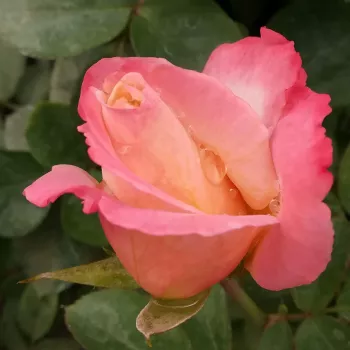
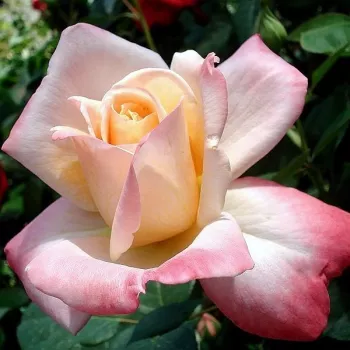
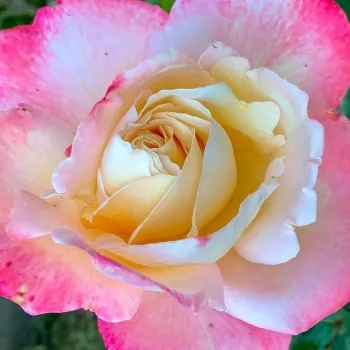
Cream base with medium-pink petal margins (RHS 55C outer, 158C inner). Newly opened blooms show a stronger pink band, which fades as cream lightens toward off-white, while the cream base dominates at full bloom. |
| Fragrance and aroma |
Mild, refined tea-rose fragrance, present but restrained, lending a soft cosmetic-style scent especially noticeable at close range or on cut stems indoors, without overwhelming other planting nearby. |
| Hip characteristics |
Limited hip set due to double flowers; occasional small, bright red, spherical hips around 9–13 mm across may form late in the season, adding subtle interest without significant wildlife or culinary value. |
| Resistance and winter hardiness |
Hardy to approximately −21 to −18 °C (RHS H7, USDA 6b, Swedish zone 3). Foliage is very susceptible to black spot, powdery mildew and rust, so regular fungicidal care and hygiene are advised. |
| Horticultural recommendations |
Best in full sun with fertile, well-drained but moisture-retentive soil; avoid deep shade. Space 45–90 cm depending on use, feed generously, water at the base, and maintain a protective spray programme against fungal diseases. |
LAETITIA CASTA® offers exhibition-quality, cream-pink blooms, a graceful, bushy shape and stable own-root performance that matures into a long-lived focal rose, making it a thoughtful choice for small, design-led gardens.