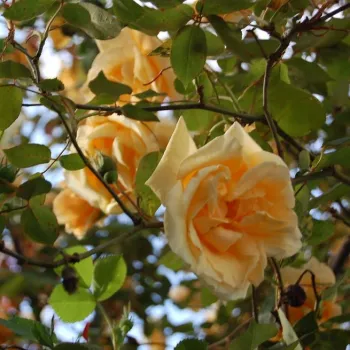
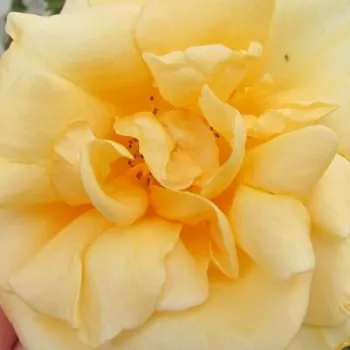
LADY HILLINGDON – yellow climbing rose - Hicks
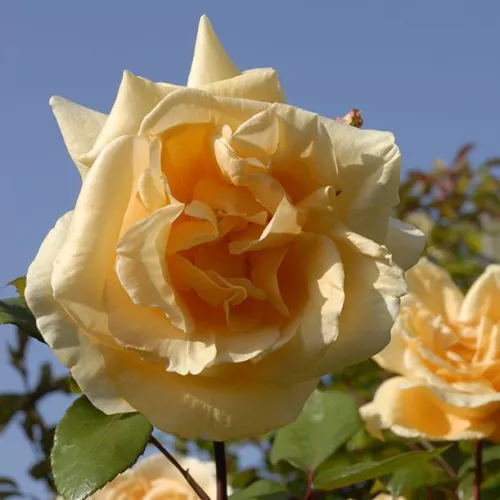
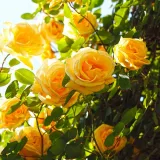
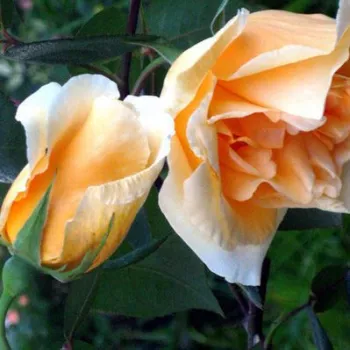
Step out to your front garden after rain and meet a rose that brings gentle balance to busy London spaces: LADY HILLINGDON – yellow climbing rose - Hicks offers warm, tea-scented fragrance, generous repeat flowering and lush, mid-green foliage that feels at home on pergolas, walls and terraces. Its semi-double blooms open in egg-yolk yellow buds and peachy tones before softening to buttery cream, creating a romantic pathway effect even in partial shade and exposed, breezy corners where rain and wind meet heavier soils and chalky conditions with confidence. As an own-root climber it ages gracefully, quietly regenerating from the base for a long, reliable lifespan with low maintenance needs, ideal for sustainable, rainwater-friendly planting. Give it time to settle – the first year builds roots, the second year adds shoots, and by the third you can expect its full ornamental impact.
Usage options
| Target area |
Reasoning |
| Terraced-house front wall |
Trains neatly against brick or render, covering 3–5 m in height with warm peach‑yellow blooms while keeping a slim footprint, ideal where pavement space is tight yet you want soft, romantic colour for busy urban garden owners |
| Pergola or arbour walkway |
Strong tea-rose perfume and semi-double clusters hang at nose level along arches, creating that “after the rain” tunnel of scent with repeat flushes that need little more than seasonal tying-in for hobby gardeners |
| Rainwater-friendly front garden |
Deep, own-root system copes steadily with downpours channelled from roofs and drier spells between, sitting well above improved drainage in heavier clay or chalk, making it a calm, low-fuss anchor for sustainability-focused homeowners |
| Low-maintenance family border |
Healthy, disease-resistant foliage and modest pruning needs suit those who prefer simple yearly tidying, while repeat flowering brings colour from early summer to autumn for beginners |
| Pollinator-conscious planting strip |
Semi-double flowers offer moderate pollen access and a lightly foraged vertical surface when mixed with perennials like salvia and nepeta, balancing ornament and wildlife value for pollinator-friendly garden planners |
| Cottage-style mixed bed |
Soft peach-yellow blooms blend beautifully with lavender, catmint and airy white perennials, giving classic charm on a compact footprint that will mature and endure for decades for romantic-style gardeners |
| Large container on balcony or patio |
Grows well in a 40–50 litre, peat-free container with a sturdy obelisk or trellis, providing vertical privacy, fragrance and long-season colour where soil is limited for balcony and courtyard owners |
| Feature rose for future-proof planting |
Own-root structure, strong hardiness and solid disease resistance make this a long-term garden investment that can be rejuvenated from low buds if cut back hard, suiting resilient designs for long-term planners |
Styling ideas
- Elegant-Entrance – Train up fan trellis either side of a terraced-house door, underplant with lavender or sage, and let the peach-yellow blooms frame visitors – ideal for time-pressed city homeowners
- Romantic-Pergola – Combine over a wooden pergola with white clematis and soft nepeta edging, creating scented shade and dappled light – suited to families who enjoy evening garden time
- Soft-Sunset – Pair with bluebeard and St John’s-wort for a golden and blue palette, balancing formal structure with loose flower shapes – perfect for small, stylish front gardens
- Balcony-Screen – Grow in a 50 litre container against a trellis, partnering with trailing thyme and compact grasses for privacy, scent and movement – great for renters or balcony gardeners
- Heritage-Corner – Use as a specimen near a seating nook with old bricks, salvaged pots and white perennials to echo its 1920s heritage – for those who value characterful, enduring plantings
Technical cultivar profile
| Parameter |
Data |
| Name and registration |
Lady Hillingdon Climbing rose Hicks; climber, large-flowered climber for walls, pillars and pergolas; ARS exhibition name ‘Lady Hillingdon, Cl.’; honours British baroness Alice Marion Harbord Mills. |
| Origin and breeding |
Sport of ‘Lady Hillingdon’ Tea rose, discovered by Elisha J. Hicks c.1917 in the United States; introduced c.1920 via E. J. Hicks Nursery, Hurst, Berkshire; unregistered but widely established in gardens. |
| Awards and recognition |
Holds the RHS Award of Garden Merit (1993), indicating reliable performance, strong garden merit and disease resistance under UK conditions, with proven value for typical domestic settings over many seasons. |
| Growth and structural characteristics |
Vigorous upright climber reaching 3–5 m high and 1–1.7 m wide, moderately thorny, with mid-green, glossy, medium-dense foliage; ideal for training on walls, arches, arbours, pergolas and sturdy trellis systems. |
| Flower morphology |
Semi-double, cupped blooms with 13–25 petals, medium-sized clusters on side shoots; remontant with a generous second flush in good seasons; suitable for cutting and for informal, slightly loose floral effects. |
| Colour data and phenology |
Warm peach-yellow flowers, ARS yellow blend; buds egg-yolk yellow with orange flush, opening golden at centre and fading to pale cream; colour softens faster in strong sun; repeats from early summer to autumn. |
| Fragrance and aroma |
Strong, classic tea-rose fragrance with peachy notes; scent carries well in still evening air and under light cover, making it particularly suitable beside seating, paths, entrances and frequently used garden routes. |
| Hip characteristics |
Moderate crop of small spherical hips, 10–14 mm in diameter, ripening orange-red; ornamental in autumn and useful for wildlife interest where not all spent flowers are removed after the main flowering flush. |
| Resistance and winter hardiness |
Good resistance to powdery mildew, black spot and rust; hardy to around -21 °C (RHS H7, USDA 6b, Swedish Zone 3); tolerates heat and drought if watered in extended dry spells, suiting varied UK climates. |
| Horticultural recommendations |
Low-maintenance climber for walls, pergolas, arbours, trellis and specimen use; thrives in sun or light shade in fertile, well-drained soil; space 1.5–3 m apart; ideal as an own-root, long-lived, structural garden feature. |
LADY HILLINGDON – yellow climbing rose - Hicks offers strong fragrance, reliable repeat flowering and long-lived own-root resilience, making it a thoughtful choice if you want a quietly enduring, low-effort climber.