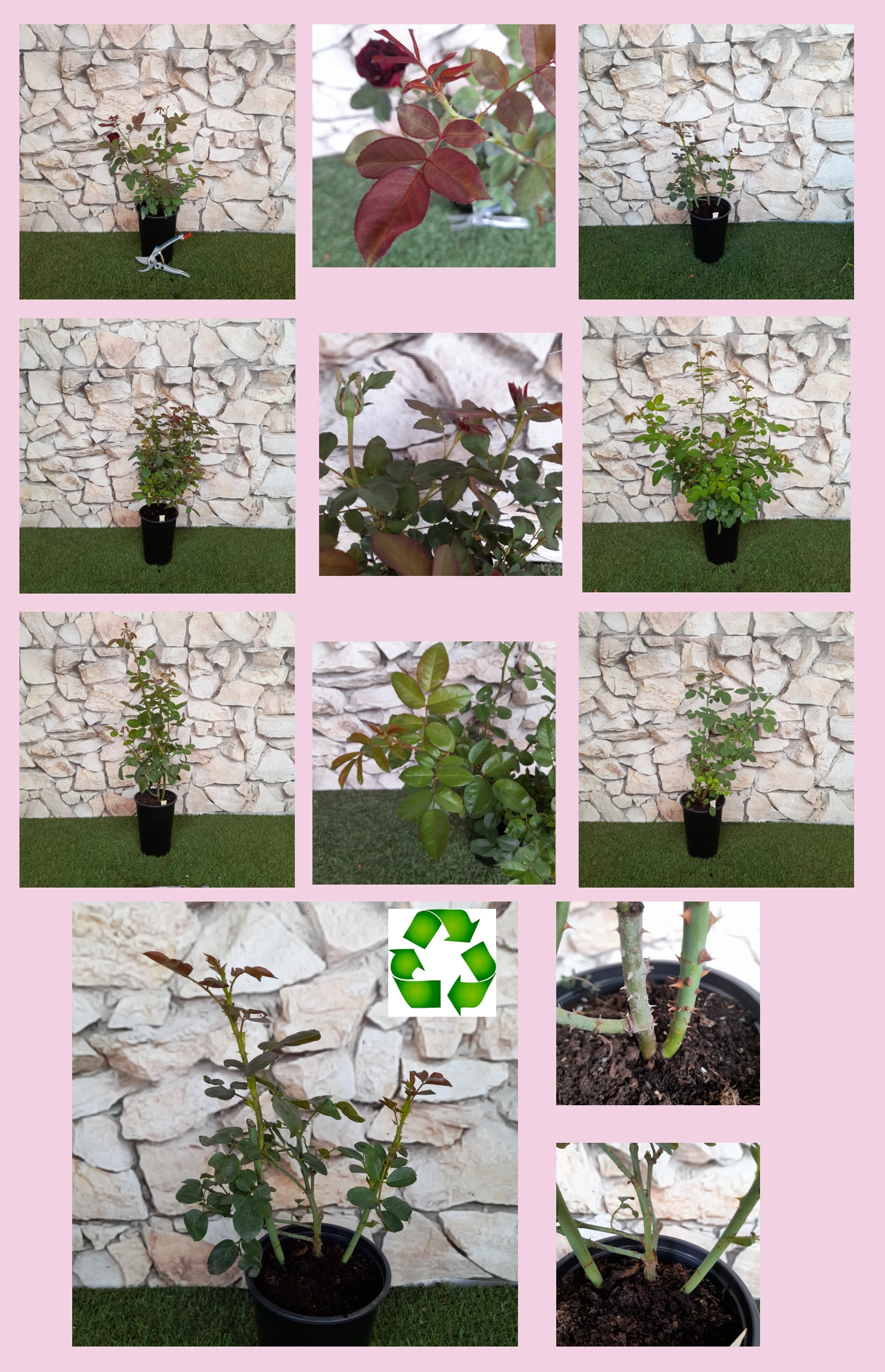
LA CLÉ DE LA ROSE – lilac-pink hybrid tea rose
Step out after rain and this lilac-pink hybrid tea meets you with fragrance that feels like an old cloister garden reborn, its very strong damask perfume lingering in the air. Upright yet compact, it suits the small London front garden as naturally as a deeper border, coping steadily with exposed corners where wind and frequent rain demand reliable, resilient planting choices for family gardens. Semi-double blooms show their golden hearts, making it gently pollinator-friendly while still refined enough for cutting. As an own-root rose it offers reassuring longevity, building a stable shrub that regrows reliably from its base. Over the first few years it follows a quiet rhythm of settling and strengthening – roots in year one, generous shoots in year two, then full garden presence in year three. Its remontant habit means season-long flowering, with each flush of deep lilac-pink blooms softening to a silvery veil that reads as effortless elegance against mid-green foliage. In a peat-free mix and a generously sized pot or bed it stays pleasingly manageable for gardeners who want reward rather than work.
Usage options
| Target area | Reasoning |
|---|
| Small London front garden |
The upright, moderately compact habit fits narrow beds along railings or paths, giving height without overwhelming the space and bringing season-long scented colour at eye level; effortless presence for the busy beginner |
| Pollinator-friendly mixed border |
Semi-double flowers reveal accessible stamens, offering nectar while still looking refined among perennials such as nepeta or sage, so you can support insects without giving up classic hybrid tea form; ideal for the eco-conscious homeowner |
| Rainwater-conscious urban planting strip |
Planted into improved clay or rubble-prone soil, its own-root resilience and steady growth work well where water collects from pavements and downpipes, complementing permeable surfacing that gently manages heavy showers for the sustainability-focused gardener |
| Large container or half-barrel (40–50 litres+) |
In a peat-free, free-draining mix and a generous pot, it forms a long-lived, own-root specimen whose roots are less prone to sulking after cold, wet spells on balconies or roof terraces, rewarding the space-limited urbanite |
| Lightly formal front-garden accent |
The solitary, cupped blooms and upright structure read as neat and composed, suiting clipped box, lavender or gravelled entrances where you want order, scent and structure with modest upkeep for the design-aware householder |
| Cutting and scent garden |
Large, strongly perfumed flowers on straight stems lend themselves to indoor vases; regular cutting encourages repeat flowering, providing a dependable source of old-rose fragrance across the season for the home bouquet enthusiast |
| Season-long family garden colour |
Remontant flowering brings a generous second flush after the first peak, keeping beds lively well into late summer so even low-maintenance gardens feel cared-for without constant intervention, suiting the time-poor family |
| Long-term, low-fuss planting scheme |
As an own-root shrub it matures steadily into a stable framework that can regenerate from the base after pruning or weather damage, giving durable ornamental value where wind and frequent rain demand reliable, resilient planting for the long-view gardener |
Styling ideas
- Cluniac Calm – Line a narrow London front path with these roses underplanted with soft nepeta, letting the lilac-pink and blue haze echo historic cloister borders – perfect for contemplative city dwellers
- Terrace Theatre – Place one plant in a 50-litre clay pot with trailing thyme and dwarf lavender to frame a doorway, giving a scented welcome with minimal care – ideal for flat-owners with a sunny step
- Rain-Garden Ribbon – Combine with ornamental grasses and moisture-tolerant perennials in a swale-style front strip to slow and enjoy rainwater while keeping strong structure – suited to eco-conscious terrace owners
- Pink Parlour – Mix with pale pink lupins and white anemones for a “girly” yet grown-up palette that looks good from the pavement and from indoors – appealing to families who enjoy romantic planting
- Evening Perfume – Plant near a small bench or balcony chair, with low silver foliage plants to reflect light and frame the blooms, for after-work relaxation in scented air – designed for busy professionals
Technical cultivar profile
| Parameter | Data |
|---|
| Name and registration |
La Clé de la Rose hybrid tea rose; trade name as listed, part of the hybrid tea group, exhibition-capable cut-flower type supplied here as an own-root, container-grown garden shrub. |
| Origin and breeding |
Hybrid tea bred in France by Fabien Ducher and Dominique Massad, introduced and registered in 2016 through Roseraie Ducher and Roses Massad, with parentage recorded as unknown. |
| Growth and structural characteristics |
Upright plant 80–120 cm high and 50–70 cm wide, with moderately dense, mid-green, slightly glossy foliage and moderate prickliness, forming a tidy, vertical accent in beds or containers. |
| Flower morphology |
Semi-double, cupped blooms, typically 13–25 petals, borne mainly singly on stems, large-flowered (about 7–10 cm), with remontant behaviour giving a generous second flush after the main flowering. |
| Colour data and phenology |
Rich purplish to lilac-pink, RHS 64C outer and 64B inner; buds dark and glossy, opening to mid- to deep tones that soften slightly, developing a delicate silvery veil before they fade. |
| Fragrance and aroma |
Very strong, garden-filling fragrance of classic old rose and damask character, noticeable in still air and particularly effective in enclosed or courtyard spaces and near seating or entrances. |
| Hip characteristics |
Occasional ellipsoidal hips, around 10–14 mm, maturing to orange-red; ornamental in autumn but not usually produced in large numbers under regular deadheading or cutting for the vase. |
| Resistance and winter hardiness |
Rated to around −21 to −18 °C (RHS H7, roughly USDA 6b), with good resistance to powdery mildew and black spot and moderate susceptibility to rust, generally needing only light preventive care. |
| Horticultural recommendations |
Suited to beds and large containers, with medium maintenance needs; plant 50–55 cm apart in groups or 90 cm as a specimen, in fertile, drained, preferably peat-free soil enriched with organic matter. |
LA CLÉ DE LA ROSE offers powerful old-rose fragrance, reliable repeat flowering and durable own-root growth, making it a thoughtful long-term choice for subtly scented, sustainable gardens and terraces.