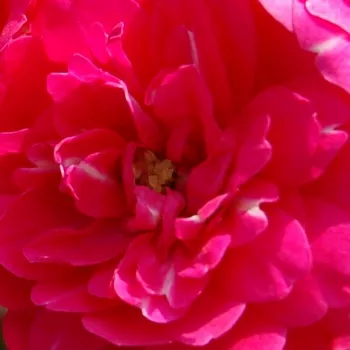
KNIRPS® – deep pink groundcover rose – KORverlandus
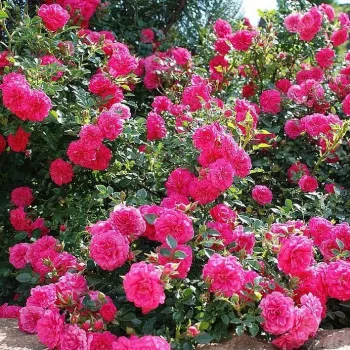
In compact city front gardens where space is precious, KNIRPS offers a low, spreading cushion of glossy foliage and deep pink blooms that shrug off rain and wind, making it a reassuring choice for exposed, coastal or street-side beds. This very healthy groundcover rose has been bred and trialled for dependable resilience, so routine care is limited to simple pruning and the occasional tidy-up as its self-cleaning flowers drop neatly away. Planted in well-prepared soil with good drainage, it quietly builds a strong root system in year one, then bulks up top growth in year two and by year three delivers full ornamental impact with minimal intervention. Ideal for busy gardeners wanting long-term, low-profile colour, it is equally at home softening paving, edging narrow paths or filling a rainwater-friendly front garden with sustainable, long-lived structure. In larger containers of at least 40–50 litres it forms a dense, flower-covered dome, while the own-root form supports gradual, reliable renewal over many seasons, keeping your small urban plot looking effortlessly settled and beautifully balanced.
Usage options
| Target area | Reasoning |
|---|
| Groundcover in small front gardens |
The naturally low, spreading habit quickly knits together into a dense carpet, helping to suppress weeds and reduce the amount of bare soil that needs attention in a compact front garden, suiting time-pressed urban homeowners and beginners. |
| Edging for narrow paths and driveways |
Its modest height and rounded outline define paths without obstructing movement, while the self-cleaning flowers mean there is no regular deadheading, fitting those who want clear, orderly lines with very little ongoing work and busy. |
| Low-maintenance family beds and borders |
High disease resistance and robust constitution keep foliage attractive even in humid, changeable British summers, so spraying is rarely required, suiting families who prefer a safe, fuss-free planting scheme and practical. |
| Exposed, rain- and wind-prone sites |
The compact framework hugs the ground and copes well with persistent rain and blustery conditions, particularly helpful in small coastal or corner plots where more upright roses can be damaged, appealing to gardeners in challenging spots and coastal. |
| Urban planting beds and high-traffic spaces |
Bred and proven for use in public, high-traffic beds, it tolerates the heat and reflected light of pavements while holding its shape, suiting householders who want a robust rose for busy, street-facing front gardens and urban. |
| Peat-free sustainable planting schemes |
The strong, fibrous root system on its own roots adapts well in quality peat-free composts with added grit or sharp sand for drainage, supporting longer plant life and stable shape for environmentally aware home gardeners and sustainable. |
| Large containers and roof terraces |
In sturdy 40–50 litre or larger containers it forms a tidy dome rather than sprawling, giving reliable summer colour on balconies and terraces where planting space is limited, ideal for city dwellers wanting manageable pots and container. |
| Long-term, easy-care planting plans |
ADR recognition and award-winning performance indicate lasting health and garden-worthiness, so once established it offers many years of dependable colour with only light pruning, reassuring planners of long-lived schemes and forward-thinking. |
Styling ideas
- Soft-Edge Pathway – Run KNIRPS in a low ribbon along a front path, underplanting with creeping thyme between paving for a seamless, step-friendly edge – suited to households wanting easy navigation and subtle fragrance.
- Pink-Cushion Corner – Fill a sunny corner bed with a loose drift of KNIRPS, backed by bluebeard shrub and purple coneflower to contrast the deep pink cushions with airy blues and vertical accents – ideal for colour-loving urban families.
- Container Courtyard – Plant one or three KNIRPS in a 50-litre clay pot with trailing nepeta and dwarf sage for a compact, low-maintenance display that softens hard paving – perfect for small courtyards or roof terraces.
- Rain-Smart Front Strip – Use staggered groups of KNIRPS in a gravel-mulched strip that accepts driveway run-off, where the dense canopy slows splash and covers soil – good for owners improving drainage and kerb appeal together.
- Play-Friendly Border – Set KNIRPS at the front of a mixed family border with mock orange behind, creating a soft, low barrier that defines play areas while keeping thorns away from small hands – reassuring for homes with children.
Technical cultivar profile
| Parameter | Data |
|---|
| Name and registration |
Groundcover shrub rose, Registered Name KORverlandus, marketed as Knirps® Groundcover KORverlandus; ARS exhibition name ‘Knirps’, selected for compact, dwarf, spreading habit in garden use. |
| Origin and breeding |
Bred by Wilhelm, Tim-Hermann and Margarita Kordes, W. Kordes’ Söhne, Germany; bred 1987, introduced 1997, with parentage undocumented but selected under professional nursery trials for resilience. |
| Awards and recognition |
Holds ADR recognition from 2004 for health and garden performance; awarded Gold Medal at Baden-Baden, Silver Medal at Adelaide National Rose Trials 1999, and Certificate of Merit at Orléans in 2001. |
| Growth and structural characteristics |
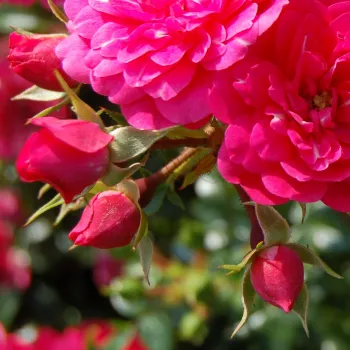
Very low, spreading groundcover habit, around 25–45 cm high and 40–70 cm wide; dense, mid-green glossy foliage, moderately thorny shoots, forming a compact, weed-suppressing mat suited to mass planting. |
| Flower morphology |
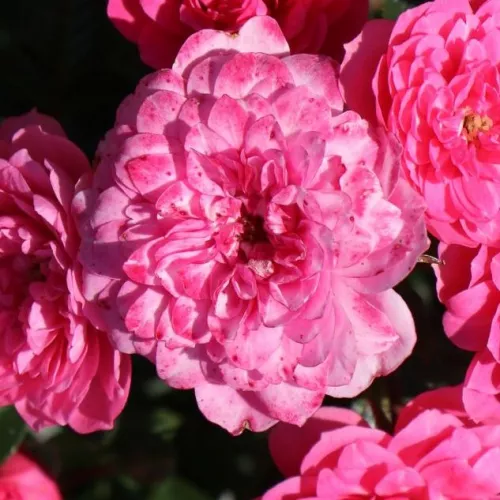
Very double, flat, small blooms (about 0.5–1.5 inches), typically in clusters; over 40 petals per flower, giving a full, rosette-like look; remontant with abundant second flushes through the season. |
| Colour data and phenology |
Intense deep pink, RHS 57A–57B, opening bright then deepening before fading to soft pastel pink; colour holds best in cooler conditions and fades more rapidly in strong, direct sun at high summer. |
| Fragrance and aroma |
Fragrance very weak, with a discreet, neutral character; chosen more for sustained colour and groundcover effect than scent, so it suits positions where visual impact is the primary design requirement. |
| Hip characteristics |
Hip set is sparse as flowers are very double; when present, hips are small, 6–10 mm, spherical, orange-red RHS 40A, with limited ornamental value and minimal self-seeding in typical garden settings. |
| Resistance and winter hardiness |
Excellent health, with documented resistance to black spot, powdery mildew and rust; hardy to about −29 to −26 °C (RHS H7, USDA 5a, Swedish Zone 4), with good tolerance of heat and moderate drought once established. |
| Horticultural recommendations |
Best in full sun with free-draining soil, spacing 30–70 cm depending on use; plant at 6.3–7.2 plants/m² for groundcover; prefers regular watering during prolonged drought and benefits from light annual pruning. |
KNIRPS® – deep pink groundcover rose – offers compact, low-maintenance colour, award-backed health and long-lived own-root reliability, making it a thoughtful choice for sustainable small gardens and urban front plots.