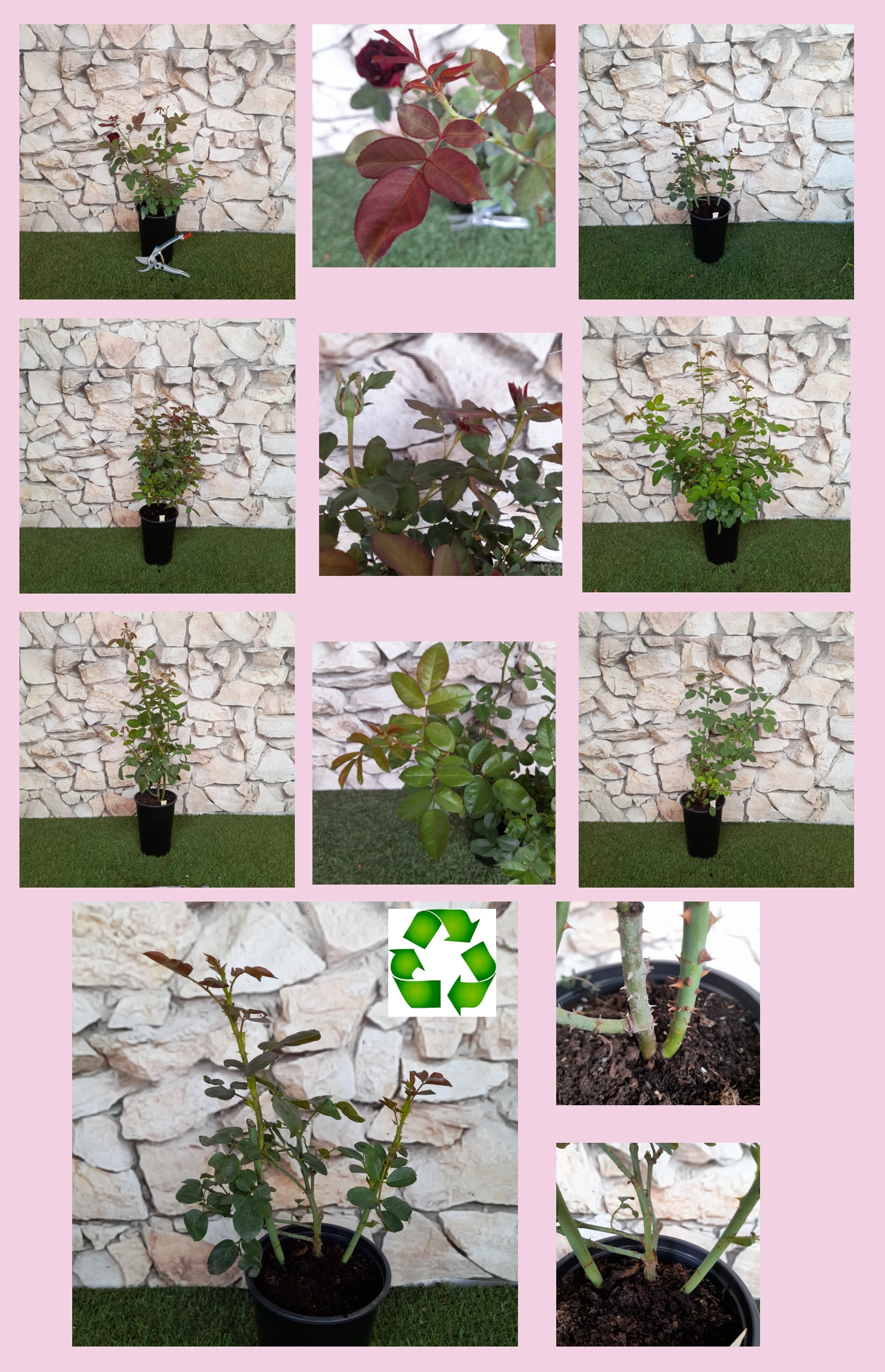
KIMONO – salmon-pink bedding floribunda rose - de Ruiter
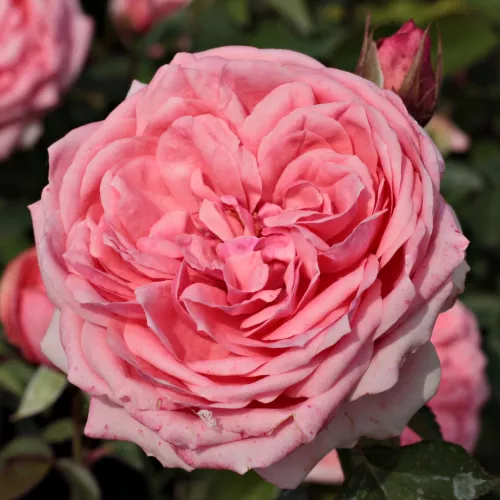
Imagine a narrow London front garden where rain has just washed the paving and a low, bushy rose glows in salmon-pink clusters against glossy foliage. Kimono has been delighting gardeners since 1961 with its reliable, repeat-flowering floribunda performance and calm, balanced look. Its almost thornless stems are easy to handle, while its compact, upright habit fits neatly into modest borders and urban beds that must cope with wet weather and heavy soil, yet still feel welcoming. Planted in our easy-to-handle own-root 2‑litre container, it settles in steadily: roots in year one, stronger shoots in year two, and full ornamental value by year three, building long-term character with minimal fuss. A medium, classic rosy fragrance completes the experience as you pass by on your everyday walk, and the medium self-cleaning habit means only occasional deadheading is needed to keep the planting looking well-kept. In small city front gardens or shared family spaces, this dependable, low-maintenance structure supports a soft, “girly” planting style without demanding expert care.
Usage options
| Target area | Reasoning |
|---|
| Front-garden bedding rows |
The bushy, upright habit and 75–105 cm height create a tidy, continuous line of colour along paths or low boundaries. In UK family gardens, this gives structure without overwhelming narrow spaces or windows, ideal for busy urban gardeners |
| Low flowering hedge |
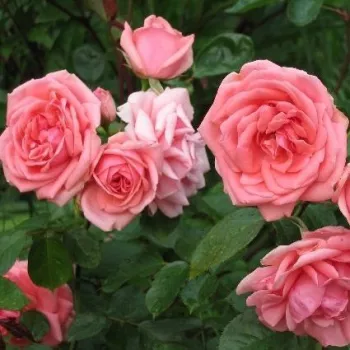
Regular clusters of very full blooms and dark green foliage form a soft, salmon-pink hedge at about knee to waist height. Planted at the recommended hedge spacing, it makes a gentle visual screen that suits small-family gardens |
| Mixed cottage-style border |
Its long season of repeat flowering blends well with perennials such as lady’s mantle or dwarf asters, providing a steady colour anchor. This helps less-experienced gardeners achieve a “put together” look over summer, reassuring beginner rose owners |
| Rain-tolerant urban planting strip |
Dense, glossy foliage and upright growth handle exposed, showery sites, working well where front gardens double as rainwater-absorbing borders beside pavements and drives. This supports sustainable drainage ideas for eco-conscious homeowners |
| Large container on balcony or patio |
In a 40–50 litre pot with good drainage, its compact, almost thornless framework and repeat-flowering clusters give months of colour near seating, without taking over the space. This is a practical way to grow roses for balcony and terrace users |
| Low-maintenance family flower bed |
Good resistance to black spot and powdery mildew, plus modest pruning needs, keep day-to-day care straightforward. Occasional checks for rust and light deadheading are usually enough to maintain a neat show, suiting time-poor households |
| Long-term structure in small gardens |
As an own-root plant, it regenerates well after pruning or winter damage and maintains a stable shape year after year, avoiding issues with weak graft unions. This offers durable value and reliability for practical garden planners |
| Classic scented walkway planting |
Medium-height, bushy bushes on each side of a path create a balanced corridor of warm salmon-pink blooms and medium, classic rosy scent, even in typical British humidity and wind after rain, enhancing everyday routines for scent-loving commuters |
Styling ideas
- Front-Garden Chic – Line a narrow London terrace front bed with Kimono, underplanting with Alchemilla mollis to soften the edge – ideal for style-conscious city homeowners
- Soft-Hedge Border – Plant a low hedge of Kimono along a front path, backed with dwarf asters to extend late-season interest – for families wanting gentle privacy
- Cottage-City Mix – Combine Kimono with pink lupins and lady’s mantle for a romantic, “girly” cottage feel in a compact space – perfect for first-time rose gardeners
- Balcony Focus – Grow a single Kimono in a 50-litre container with trailing herbs or nepeta at the rim – suited to balcony and patio dwellers
- Pathway Perfume – Alternate Kimono with low lavender or sage along a main route to the door – great for commuters who enjoy a scented welcome home
Technical cultivar profile
| Property | Data |
|---|
| Name and registration |
Floribunda bed rose, registered as ‘Kimono’, also traded as Kimono Bedding rose Kimono; ARS exhibition name Kimono, in the bedding rose collection and floribunda exhibition category. |
| Origin and breeding |
Bred by Gerrit de Ruiter in the Netherlands from ‘Cocorico’ × ‘Frau Anny Beaufays’, introduced and registered in 1961, first distributed by Horstmann & Co. in Germany the same year. |
| Awards and recognition |
Received the Royal National Rose Society Trial Ground Certificate in 1961, reflecting proven garden performance and ornamental value under independent UK trial conditions soon after introduction. |
| Growth and structural characteristics |
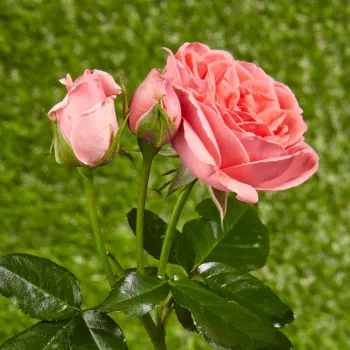
Bushy, upright floribunda rose, around 75–105 cm tall and 60–90 cm wide, with moderately dense, glossy dark green foliage and very few thorns, forming a manageable, compact shrub for beds and borders. |
| Flower morphology |
Medium-sized, cup-shaped clusters of very full, double blooms with more than 40 petals, repeat-flowering with generous second flushes, providing dense colour on each truss throughout the main season. |
| Colour data and phenology |
Warm salmon-pink blooms, RHS 48C outer and 48D inner, opening vivid then gradually fading to softer, pastel salmon and near-cream tones depending on temperature, with best saturation in cooler, duller weather. |
| Fragrance and aroma |
Medium-strength, classic rosy fragrance that is noticeable at close range along paths or seating areas, adding traditional scent to the otherwise modern, compact bedding and hedging uses of this variety. |
| Hip characteristics |
Occasional small spherical hips, about 8–12 mm across, in orange-red tones, may appear if spent flowers are left uncut, offering a subtle seasonal accent without significantly affecting flowering. |
| Resistance and winter hardiness |
Rated resistant to black spot and powdery mildew, with medium rust susceptibility; cold-hardy to approximately −21 to −18 °C (RHS H7, USDA 6b, Swedish zone 3) under typical garden conditions. |
| Horticultural recommendations |
Suited to beds, edging, hedges, parks and cutting; plant at 45–85 cm spacing depending on use, with 3.6–4.2 plants/m² for mass beds; prefers good drainage and benefits from light, regular deadheading. |
KIMONO offers compact structure, repeat salmon-pink flowering and low-maintenance disease resistance, with own-root durability that rewards patient gardeners seeking a dependable long-term bed or hedge rose.