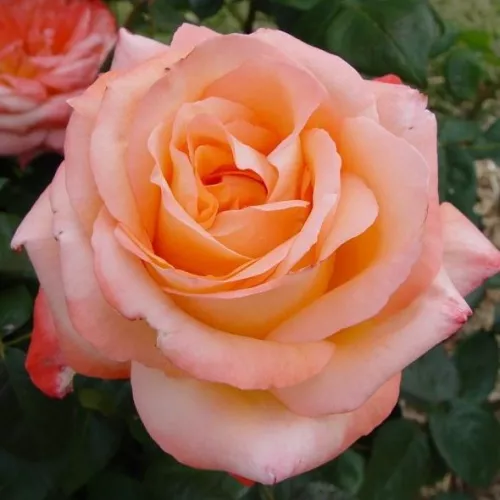
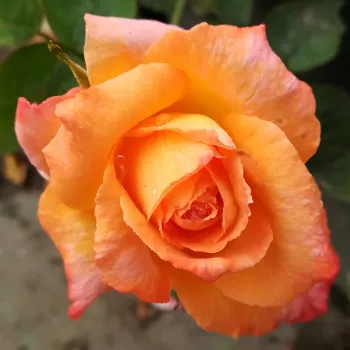
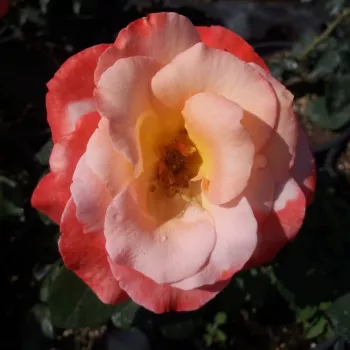
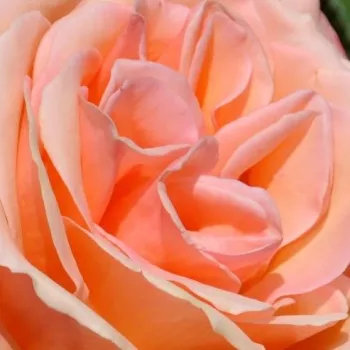
JOYFULNESS – apricot tea-hybrid rose – Tantau
Bring a sense of balance to a compact, rainwater-wise front garden with Joyfulness, a hybrid tea shaped for easy care and long-term structure, even where wind and showers meet heavy soils and need thoughtful drainage in town plots. Its medium, fruity fragrance lifts the air along pathways, while upright, sparsely thorned stems keep access simple by steps, bins or bikes. In its first year it concentrates on rooting, the second brings stronger shoots, and by the third the plant settles into dependable flowering that rewards modest, regular deadheading, particularly in small city borders and 40–50 litre containers.
Usage options
| Target area | Reasoning |
|---|
| London terraced-house front border |
The upright, hybrid tea growth makes Joyfulness ideal where space is narrow yet vertical impact is welcome, giving elegant, pastel blooms at eye level without overwhelming a small frontage, suiting the needs of the busy urban gardener. |
| Rainwater-aware clay or chalk soils |
Once established, its own-root system copes reliably with typical British wet spells followed by dry periods, provided you give decent drainage at planting, offering steady performance for the environmentally conscious homeowner. |
| Low-maintenance family display bed |
Moderate disease resistance and simple pruning keep routine tasks manageable, while remontant flowering offers colour from early summer onwards, fitting the schedule of the time-pressed family gardener. |
| Feature rose by front steps or doorway |
Medium-height, upright stems and medium, fruity fragrance create a welcoming accent near entrances without blocking views or paths, an attractive solution for the style-focused householder. |
| Large container on balcony or patio |
In a 40–50 litre pot with peat-free compost, Joyfulness forms a stable, own-root plant that responds well to regular watering, offering refined colour and scent for the small-space city gardener. |
| Cut flowers for the home |
Long, sparsely thorned stems with cupped, medium-high-centred blooms slip easily into vases, providing classic hybrid tea form and a fresh, fruity note for the home flower arranger. |
| Structured mixed border with perennials |
Its dark, slightly glossy foliage and pastel peach flowers pair well with cool-toned perennials, adding repeat vertical accents that frame softer planting for the design-conscious gardener. |
| Standard or focal-point planting |
Strong, upright growth and moderate height suit training as a standard or key focal shrub, keeping shape over many seasons with rejuvenation from the own-root base for the long-term planner. |
Styling ideas
- Pastel-approach – Underplant Joyfulness with lamb’s ear and Japanese sedge for a soft, textural pastel look that suits neat London front gardens – perfect for urban minimalists.
- Doorway-focus – Flank a front door with two large containers of Joyfulness and low evergreen euonymus to create a scented, symmetrical welcome – ideal for house-proud owners.
- Clay-balance – In heavier soils, mix in grit and compost and edge with nepeta or lavender, using the rose’s upright structure as a gentle focal point – suited to practical gardeners.
- Cutting-corner – Dedicate a sunny bed to Joyfulness and a few stems of sage and ornamental grasses, giving reliable stems for the vase – appealing to home arrangers.
- Standard-elegance – Train Joyfulness as a standard rose above a low carpet of thyme or sedum for a neat, raised canopy of colour – attractive to compact-garden planners.
Technical cultivar profile
| Parameter | Data |
|---|
| Name and registration |
Hybrid tea rose, registered as TANsinnroh, marketed as Joyfulness; ARS exhibition name Joyfulness; part of the Hybrid Tea commercial group for garden and cutting use. |
| Origin and breeding |
Bred by Mathias Tantau Jr. at Rosen Tantau, Germany, in 1961; registered 1984 and introduced after 1984, with parentage not recorded but selected for garden and exhibition performance. |
| Growth and structural characteristics |
Vigorous, upright bush 120–160 cm high and 100–140 cm wide, moderately dense dark green foliage with a slight gloss, and relatively few prickles for easier handling and maintenance. |
| Flower morphology |
Hybrid tea, double blooms with 26–39 petals, small solitary flowers in a cupped, distinctly medium-high-centred form, producing an abundant repeat flush after the first main flowering. |
| Colour data and phenology |
Soft peachy-yellow base with pale pink hues; buds warm peach with blush, opening to creamy peach with inner orange glow, fading toward creamy straw-yellow margins and soft pink centres. |
| Fragrance and aroma |
Medium-strength, clearly noticeable scent with a fresh, fruity character; sufficiently pronounced to enjoy along paths, terraces and cut stems indoors without becoming overpowering in small spaces. |
| Hip characteristics |
Hip set generally limited due to double flowers and regular pruning; when present, small 12–16 mm red, ellipsoid hips develop, adding modest late-season interest without heavy self-seeding. |
| Resistance and winter hardiness |
Hardy to about −21 to −18 °C (RHS H7, Swedish zone 3, USDA 6b); moderate disease resistance with good tolerance to powdery mildew and black spot, and moderate susceptibility to rust. |
| Horticultural recommendations |
Best in sunny positions; moderate maintenance with deadheading and occasional pest control, spacing 95–180 cm depending on use, with planting densities around 0.8–1.0 plants per m² in beds. |
JOYFULNESS – apricot tea-hybrid rose – Tantau offers upright structure, reliable repeat flowering and a medium, fruity fragrance on a durable own-root plant; a considered choice if you favour lasting beauty with modest care.