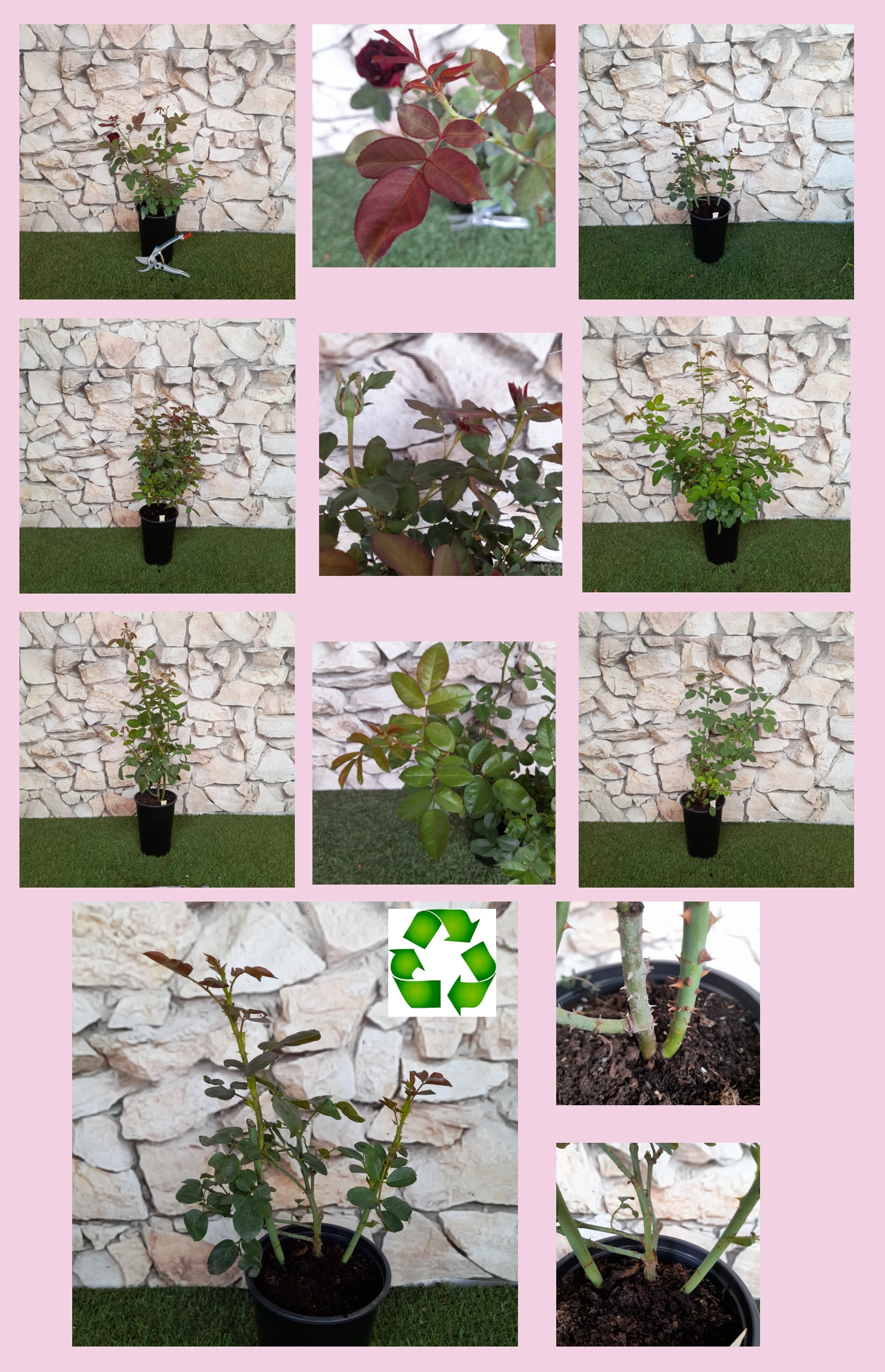
PANLAVRUG – pink hybrid tea rose - Panozzo
Imagine your London front garden after soft rain, when the pavements shine and this rose’s cup-shaped blooms catch the light in vivid pink and peach. In a modest space, PANLAVRUG offers balance between modern ease and traditional charm: its compact, upright habit fits neatly into narrow borders and pots, while dense, glossy foliage keeps the display looking lush even between flushes. Bred for resistance, it copes well with typical UK humidity and showers, easing worries about black spot or mildew in changeable weather and on heavier soil where drainage needs some attention. Repeating freely from early summer, this remontant flowering pattern delivers armfuls of long-stemmed blooms for cutting, especially when planted as a specimen near the door where you pass each day. As an own-root rose it offers reassuring longevity, quietly building underground strength for years of stable performance; roots establish in the first year, top growth fills out in the second, and by the third you enjoy full ornamental impact with very little extra effort. Ideal for rainwater-conscious, small-city gardens seeking sustainable pleasure from a single, reliable plant.
Usage options
| Target area |
Reasoning |
| Front-garden specimen by the doorstep |
Its compact, upright hybrid tea form makes PANLAVRUG a natural focal point beside a path or doorway, offering repeated flushes of full, magenta-pink blooms with peach centres from early summer onwards for busy urban homeowners seeking low-effort glamour front-garden owners |
| Small mixed border in a family garden |
The 75–105 cm height and dense, dark green foliage create a tidy backbone in a short border, pairing easily with perennials while leaving enough breathing space for children’s play areas in typical family gardens that need reliable structure without complex pruning family-garden planners |
| Cutting corner for home bouquets |
Large, very full, long-stemmed flowers are ideal for cutting, with a clearly noticeable fragrance and good repeat; planted at the back of a narrow border, PANLAVRUG turns spare corners into a steady supply of characterful, pink-toned stems for vases indoors home bouquet lovers |
| Low-maintenance rose bed in sunny aspect |
Good resistance to black spot, mildew and rust, combined with moderate heat tolerance, keeps maintenance low in sunny, exposed positions; a simple regime of watering in dry spells and light post-bloom deadheading is enough to maintain an orderly, floriferous display time-poor gardeners |
| Rainwater-conscious front garden re-design |
This own-root rose responds well to consistent moisture yet appreciates free-draining soil, making it easy to combine with permeable surfaces and simple drainage, supporting a front garden that manages rainfall better while still feeling decorative and welcoming sustainable-townhouse owners |
| Compact hedge or rhythm along a path |
At 50–70 cm spread and recommended 50–60 cm spacing, repeated planting forms a low, rhythmical line of colour; remontant flowering gives several waves of magenta-pink, helping to visually tidy driveways or paths while leaving light and sightlines open structure-focused designers |
| Feature rose in a large container |
Grown in a minimum 40–50 litre container with peat-free compost, its tidy habit, glossy foliage and repeat flowering create a strong vertical accent on balconies and patios, offering an elegant solution where ground planting is limited or paving dominates the space balcony and patio users |
| Long-term, low-intervention planting scheme |
As an own-root, premium-grade rose, PANLAVRUG is bred for long service: it can regenerate well from the base after harsh winters or pruning errors and will typically give stable ornamental value across many seasons with only light annual care once established long-view gardeners |
Styling ideas
- Townhouse Welcome – Plant a single PANLAVRUG by the front step, underplanted with low Nepeta and thyme, for a soft, scented welcome that stays tidy in narrow London terraces – ideal for style-conscious city homeowners.
- Rosy Ribbon – Line a short path with evenly spaced bushes, interplanting white Salvia nemorosa and honesty for a pastel ribbon effect that feels airy yet structured – suited to families wanting order without fuss.
- Peat-Free Pot – Use a 50-litre clay pot with peat-free compost, adding trailing ivy and dwarf lavender for contrast so the rose becomes a vertical accent on a paved patio – perfect for balcony and small-yard gardeners.
- Summer Cutting Patch – Group three plants in a sunny corner with oriental poppies and airy grasses, creating a simple cutting patch of magenta-pink blooms that refills through summer – good for home florists on a budget.
- Rainwise Front Border – Combine PANLAVRUG with gravel mulches, permeable paths and drought-tolerant perennials to soak up rainfall while keeping a classic rose highlight – aimed at eco-minded urban planners of small plots.
Technical cultivar profile
| Property |
Data |
| Name and registration |
Hybrid tea rose; registered as Panlavrug, trade name PANLAVRUG – pink hybrid tea rose - Panozzo; part of the hybrid tea group for garden and cutting use. |
| Origin and breeding |
Hybrid tea of unknown parentage, bred by Bernard Panozzo and introduced in 2011; distributed commercially in Europe via PhenoGeno Roses and offered here as own-root stock. |
| Growth and structural characteristics |
Compact, upright shrub rose, typically 75–105 cm tall and 50–70 cm wide, with dense, dark green, glossy foliage and moderate prickliness; prefers a sunny, open planting position. |
| Flower morphology |
Large, very full, cup-shaped blooms with over 40 petals, carried mainly in clusters; remontant flowering habit provides an abundant second flush after the main early-summer display. |
| Colour data and phenology |
Deep pink buds open to vivid magenta-pink with a peach-toned centre (RHS 53C outer, 25B inner), gradually fading to light pink with peach hints; colour persistence is moderate in strong sun. |
| Fragrance and aroma |
Medium-strength, clearly noticeable scent typical of hybrid tea roses; fragrance is detectable at close range and suited to planting near seating areas, entrances or frequent walk-by routes. |
| Hip characteristics |
Occasional, small spherical hips may form, red and around 10–14 mm in diameter; these are mainly ornamental and do not significantly affect flowering performance during the season. |
| Resistance and winter hardiness |
Shows resistance to black spot, mildew and rust; winter-hardy roughly to −21 to −18 °C (RHS H7, USDA 6b), suitable for much of the UK with routine mulching and watering in dry spells. |
| Horticultural recommendations |
Best in full sun with well-drained soil; allow 50–60 cm between plants, water in prolonged drought, deadhead for repeat, and use a minimum 40–50 litre container when grown in pots. |
PANLAVRUG offers compact, repeat flowering with reliable disease resistance and long own-root lifespan, making it a thoughtful choice for an easy-care, long-term rose in your garden.