JIVE ™ – red climbing rose - Olesen & Olesen
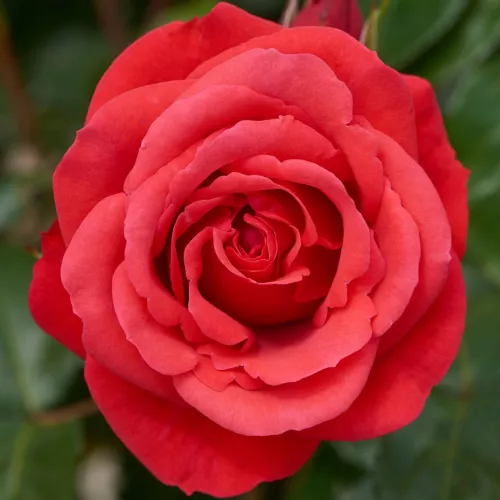
Step out of your front door into a post-rain fragrance of vivid carmine-red blooms with JIVE ™, a compact Courtyard® climber designed for relaxed, low-fuss gardens. Its semi-double, open flowers are naturally helpful to visiting pollinators, while the moderate height and neat spread make it easy to train on a London terrace or small front fence, even where windy, rainy weather and heavier soils regularly test less robust roses. Own-root reliability means long-term longevity and steady regeneration after pruning or damage, building from strong roots in year one, confident framework in year two and full ornamental impact by year three. In partial shade it still repeats generously, giving flush after flush of colour from mid-season onwards, with light, discreet scent that suits seating areas and doors. In larger containers of at least 40–50 litres it provides vertical structure and a sustainable alternative to short-lived bedding, bringing movement, balance and a quietly joyful, “girly” courtyard feel to everyday city life.
Usage options
| Target area | Reasoning |
|---|
| Small urban front garden arch or porch |
Moderate height and spread make JIVE ™ easy to train over a simple arch, railing or porch in a standard terraced front garden, without overwhelming the space or neighbouring paths; ideal for busy urban garden owners |
| Rainwater-conscious terrace or patio planting |
Performs reliably where regular rain and wind test other roses, suiting permeable paving, rain-fed barrels and simple soakaway beds that help manage wetter conditions in compact city plots; ideal for sustainability-focused households |
| Beginner-friendly vertical accent by a fence |
Climbing habit with medium maintenance needs gives beginners a manageable introduction to training roses, with forgiving own-root regrowth if pruning is hesitant or a stem is damaged; ideal for new hobby gardeners |
| Courtyard seating area or balcony in large container |
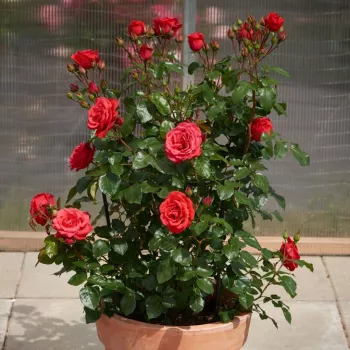
Suited to 40–50 litre or larger containers, where its light fragrance and partial shade tolerance make it a comfortable companion for seating areas, without overpowering small balconies or courtyards; ideal for apartment and flat residents |
| Pollinator-supportive front garden framework |
Semi-double, open blooms offer moderately accessible nectar and pollen through repeat flowering, adding vertical interest while giving useful foraging stops in a mixed urban planting; ideal for wildlife-aware families |
| Long-term feature for compact family gardens |
Own-root form establishes gradually into a durable framework, helping the plant recover from winter, pruning or weather damage and maintain a stable display over many years of family use; ideal for long-term homeowners |
| Part-shaded side path or north-east wall |
Tolerates partial shade, so it will still flower and colour up along side passages or front aspects that only receive morning or late-afternoon sun, keeping narrow access routes welcoming; ideal for space-conscious households |
| Colour-strong “girly” entrance with grasses and perennials |
Continuously shifting red-to-warm-pink blooms pair well with airy grasses and aromatic herbs, creating a playful yet balanced entrance that feels soft, modern and easy to look after; ideal for style-led city gardeners |
Styling ideas
- CITY-ARCH – Train JIVE ™ over a slim metal arch with lavender and nepeta beneath for a soft, scented tunnel that stays manageable in a narrow front garden – perfect for design-aware beginners.
- RAINFALL-RIBBON – Plant along a gravel strip that channels roof run-off, interwoven with low sage and thyme, to turn practical drainage into an attractive, flower-rich feature – ideal for sustainability-focused owners.
- PINK-PORCH – Tie stems to a porch post with underplanting of pale pink hardy geraniums, echoing the rose’s softer faded tones for a “girly” yet grown-up entrance – suited to busy family homes.
- COURTYARD-POT – Grow in a 50-litre clay pot with trailing nepeta and heuchera around the base for layered colour and structure on a small paved terrace – great for balcony and patio gardeners.
- GRASSY-GLOW – Combine JIVE ™ on a fence with switchgrass and compact phormium to contrast its vivid blooms against bronzy foliage and movement in the breeze – ideal for contemporary urban schemes.
Technical cultivar profile
| Property | Data |
|---|
| Name and registration |
Large-flowered Courtyard® climber registered as POUlyc009, marketed as Jive ™ Courtyard® POUlyc009; ARS exhibition name ‘Jive’, a reference to lively, dance-like colour and repeat bloom. |
| Origin and breeding |
Bred in Denmark in 2003 by L. Pernille and Mogens N. Olesen for Poulsen Roser A/S; parentage unknown × ‘POUlket’; registered 2004 and introduced internationally after 2004 as a modern climbing rose. |
| Awards and recognition |
Gold Medal at Buenos Aires International Rose Trials 2006; Gold Medal plus Société Genevoise d’Horticulture special prize at Geneva Trials 2007; Silver Medal at the Inagro vzw International Rose Competition. |
| Growth and structural characteristics |
Medium-sized climber 150–260 cm high with 100–180 cm spread, moderately thorny canes and dark glossy foliage of medium density; forms an upright, trainable framework suitable for arches, fences and large containers. |
| Flower morphology |
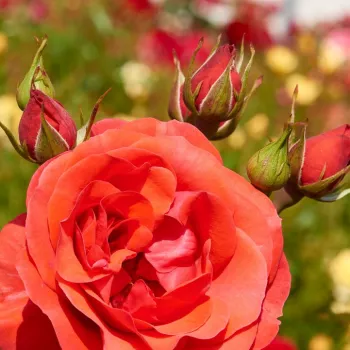
Semi-double, cup-shaped blooms with 13–25 petals, large-flowered clusters on short laterals; remontant, with a generous second flush after initial peak, suitable for both garden display and informal cutting from mid-season onward. |
| Colour data and phenology |
Vivid carmine-red flowers (RHS 53A outer, 53B inner) opening from deep buds, later softening to orangey pink with paler margins and fine veining; colour is changeable and eye-catching but not strongly fade resistant. |
| Fragrance and aroma |
Light, discreet fragrance with an elegant classic rose character, designed more for subtle background scent than for powerful perfume; suitable near doors and seating where strong fragrance might be overwhelming. |
| Hip characteristics |
Forms small decorative hips in moderate quantities, generally 0–4 mm across; hips are not a dominant ornamental feature but may add a fine-textured, wildlife-friendly accent if spent blooms are left untrimmed. |
| Resistance and winter hardiness |
Hardy to around -21 to -18 °C (RHS H7, Swedish zone 3, USDA 6b) with medium overall disease resistance; notably resistant to powdery mildew and black spot, with rust performance average, requiring only occasional treatments. |
| Horticultural recommendations |
Best on well-drained soil with regular watering in prolonged dry spells; suitable for beds, terraces, large containers and cutting; plant 145–250 cm apart depending on use, and provide support plus light annual pruning. |
JIVE ™ offers compact climbing colour, moderate pollinator appeal and long-lived own-root resilience, making it a thoughtful choice for relaxed, sustainable family gardens and terraces you plan to enjoy for many years.