JEAN DE LUXEMBOURG, ROI DE BOHÊME – peach park rose - Ducher
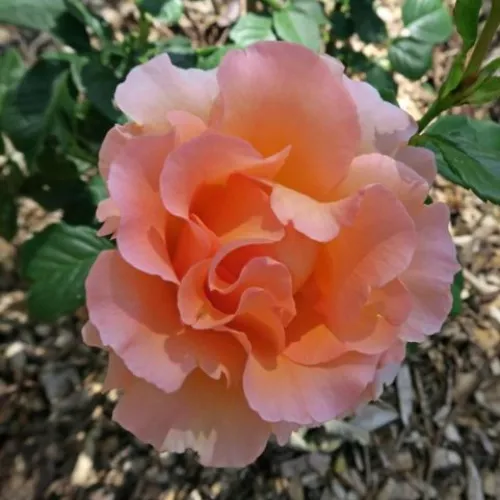
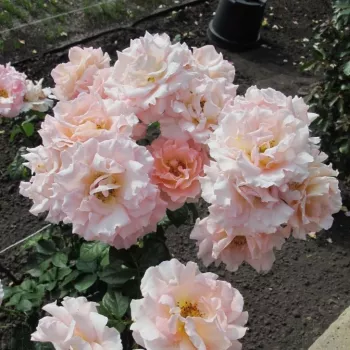
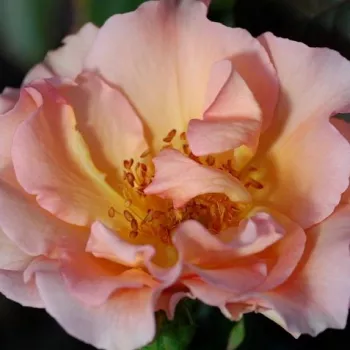
Immerse yourself in the peach softness of ‘Jean de Luxembourg, roi de Bohême’, a reliably upright shrub rose that feels perfectly at home in a London front garden, where it copes calmly with blustery showers and changeable conditions, offering reassuring performance even on heavier soils and exposed plots. Its dense, glossy foliage frames clusters of fragrant blooms that repeat generously from early summer well into autumn, creating a long, relaxed flowering season. As an own-root rose, it is quietly resilient, persisting and recovering well over the years without graft-union worries, ideal when you want low-input planting that still looks considered. In a generous 40–50 litre container or in the ground, this shrub settles in steadily, with roots first, then shoots, then full garden impact building naturally over three seasons. The double, open cups are softly romantic yet practical, with accessible stamens that are welcome to visiting bees once the flowers mature. Their colour shift from rich peach-orange to rosy-cream keeps the display varied, while the tall, structural habit creates a quietly confident backdrop for lavender, nepeta or sage in a sustainable, rainwater-conscious setting.
Usage options
| Target area | Reasoning |
|---|
| Small London front garden hedge |
This upright shrub forms a dense, leafy screen, giving gentle privacy without overpowering a compact frontage. Medium maintenance and own-root durability make it easy to keep tidy over time for the busy terraced‑house gardener. |
| Rainwater‑friendly boundary planting |
Planted in improved heavy clay with good drainage, its strong root system and H7 hardiness cope well with wet, wind‑exposed spots where rain from roofs and paving naturally collects, supporting low‑input, resilient schemes for the climate‑aware homeowner. |
| Feature shrub in mixed border |
The tall, upright habit anchors a border, with glossy dark foliage setting off perennials such as lavender, nepeta and sage. Repeating peach‑pink flowers add structure and seasonal rhythm for the design‑minded hobby gardener. |
| Large container on balcony or patio |
In a 40–50 litre pot with peat‑free compost, this shrub rose offers long‑season scent and colour without needing intricate pruning. Own‑root growth means it rebounds well if weather or watering are occasionally imperfect for the urban balcony owner. |
| “Girly” entrance planting with soft colours |
The romantic peach‑to‑rosy‑cream gradient pairs beautifully with lilac, blue and cream companions, giving a welcoming, feminine feel to a small front garden that stays tasteful rather than showy for the style‑conscious resident. |
| Lightly structured park‑style group |
At recommended spacings, several plants create a loose, naturalistic shrub drift, offering repeating blooms and fragrance with only moderate care, ideal where you want a park‑like feel in an ordinary plot for the relaxed family gardener. |
| Pollinator‑supportive flower strip |
The double yet open form, with delayed but reachable stamens, offers modest forage across a long season when combined with other bee plants, adding both scent and ecological value for the pollinator‑minded beginner. |
| Long‑term, low‑fuss specimen shrub |
Own‑root planting supports a long lifespan and steady regeneration, so once established it maintains its ornamental form without complex renovation pruning, settling more deeply into the garden character each year for the time‑pressed homeowner. |
Styling ideas
- Peach‑and‑lavender drift – Underplant with lavender and nepeta to echo the soft peach tones and provide movement and pollinator interest – ideal for a relaxed, fragrant family front garden.
- Romantic entrance pair – Flank a path or gate with two large containers, each with this rose and trailing thyme, for scented structure – suited to small, “girly” London terraces.
- Soft sunset border – Combine with dusky salvias, pale grasses and cream perennials to create a gentle peach‑and‑gold dusk palette – appealing to colour‑sensitive home stylists.
- Sustainable shrub rhythm – Repeat this rose at intervals along a boundary with rain‑tolerant perennials, using collected rainwater for irrigation – for eco‑focused urban gardeners.
- Perfumed reading corner – Position near a favourite bench with low catmint and agastache, so repeat flowering and strong scent frame a quiet retreat – perfect for contemplative evening garden users.
Technical cultivar profile
| Parameter | Data |
|---|
| Name and registration |
Shrub, Hybrid rugosa park rose; registered as DUCjdl, marketed as ‘Jean de Luxembourg, roi de Bohême’, with ARS exhibition name ‘Jean de Bohême’ for show and collection use. |
| Origin and breeding |
Bred by Fabien Ducher at Roseraie Ducher, France, introduced and registered in 2010. Parentage is unknown; developed as a robust park and shrub rose for structural planting. |
| Growth and structural characteristics |
Upright shrub 120–190 cm tall and 100–150 cm wide, with dense, glossy dark green foliage and strong thorniness. Forms a substantial, leafy framework suitable for hedges or specimen use. |
| Flower morphology |
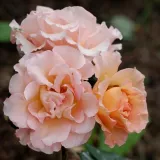
Medium, double, cup‑shaped flowers with 26–30 petals, borne in clusters. Remontant, with an especially abundant second flush after the main early‑summer bloom, extending seasonal display. |
| Colour data and phenology |
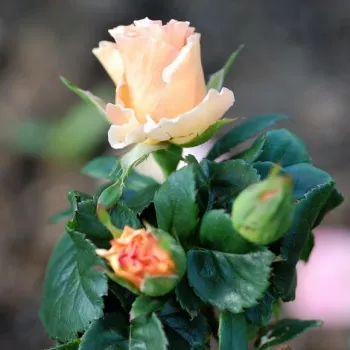
Soft peach with pink‑orange tones; buds deep peach‑pink. Opens rich peach‑orange, then lightens to peach‑pink and finally rosy‑cream with creamy outer petals, showing good colour retention in garden conditions. |
| Fragrance and aroma |
Strong, long‑lasting old‑rose fragrance, noticeable around the plant in still air. Scent profile suits seating areas, entrances and paths where repeated flowering extends aromatic interest. |
| Hip characteristics |
Rosehip set is generally low due to double flowers; occasional spherical, orange‑red hips 18–26 mm may form, adding modest late‑season interest without prolific seeding. |
| Resistance and winter hardiness |
Rated to approximately −26 to −23 °C (H7, USDA 5b, Swedish zone 4). Disease resistance moderate for powdery mildew, black spot and rust; benefits from good air flow and standard preventive care. |
| Horticultural recommendations |
Best with 110–180 cm spacing depending on hedge or specimen use. Plant in fertile, well‑drained soil; suitable for urban green spaces, parks and home gardens with medium maintenance expectations. |
Jean de Luxembourg, roi de Bohême combines long-season scent, romantic peach flowers and upright structure with the dependable longevity of an own-root shrub rose; an excellent choice if you are planning a lasting feature.