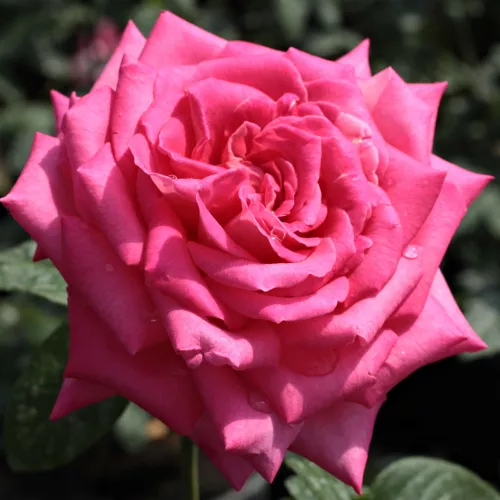
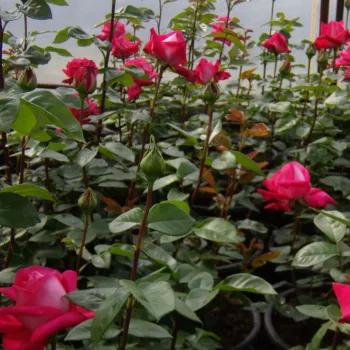
ISABEL DE ORTIZ® – pink hybrid tea rose – Kordes
Imagine brushing past tall, elegant stems after rain, each carrying a perfumed high‑centred bloom in luminous deep pink with a silvery sheen. ISABEL DE ORTIZ® is a classic hybrid tea shaped for both vases and front gardens, thriving even where soil stays heavy after showers and helping you manage wet, compact ground after prolonged rain and wind. Bred by Kordes, it offers reassuringly strong disease resistance and a medium, clearly noticeable fragrance that suits everyday family life. Its upright habit and medium‑large flowers create a clear vertical accent in small urban spaces, while the own‑root form supports a long‑lived, regenerating structure that settles in gently: roots in year one, growing body in year two, and full garden impact by year three.
Usage options
| Target area |
Reasoning |
| Feature rose for a London terraced-house front garden |
The upright, medium‑tall habit and classic hybrid tea form create an immediate focal point in a narrow front border without overwhelming the space, giving structure and a sense of order that suits neat urban approaches, appealing to the design-conscious homeowner. |
| Easy-care flowering accent in small family gardens |
Strong resistance to black spot and powdery mildew keeps foliage healthy with minimal spraying, so the plant stays attractive even in changeable British summers and you spend less time troubleshooting, ideal for the low-maintenance gardener. |
| Cutting patch or mixed cutting-and-display bed |
Large, high‑centred blooms on straight, upright stems lend themselves to home cutting, allowing you to bring classic, long‑stemmed pink roses indoors regularly through the season, rewarding the home flower arranger. |
| Specimen rose in a rainwater-focused, clay-soil front plot |
The vigorous root system of an own‑root plant establishes steadily and copes well once drainage is improved, complementing raingarden-style beds that collect roof run‑off and suiting the wet, compact ground after prolonged rain and wind realities faced by the climate-aware city gardener. |
| Formal rose bed with simple companion planting |
The uniform height and upright shape make spacing straightforward; mass planting at recommended distances forms a calm, repeated rhythm in front gardens, working well with low perennials and lavender edging for the structured-planting enthusiast. |
| Single accent rose in a large patio container |
In a 40–50 litre pot with peat-free compost and regular watering, this variety becomes a vertical statement beside a front door or balcony screen, with its glossy dark foliage setting off the blooms for the space-limited balcony owner. |
| Long-season focal point among shrubs and evergreens |
Reliable repeat flowering, with a good second flush, threads colour through quieter periods in mixed borders, while the medium fragrance adds interest near seating areas, suiting the relaxed weekend gardener. |
| Low-intervention rose choice for beginners |
Own‑root plants recover more easily from winter damage or pruning errors, gradually building a stable framework over the years, so occasional mistakes are forgiven and confidence grows naturally for the first-time rose grower. |
Styling ideas
- Front-door elegance – Plant ISABEL DE ORTIZ® as a single specimen by the path, underplanted with low nepeta to soften edges and highlight the tall, formal blooms – for the house-proud urban owner.
- Pastel borders – Combine with pale lavender, white sage and soft grasses, letting the deep pink flowers act as accents among airy textures – for gardeners who enjoy calm, feminine colour schemes.
- Cutting corner – Line up several plants in a sunny side bed with simple edging, allocating this strip purely for picking, so the main borders remain undisturbed – for those who love home-grown bouquets.
- Clay-buster bed – Improve a heavy clay front garden with grit and compost, then mix this rose with hardy perennials such as geraniums to stabilise the soil and create a resilient display – for practical, sustainability-minded planters.
- Patio statement – Grow one plant in a 50 litre container with peat-free compost and a gravel mulch, pairing it with dwarf lavender around the rim for fragrance and structure – for balcony and courtyard dwellers.
Technical cultivar profile
| Parameter |
Data |
| Name and registration |
ISABEL DE ORTIZ® hybrid tea rose (Kordes); ARS exhibition name: Isabel de Ortiz; group: Hybrid Tea; introduced 1962; RNRS registration number 723; own-root, consumer garden form. |
| Origin and breeding |
Bred by Reimer Kordes, W. Kordes’ Söhne, Germany, before 1961; parentage Peace × Perfecta; first distributed by W. Kordes’ Söhne; classic cut-flower type adapted here for garden use. |
| Awards and recognition |
Madrid International Rose Competition Gold Medal 1961; RNRS Trial Ground Certificate 1961; RNRS Gold Medal 1962, confirming proven garden performance and long-standing horticultural merit. |
| Growth and structural characteristics |
Upright bush 100–140 cm tall, 70–100 cm spread; moderately dense, glossy dark green foliage; moderately thorny stems; weak self-cleaning, so spent blooms benefit from regular deadheading. |
| Flower morphology |
Hybrid tea flowers, large (approx. 2.75–3.95 in), double with 26–39 petals; high-centred, pointed buds; mainly solitary blooms; good remontancy with a strong second flush in suitable conditions. |
| Colour data and phenology |
Deep pink petals with silvery-pink reverse; ARS pb, RHS 62C outer, 155D inner; colour softens to silvery pastels as flowers age; even full-bloom colour with medium retention before petal drop. |
| Fragrance and aroma |
Medium-strength fragrance, clearly noticeable at close range; pleasant, harmonious character typical of classic garden hybrid teas, adding sensory value near entrances, pathways and seating spaces. |
| Hip characteristics |
Hip set generally low because of double blooms; occasional ovoid red hips 10–15 mm in diameter may form, adding minor seasonal interest in late season without being a primary feature. |
| Resistance and winter hardiness |
Rated resistant to powdery mildew and black spot, moderate against rust; winter hard to approximately −21 to −18 °C (RHS H7, USDA 6b, Swedish Zone 3) with typical garden protection as needed. |
| Horticultural recommendations |
Best in full sun with improved drainage, especially on clay or chalk; prefers regular watering in drought; plant 50–100 cm apart depending on use; respond to deadheading and balanced spring feeding. |
ISABEL DE ORTIZ® offers classic long-stemmed pink blooms, strong disease resistance and reliable repeat flowering on a durable own-root framework, a thoughtful choice if you would like a graceful yet undemanding garden rose.