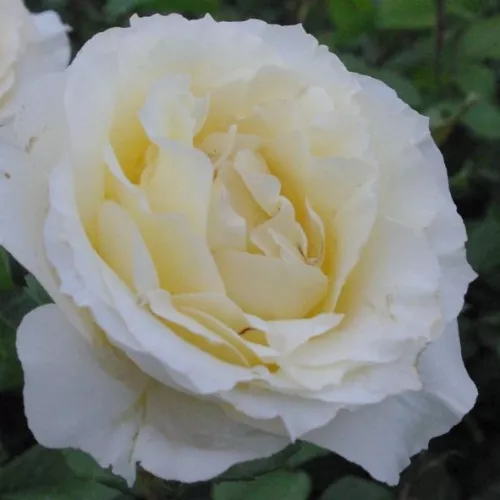
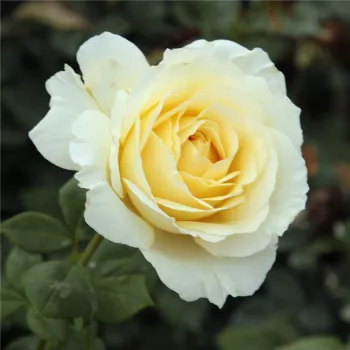
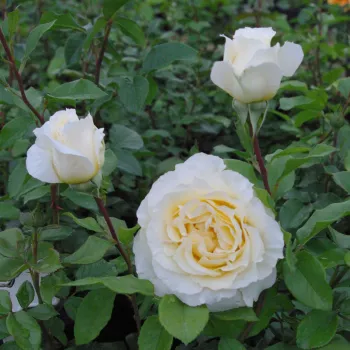
IRIS HONEY – cream-coloured hybrid tea rose
With its serene cream blooms and upright habit, IRIS HONEY brings a sense of balance to compact front gardens and narrow borders, even where heavy soil needs thoughtful drainage after rain. This hybrid tea offers reliably remontant flowering from summer into autumn, producing elegant, ball-shaped blooms ideal for cutting without demanding complex care. Grown on its own roots for long lifespan, it establishes steadily and stays true to type, regenerating well after pruning or weather damage. In a London terrace or small urban plot, IRIS HONEY suits low-input, low-chemical planting schemes that feel quietly sustainable over many seasons. Once planted, the focus is on simple watering and light feeding, leaving its good disease resistance and sturdy structure to do most of the work. In a large 40–50 litre container or in the ground, you can look forward to the classic hybrid tea shape, mild rosy fragrance, and dense, matt foliage forming a calm, tidy backdrop. Expect roots to settle in the first year, stronger shoots in the second, and full ornamental value by the third year as this rose becomes a reliable garden feature.
Usage options
| Target area | Reasoning |
|---|
| Front garden specimen for London terraces |
The upright, bushy shape and medium height make IRIS HONEY a natural focal point beside a front door or bay window, without overwhelming the space; its calm cream colour suits brickwork and railings, ideal for the busy homeowner. |
| Low-care family border in heavy clay |
This rose copes well in typical UK garden soils when given basic drainage, pairing its disease resistance with modest maintenance so you can enjoy flowers without frequent spraying, perfect for the time-pressed hobby-gardener. |
| Cutting patch for soft cream flowers |
Hybrid tea, ball-shaped blooms on upright stems are well suited to cutting for jugs and vases, and the mild rosy fragrance is pleasant indoors without dominating, attractive for the style-conscious flower-lover. |
| Rainwater-friendly front garden design |
Planted in permeable, mulched beds with companions like salvia and yarrow, IRIS HONEY works in schemes that slow and use rainfall rather than shed it, aligning with discreet, sustainable choices valued by the urban gardener. |
| Own-root rose for long-term planting |
As an own-root shrub, this variety avoids issues of failing grafts, regrows reliably from the base, and maintains its ornamental character over many years, a reassuring investment for the practical planner. |
| Large container on balcony or patio |
In a 40–50 litre peat-free container, roots have space to develop and support regular flowering, while the bushy form remains compact enough for balconies and small patios, suiting the space-limited city-dweller. |
| Low-intervention, low-chemical planting scheme |
Good resistance to black spot, mildew and rust supports a reduced-spray approach, letting you combine IRIS HONEY with nectar-rich perennials in a breathing-garden concept appealing to the environmentally aware beginner. |
| Structured mixed border backbone |
The dense, matt, light-green foliage forms a tidy backdrop for perennials, and its season-long repeat bloom adds continuity in borders where coastal rain and wind require resilient structure, appreciated by the design-focused gardener. |
Styling ideas
- Terrace-Classical – Plant a single IRIS HONEY by a front step with box or yew for structure, creating a calm, elegant welcome – ideal for homeowners wanting understated kerb appeal.
- Soft-Pastel – Combine with lavender, nepeta and pale yarrow for a gauzy, romantic border that flowers for months – suited to beginners seeking an easy yet refined look.
- Urban-Container – Grow in a 40–50 litre pot with trailing thyme and ornamental grasses for movement and texture – perfect for balcony and patio gardeners with limited space.
- Cutting-Row – Line a sunny path with evenly spaced plants to create a small cutting garden of uniform cream blooms – appealing to home florists who like simple, reliable stems.
- Rain-Garden – Set IRIS HONEY in a slightly raised bed with salvia and drought-tolerant perennials, using mulch and permeable surfaces around it – for eco-minded urban owners managing runoff gracefully.
Technical cultivar profile
| Parameter | Data |
|---|
| Name and registration |
IRIS HONEY is a cream-coloured Hybrid Tea rose marketed as a garden and cut-flower variety; formal registration data and exhibition names are currently unavailable or not recorded. |
| Origin and breeding |
The exact breeder, year of origin and parentage are unknown; this cultivar is circulated primarily through garden trade channels rather than documented breeding programmes or show-focused introductions. |
| Growth and structural characteristics |
Forms an upright, bushy shrub around 95–125 cm high and 80–110 cm wide, with dense, matt, light-green foliage and moderate prickles, creating a tidy, medium-scale presence in borders or containers. |
| Flower morphology |
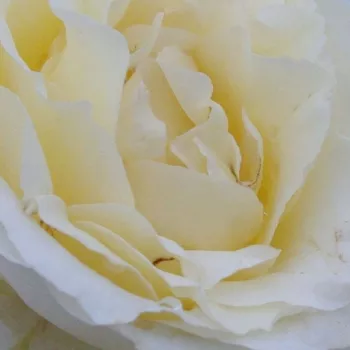
Produces medium-sized, double flowers with approximately 26–39 petals, carried mostly singly on stems; blooms have a ball to pompon form and repeat well through the season with a strong second flush. |
| Colour data and phenology |
Flowers open warm butter-yellow with lemon hints, then settle to soft cream; colour lightens gently to creamy white with slight translucency, maintaining an overall delicate, even tone in full bloom. |
| Fragrance and aroma |
The scent has a gentle, rosy character noticeable only at close range, offering a subtle fragrance that enhances intimate garden spaces or cut stems without overwhelming nearby seating or indoor rooms. |
| Hip characteristics |
Occasionally produces small, rounded rose hips around 10–16 mm across, adding modest late-season interest without significantly affecting flowering performance or requiring additional maintenance in family gardens. |
| Resistance and winter hardiness |
Shows good resistance to key fungal diseases, including black spot, powdery mildew and rust, and is hardy to approximately −26 to −23 °C (RHS H7), suitable for most UK and similar temperate climates. |
| Horticultural recommendations |
Best in sunny borders or as a specimen at 50–100 cm spacing, or a 40–50 litre container; maintenance is light, with routine pruning, feeding and watering sufficient for reliable repeat flowering. |
IRIS HONEY offers season-long cream blooms, low-intervention reliability and a long-lived own-root habit that settles in for years of quiet structure, making it a thoughtful choice for relaxed, sustainable gardens.