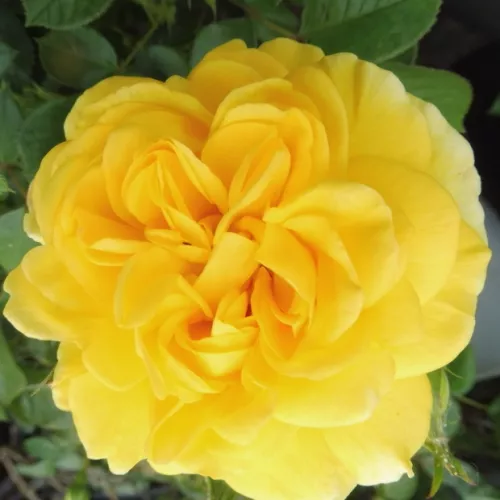
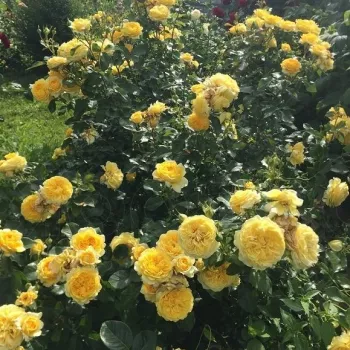
CHEERFULNESS – apricot bedding floribunda rose
CHEERFULNESS brings an easy sense of balance to compact urban spaces, thriving in typical British conditions where showers and breezes are frequent yet summers grow steadily warmer and drier. Its clusters of warm apricot rosettes open in waves from early summer, fading to creamy, light-catching tones that keep a small front garden feeling luminous and welcoming from the pavement. On its own roots it builds quietly reliable structure, settling in with strong vitality below ground so that, over the first three seasons, roots establish, then shoots fill out, before the rose reaches its full ornamental expression. Glossy foliage stays attractively healthy with minimal intervention, while natural self-cleaning keeps borders looking orderly even when you are busy. In containers or beds, its bushy habit is wonderfully compact, ideal for narrow London front gardens, rainwater-fed planters and sustainable edging. With medium maintenance needs and good flowering continuity, CHEERFULNESS offers reassuringly durable, long-lived colour that fits calmly into an everyday family garden rhythm.
Usage options
| Target area | Reasoning |
|---|
| Front-garden bedding ribbons |
The bushy, floribunda habit produces generous clusters along a low hedge line, giving strong colour from the street side without blocking light into the house, and staying visually tidy through good self‑cleaning – ideal for the busy urban gardener |
| Compact specimen by the front door |
Planted as a single shrub at 100 cm spacing, CHEERFULNESS forms a rounded, welcoming focal point, its apricot-to-cream colour shift softening brick and stone while maintaining presence across the season – perfect for the style-conscious homeowner |
| Rainwater-fed patio container |
In a 40–50 litre peat-free container with good drainage, this variety responds well to regular watering with collected rain, offering reliable repeat flushes and stable structure without frequent repotting – designed for the sustainability-minded city dweller |
| Low-maintenance family border |
Medium maintenance needs, natural self-cleaning and medium disease resistance mean less deadheading and spraying, yet steady flowering, so borders remain attractive even when household routines are busy – well suited to the time-pressed family gardener |
| Mixed planting with perennials |
The warm apricot rosettes pair beautifully with lavender, sage or nepeta, and with airy perennials such as verbena or campanula, creating a long-season, textural planting that looks designed but is easy to manage – appealing for the informal cottage-style enthusiast |
| Edging for narrow terraced-house paths |
Its compact height and 65–95 cm spread define narrow paths without overwhelming them, while the soft colouring keeps the space light and calm, echoing the mood of a gentle post‑rain walk – an asset for the small-space front-garden owner |
| Small group or informal hedge |
Planted at 50–60 cm intervals, groups quickly read as a continuous band of colour, making the most of limited footage and providing structure that will improve year on year as the own‑root plants mature – ideal for the long-term planner |
| Feature rose in sustainable urban schemes |
Though primarily ornamental rather than pollinator-led, its long flowering season and durable own‑root framework contribute consistent colour and structure in schemes that also include pollinator plants, coping well with typical UK rain and wind – valuable to the eco-aware project gardener |
Styling ideas
- Terrace-Border Calm – Line a narrow front path with CHEERFULNESS and soft blue nepeta, letting the compact, self-cleaning shrubs define the route – ideal for those wanting order with minimal clipping.
- Apricot-Glow Pot – Plant one shrub in a 50 litre clay container with trailing thyme and use stored rainwater for irrigation – perfect for balcony or patio gardeners seeking durable structure and gentle colour.
- Soft-Hedge Harmony – Create a low hedge at 50 cm spacing, backed by tall verbena, for a light, semi-transparent screen that feels calm rather than imposing – suited to families sharing boundaries in close-knit streets.
- Cottage-Stripe Mix – Combine CHEERFULNESS with oxeye daisies and campanula in a sunny strip bed for a relaxed, meadow-like edge that still looks intentional – appealing to those who like romantic, unfussy planting.
- Doorway-Focus – Flank a front step with two large containers of CHEERFULNESS underplanted with silver sage, using their stable, year-on-year framework as a constant welcome – ideal for homeowners wanting easy, lasting impact.
Technical cultivar profile
| Parameter | Data |
|---|
| Name and registration |
CHEERFULNESS – apricot bedding floribunda rose, commercial bed rose, shrub-type floribunda; current trade name Cheerfulness Bedding rose pharmaROSA®, registered and marketed for garden use. |
| Origin and breeding |
Originating in Germany and discovered in 2008, with parentage unknown; introduced by PharmaRosa® Ltd. in 2015 as an own-root, container-grown garden rose for general ornamental planting. |
| Awards and recognition |
Recognised at European trials: Baden-Baden City of Zweibrücken Award 2015, Rose of Madrid 2015 and 1st Silver Medal 2015, confirming strong garden and landscape performance. |
| Growth and structural characteristics |
Bushy shrub rose, approximately 100–140 cm high and 65–95 cm wide, with dense mid-green glossy foliage and moderate prickles; forms a stable, rounded structure well suited to bedding and small hedges. |
| Flower morphology |
Medium-sized, very double rosette blooms with 40+ petals, borne in clusters on floribunda-type trusses; remontant with a generous second flush, maintaining a decorative display through the main season. |
| Colour data and phenology |
Warm apricot blooms with a pale golden-yellow base; colour gradually lightens to creamy, buttery yellow with near-white edges, giving a nuanced, multi-toned effect from bud to full openness and fade. |
| Fragrance and aroma |
Light, airy fragrance of very weak strength, often barely perceptible in normal garden conditions; selected primarily for visual impact and flowering performance rather than for strong scent. |
| Hip characteristics |
Rose hip formation is slight; occasional small spherical hips, around 8–12 mm, in orange-red RHS N34A, providing modest autumn interest without significant self-seeding. |
| Resistance and winter hardiness |
Medium overall disease resistance, with good resistance to powdery mildew and black spot, moderate rust susceptibility; hardy to about −21 to −18 °C (RHS H7, USDA 6b, Swedish zone 3) under normal garden care. |
| Horticultural recommendations |
Best in sunny sites with well-drained soil; suitable for beds, groups, edging, containers and occasional cutting, with medium maintenance and periodic plant protection where disease pressure is high. |
CHEERFULNESS Bedding rose pharmaROSA® offers compact structure, self-cleaning apricot blooms and year-on-year reliability from its own-root form, making it a thoughtful choice if you would like lasting colour with little fuss.