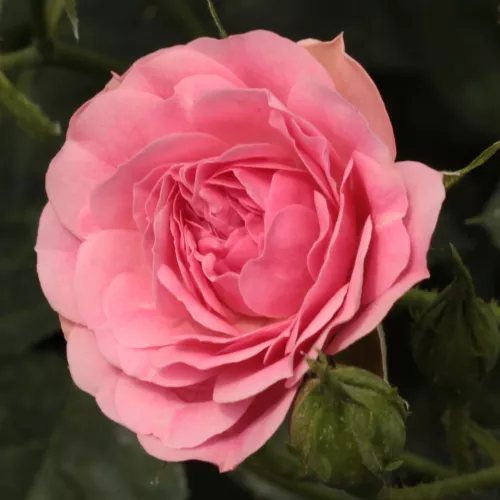
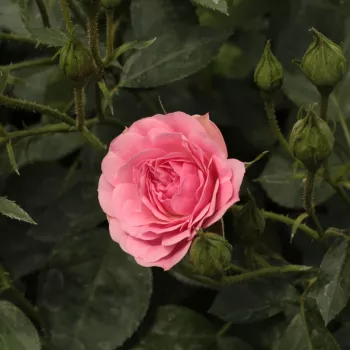
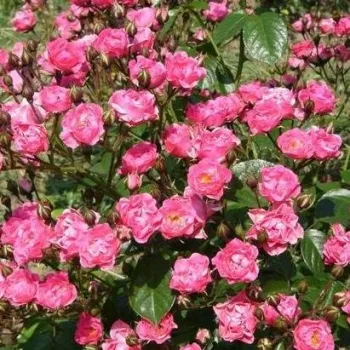
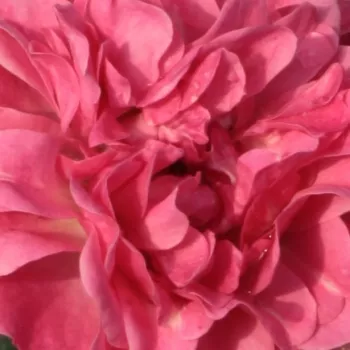
INGRID STENZIG – pink bedding polyantha rose
In a compact London front garden or balcony, Ingrid Stenzig offers an easy, own-root route to long-lived summer colour with bunches of small, deep pink pompon blooms that flower in waves from early season to autumn. Its bushy, low habit creates neat flowering edging and bedding, settling in reliably even where soils hold moisture after showers and occasional wind, suiting British gardens that juggle paving, pots and mixed borders. Semi-double flowers give modest support to visiting bees while dense, glossy foliage keeps the planting looking quietly balanced. In its first year the plant concentrates on roots, in the second it builds strong shoots, and from the third year you can enjoy full ornamental impact with minimal extra work. The peat-free, container-grown plant is simple to transfer into borders or larger pots, supporting rainwater-wise, low-fuss urban gardens and calm, gently feminine planting schemes.
Usage options
| Target area | Reasoning |
|---|
| Front-garden edging for terraced houses |
Compact, bushy growth and low height create a tidy pink edging that frames steps and paths without overwhelming narrow spaces. Clustered blooms provide a long season of soft colour for everyday kerb appeal, suiting the needs of the busy homeowner. |
| Small flowerbed in family gardens |
Remontant flowering gives repeated flushes from early summer into autumn, keeping a small bed lively with minimal planning. Semi-double pompon blooms refresh the border when other plants pause, providing reliable interest for the hobby gardener. |
| Rainwater-friendly urban planting strip |
Dense, glossy foliage and a shallow root system suit planting beside drives or pavements where run-off gathers, helping soften hard surfaces. The plant tolerates typical urban microclimates, making life easier for the city gardener. |
| Container or large pot (40–50 litres+) |
Its compact size and bushy habit adapt well to big containers, where own-root plants establish steadily and regenerate if cut back. A larger volume pot buffers dry spells, simplifying care for the balcony owner. |
| Mixed perennial and rose borders |
Deep pink pompon clusters blend attractively with cool-toned perennials like nepeta or sage, giving a soft “girly” note without appearing fussy. Own-root stability means clumps remain even and balanced for the design-conscious gardener. |
| Pollinator-friendly corner |
Semi-double flowers offer a moderate nectar source and repeated flushes give regular, if modest, visits from bees and hoverflies. Used with stronger pollinator plants, it adds texture for the eco-aware planter. |
| Low-maintenance family play garden |
Moderate disease resistance and partial shade tolerance mean fewer interventions, especially when combined with sensible spacing and air flow, even in areas where windy, rainy spells and heavier soils are common, reassuring the time-poor parent. |
| Long-term structural planting |
As an own-root rose, it does not depend on graft unions, so it recovers better from winter damage or hard pruning, maintaining shape and flowering for many years, which suits the long-term planner. |
Styling ideas
- Terrace-Romance – Line a short front path with Ingrid Stenzig and soft lavender for a pink-and-mauve welcome – ideal for the style-conscious city dweller.
- Balcony-Border – Plant one rose in a 50-litre container with trailing nepeta to spill over the edge – perfect for renters wanting impact without heavy upkeep.
- Rain-Garden-Edge – Use a low row along a gravel strip that catches downpipe run-off, pairing with sage and ornamental grasses – suited to sustainability-minded homeowners.
- Girly-Pocket – Combine its pompon pink blooms with airy verbena and hardy geraniums in a small bed – attractive to those seeking a soft, feminine look.
- Family-Playframe – Place a short hedge behind a lawn or play area so flowers are visible but set back from traffic – practical for parents prioritising colour and ease.
Technical cultivar profile
| Parameter | Data |
|---|
| Name and registration |
Ingrid Stenzig, polyantha bedding rose; ARS exhibition name ‘Ingrid Stenzig’. Commercially offered as a bedding rose; unregistered cultivar used mainly for garden display. |
| Origin and breeding |
Sport of ‘Orange Triumph’, bred by Hassefras Bros. in the Netherlands and introduced in 1951 via Bobbink & Atkins in the United States; part of mid-20th-century polyantha breeding. |
| Growth and structural characteristics |
Compact, bushy plant 30–45 cm tall and 35–50 cm wide with dense, dark green, glossy foliage and moderate prickliness; forms a low, uniform mound suitable for edging and bedding. |
| Flower morphology |
Semi-double, ball to pompon-shaped blooms, 13–25 petals, small-flowered in tight clusters. Remontant habit with particularly abundant second flush, providing repeated seasonal display. |
| Colour data and phenology |
Deep pink with warm tone; buds dark velvety pink, opening vivid then lightening to pale pink with silvery hints. RHS 55B outer, 55C inner; medium colour retention, gradual softening as blooms age. |
| Fragrance and aroma |
Very weak fragrance with a slightly sweet character, often barely noticeable in garden use. Visual effect rather than scent is the primary ornamental feature of this cultivar. |
| Hip characteristics |
Produces moderate quantities of small, spherical red hips, around 4–6 mm diameter. Hips add fine-textured late-season interest and may offer incidental wildlife value. |
| Resistance and winter hardiness |
Hardy to approximately –21 to –18 °C (RHS H7; USDA 6b; Swedish zone 3). Disease resistance moderate to powdery mildew, black spot and rust; benefits from good air flow and basic care. |
| Horticultural recommendations |
Best at 25–45 cm spacing depending on use; square or hexagonal mass planting possible. Prefers well-drained soil, moderate feed, watering in prolonged drought, and occasional deadheading for neatness. |
Ingrid Stenzig offers compact, long-season pink bedding colour with moderate pollinator appeal, and as an own-root rose it establishes steadily for many years of reliable, low-fuss flowering, making it a thoughtful choice for your garden.