INGRID BERGMAN™ – dark red hybrid tea rose
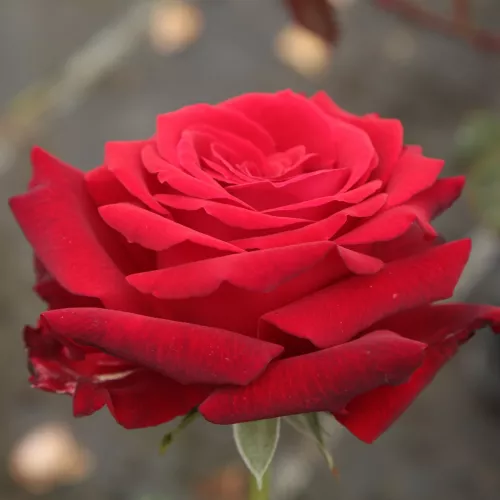
Step out after rain and let Ingrid accompany you along a narrow garden path, its velvety, dark red, classic blooms catching the light against healthy, dark green foliage. This own-root hybrid tea is raised in peat-free media for reliable establishment, ideal for London terraces and small family plots where you want impact rather than complicated tasks. Once planted in well-prepared soil, it settles steadily, coping well with blustery showers and damp spells that often bring fungal pressure in British gardens. In a 40–50 litre container or a sunny front bed it offers longevity and measured maintenance, responding well to simple annual pruning and a regular watering routine. As the roots thicken and deepen, you will notice strong regrowth after winter and pruning, with regeneration and flower power increasing year on year as it moves from a modest first season to a far more established presence by its third summer.
Usage options
| Target area | Reasoning |
|---|
| Feature rose for a small front garden |
The velvety dark-red flowers are classic hybrid tea form, held singly on upright stems that read beautifully from the pavement, giving a polished, “grown-up” touch to compact London front gardens without needing complex design knowledge – ideal for the beginner. |
| Cutting patch or cutting corner |
Long, straight stems and large, double, high‑centred blooms make this cultivar particularly suitable for home cutting; a single stem in a narrow vase can transform a hallway, while a trio of buds offers several days of unfolding beauty – perfect for the homeowner. |
| Statement container by the front door |
Planted in a 40–50 litre pot with good drainage, this upright rose forms a dense, dark green structure that frames entrances elegantly; own‑root plants bounce back well after winter, maintaining a stable outline that suits busy city lifestyles – reassuring for the urbanite. |
| Repeat-flowering focal point in a mixed border |
Its good repeat flowering and colour that hardly fades even in strong sun ensure a long display through summer; regular deadheading keeps new buds coming, allowing the plant to anchor a border while perennials weave seasonality around it – attractive to the planner. |
| Heat- and cold-tolerant core plant |
This rose is hardy to around -30 °C and copes well with summer heat, so it remains dependable through cold snaps and warmer spells alike, providing long-term structure in climates where weather patterns are increasingly changeable – reassuring for the family. |
| Structured planting on heavier or challenging soils |
With a robust root system and upright habit, it responds well to improved drainage on heavier or chalky ground, allowing you to convert previously awkward spots into reliable, formal planting that still feels lush and romantic – confidence‑building for the improver. |
| Rainwater-aware front garden layout |
Set slightly back from gravel or permeable paving, this rose partners well with low, moisture-resilient perennials, making it easier to direct roof run‑off into planting areas rather than drains, even where cool, damp weather encourages fungal problems – enabling for the sustainability‑minded. |
| Long-term own-root investment planting |
As an own-root rose, any regrowth remains true to type, and the plant gradually builds a sturdy framework; if stems are damaged, it re-shoots from its own base, helping preserve its award-winning character for many years – reassuring for the long‑term. |
Styling ideas
- Velvet-Entrance – Flank a small front path with two Ingrid Bergman™ in generous pots underplanted with silver-leaved sage for a formal yet soft welcome – for terrace and mews homeowners.
- Ruby-Accent – Place a single plant in a narrow border with Nepeta and low grasses so the dark red blooms rise from a hazy, movement-filled base – for quiet, contemporary spaces.
- Classic-Cutting – Dedicate a sunny strip to three bushes in a row to supply velvety stems for vases, edging with feverfew for a light, lacy contrast – for home florists.
- Townhouse-Frame – Combine Ingrid Bergman™ with lavender and meadow sage along railings, echoing traditional London front gardens while keeping planting drought-conscious – for urban traditionalists.
- Rain-Garden-Ribbon – Set roses in a gravel strip that receives downpipe run-off, threading in low herbs to soak up moisture and keep surfaces permeable – for sustainability-focused beginners.
Technical cultivar profile
| Parameter | Data |
|---|
| Name and registration |
Hybrid tea rose, registered as POUlman and marketed as Ingrid Bergman™ Hybrid Tea POULSEN®; ARS exhibition name Ingrid Bergman, part of the Hybrid Tea POULSEN® collection. |
| Origin and breeding |
Raised by L. Pernille and Mogens Nyegaard Olesen (Poulsen Roser A/S, Denmark) from ‘Precious Platinum’ × ‘Else Poulsen’; bred, registered and introduced in 1984. |
| Awards and recognition |
RNRS Trial Ground Certificate, multiple European medals including Belfast Gold and Best Hybrid Tea, RHS Award of Garden Merit, and WFRS World’s Favourite Rose (Rose Hall of Fame). |
| Growth and structural characteristics |
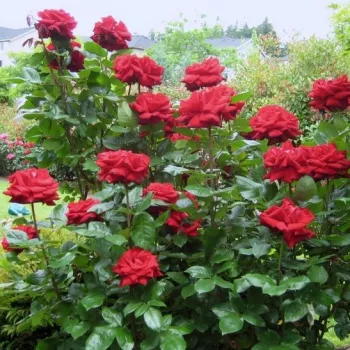
Upright, bushy habit to around 80–105 cm high and 50–70 cm wide; moderately thorny with dense, slightly glossy dark green foliage providing a solid, structural presence. |
| Flower morphology |
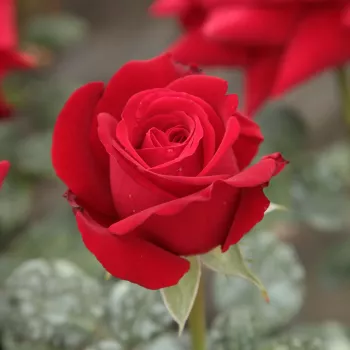
Large, double, high‑centred blooms with 26–39 petals, typically borne singly on stems; classic pointed-bud hybrid tea form with good repeat flowering and a generous second flush. |
| Colour data and phenology |
Deep velvety dark red with ruby highlights; buds almost black burgundy, ageing slowly towards blackish‑bordeaux, with very good colour retention and little fading even in strong sunlight. |
| Fragrance and aroma |
Light, subtle scent of classic rose character; fragrance is noticeable at close range but not overpowering, suiting entrance areas, small gardens and use as a refined cut flower. |
| Hip characteristics |
Rosehips form sparsely because of the very double flowers; where present they are small, red, ellipsoidal hips around 10–14 mm, adding discreet late-season interest. |
| Resistance and winter hardiness |
Very hardy (RHS H7, USDA zone 4b, Swedish zone 5) but disease-prone; especially susceptible to powdery mildew and rust, with moderate black spot, so regular protective care is recommended. |
| Horticultural recommendations |
Best in full sun with enriched, well-drained soil; plant 50–90 cm apart depending on use, water during prolonged drought, deadhead spent blooms, and include fungicide or organic hygiene where disease pressure is high. |
INGRID BERGMAN™ offers classic dark-red blooms, dependable repeat flowering and container versatility on a resilient own-root framework, making it a thoughtful choice if you seek a long-lived, formal highlight for your garden.