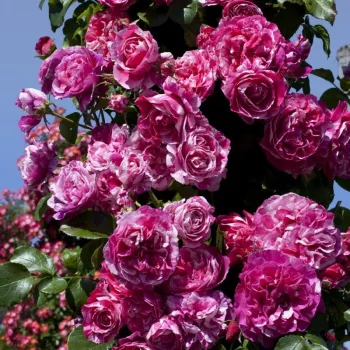
INES SASTRE® – pink-white climbing rose
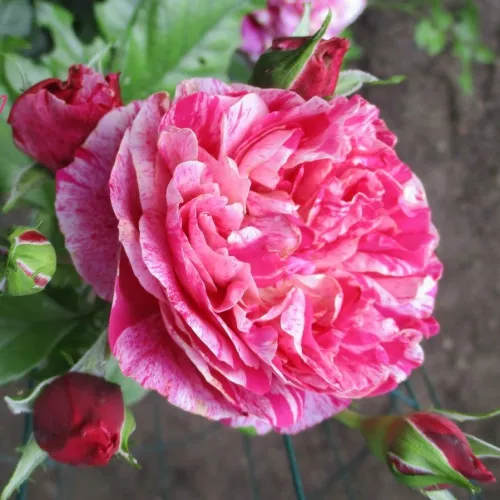
Bring a touch of couture to your front garden with INES SASTRE®, a characterful Romantica® climbing rose whose raspberry‑and‑cream blooms make even a narrow London terrace feel indulgently romantic after rain. Bred by Meilland for reliable flowering, this own‑root climber builds long‑lived structure on fences, arches and railings while its glossy dark foliage keeps the display attractive between flushes. Over time, its flexible, sparsely thorned canes help you create soft screening and a vertical sense of balance in compact, sustainable spaces that must still cope gracefully with blustery showers and persistent humidity. In its first years, you can expect steady growth as roots establish and top growth matures into a richly textured, climber‑filled canopy.
Usage options
| Target area |
Reasoning |
| Front garden climber for narrow terraces |
Ideal for London-style front gardens where ground space is tight but vertical height is available; the flexible, creeping habit allows you to fan stems along railings or a short wall for maximum floral impact with minimal footprint, suiting the time-poor urban homeowner who enjoys gentle upkeep for beginners. |
| Arch or pergola focal point |
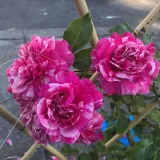
The long canes and very double, raspberry‑striped flowers create a luxurious, romantic tunnel over a path or seating area; trained carefully, the sparse prickles make seasonal tying‑in less of a chore, supporting an easy-care structure that matures beautifully over several years for family. |
| Rainwater-conscious, clay-soil front border |
Works well where you are directing roof water into planting rather than paving; once established in improved clay with good drainage, this own-root climber copes reliably with a damp British season and the intermittent gusts of coastal-type weather for sustainability. |
| Statement container on balcony or patio |
In a large, 40–50 litre peat-free container with regular watering, this rose provides vertical drama and repeat blooms without demanding complex pruning; own-root growth helps it recover from winter or wind damage, appealing to busy city dwellers seeking resilient elegance for balconies. |
| Long-season decorative backdrop |
The dense, dark green foliage and remontant flowering pattern offer a long window of colour, even when individual blooms need deadheading; over time, the plant’s permanent framework offers a stable, green backdrop for perennials and herbs, ideal for relaxed gardeners wanting dependable charm for everyday. |
| Cut-flower and indoor display rose |
Large, cupped, very double blooms with distinctive striping are excellent for cutting and short-term indoor arrangements, giving a “florist” feel from your own front garden; regular light picking naturally encourages new flowering, suiting home stylists who enjoy seasonal bouquets for interiors. |
| Softer, low-prickle walkway rose |
Compared with many climbers, the sparsely thorned stems are easier to manage near paths, gates or letterboxes; this makes routine tying-in, winter tidy-ups and safe passage for children or deliveries more straightforward, well-suited to practical family gardens prioritising comfort for accessibility. |
| Long-lived structural feature in a small garden |
As an own-root climber, it is bred to regenerate from the base, building a durable framework rather than relying on a short-lived graft; with roots settling in year one, shoots strengthening in year two and full ornamental value from year three, it rewards patient planners seeking future-proof planting for longevity. |
Styling ideas
- Romantic Arch – Train INES SASTRE® over a slim metal arch, underplant with lavender and nepeta to soften the base and attract insects – ideal for homeowners wanting a welcoming, scented entrance.
- Striped Showcase – Cover a sunny front fence, pairing with white or pale-pink sage and soft grasses to let the raspberry‑cream striping shine – perfect for design-conscious urban gardeners.
- Balcony Screen – Grow in a 50 litre container with a slim trellis, interplant trailing thyme and strawberries for a green, edible privacy screen – suited to small-balcony dwellers who value beauty and function.
- Clay-Friendly Frame – In improved clay soil, use it to frame a rainwater-fed downpipe, edging with hardy geraniums and dwarf honeysuckle groundcover – good for eco‑minded gardeners managing runoff.
- Evening Focus – Place near a seating area where creamy stripes catch low light, backed by dark-leaved shrubs for contrast – for those who relax outdoors after work and enjoy subtle drama.
Technical cultivar profile
| Property |
Data |
| Name and registration |
INES SASTRE® Romantica® (MEIteratol), large-flowered climbing rose from the Romantica® collection; ARS exhibition name Raspberry Cream Twirl; registered cultivar name MEIteratol, premium gold authenticity. |
| Origin and breeding |
Bred by Alain Antoine Meilland, Meilland International SA, France, from ‘Meinoiral’ × (‘Meihestries’ × ‘Meidomonac’); bred 2010, introduced 2012 via Meilland International and Star Roses and Plants. |
| Awards and recognition |
First prize at the Hradec Králové International Rose Competition, Czech Republic, in 2012, highlighting its ornamental display quality and performance as an exhibition-type climbing rose in European trial conditions. |
| Growth and structural characteristics |
Creeping, climbing habit reaching about 180–280 cm high and 90–160 cm spread; dense, glossy dark green foliage (RHS 147A); sparsely thorned canes; spent blooms may need deadheading as self-cleaning is relatively weak. |
| Flower morphology |
Very double, cupped XL blooms (from around 3.5 in), usually borne in clusters of 3–5 per stem; over 40 petals per flower; remontant with an abundant second flush, suitable for cutting and decorative garden display. |
| Colour data and phenology |
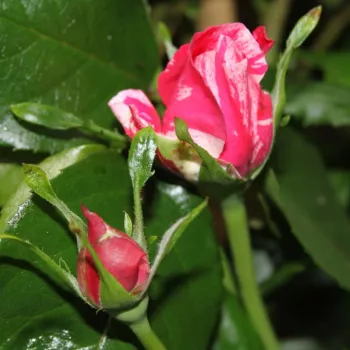
Raspberry-pink ground with irregular cream-white stripes and speckles; ARS PB, RHS 58C outer, 60B inner; buds deep raspberry-red with off-white streaks; colour softens as flowers open, striping becomes blurred towards full bloom. |
| Fragrance and aroma |
Very weak scent, with a light, fresh, apple-like character detectable at close range in favourable weather; selected primarily for visual impact and form rather than strong fragrance, making it best for colour-focused plantings. |
| Hip characteristics |
Hip set is generally poor due to its very double flowers; when present, forms small spherical red hips about 6–10 mm in diameter, which add only a modest seasonal accent rather than a major ornamental feature. |
| Resistance and winter hardiness |
Rated to approximately –26 to –23 °C (RHS H7; Swedish zone 4; USDA 5b); disease resistance medium to black spot, powdery mildew and rust, so routine monitoring and timely treatment may be helpful in humid seasons. |
| Horticultural recommendations |
Best in full sun with fertile, well-drained soil; recommended spacing 150 cm for mass plantings, 140 cm for hedging, 225 cm as a specimen; useful on walls, fences, arches, pergolas, and in large containers of at least 40–50 litres. |
INES SASTRE® offers romantic striped blooms, manageable prickles and durable own-root structure for long-term vertical interest in compact gardens; consider it if you are planning a graceful, low-fuss climbing feature.