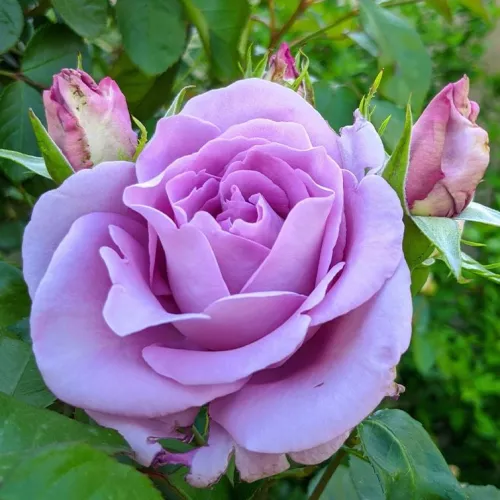
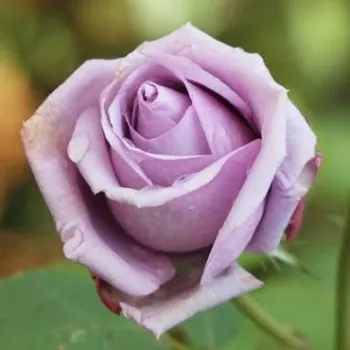
INDIGOLETTA – purple climbing rose - Laak
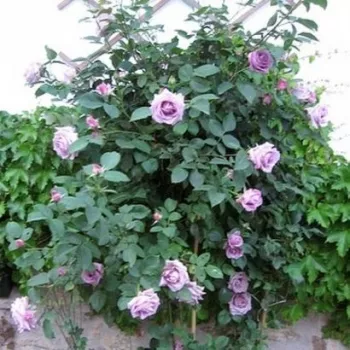
Step out after rain and this rose greets you with indigo blooms and a sweet, spicy fragrance, trained easily over a modest London terrace wall or balcony railing. Its compact climbing habit makes it ideal where space is limited, while dense foliage and uniform growth give reliable structure along fences and pergolas. Own-root plants offer quiet longevity, regenerating well after pruning and ensuring a settled, sustainable presence in family gardens. With peat‑free compost and simple rainwater‑friendly planting, it copes steadily with damp, heavy soils and cool, breezy conditions by the coast and in wetter districts. Over a few seasons roots establish, shoots extend and the display matures into full character, giving a distinctive accent of purple against brick, timber or gravel, and creating a calm sense of balance in small, thoughtfully planted outdoor spaces.
Usage options
| Target area | Reasoning |
|---|
| Compact front-garden climber for London terraces |
Suited to smaller walls and railings, this medium-height climber offers a vertical curtain of purple without overwhelming a narrow frontage, bringing colour and privacy for the busy city-based beginner |
| Pergola or arch for scented passageways |
The strong, sweet–spicy fragrance is ideal over an arch or slim pergola, where flowers sit at nose level and create an immersive, post‑rain scent experience for the relaxed home‑and‑garden enthusiast |
| Rainwater-conscious planting along fences |
Works well along a gravel strip or free‑draining border beside fences, helping make use of roof run‑off while coping steadily with cool, breezy and wetter garden corners for the sustainability‑minded urbanite |
| Own-root, long-lived feature rose |
As an own‑root climber it builds strength year by year, regrowing reliably from the base and maintaining shape even after harder pruning, suiting those who value long-term results without complex regimes for the practical homeowner |
| Season-long colour focus near seating |
Repeat flowering gives waves of purple bloom from early summer, with later flushes extending interest even if not as abundant, making it ideal beside a small seating area for the time‑poor garden lover |
| Vertical partner for lavender and herbs |
Its upright climbing habit lets you underplant with lavender, nepeta or sage, combining scented foliage and pollinator-friendly companions beneath a richly coloured rose for the style-conscious planting planner |
| Partial-shade side-return or alleyway |
Performs well in partial shade where many roses struggle, holding its colour better out of harsh midday sun, perfect for side returns or north‑east aspects used by space-aware city gardeners |
| Medium-care project for developing gardeners |
Needing only occasional deadheading and basic disease checks, it offers a manageable step up from beginner plants while still forgiving, especially once established over the first three seasons, for the learning‑by‑doing gardener |
Styling ideas
- Terrace Archway – train it over a slim metal arch with lavender and nepeta at the base for scented, bee‑rich edging – ideal for compact front gardens wanting soft privacy
- Railway-Romantic – let stems climb a narrow trellis against brick, with Verbena ‘Blue Spires’ and grasses for a relaxed, urban‑meadow feel – suited to creative city dwellers
- Courtyard Frame – plant in a large 50‑litre container with a fan trellis, underplanted with thyme and sage – perfect for balcony or paved courtyards needing vertical colour
- Evening Seat – position near a small bench, combining with pale foxgloves and white campanula to reflect twilight light – for those who unwind outside after work
- Rain-Garden Edge – set along a gravel swale catching roof run‑off, with evergreen St John’s‑wort for year‑round foliage – for sustainability‑focused homeowners managing heavy rain
Technical cultivar profile
| Parameter | Data |
|---|
| Name and registration |
Large-flowered climbing rose, registered as ‘Azubis’, marketed as Indigoletta Climbing rose Azubis; ARS exhibition name ‘Indigoletta’, in the eleanorROSE ORIGINAL 2‑litre own‑root range. |
| Origin and breeding |
Shoot mutation of ‘Mainzer Fastnacht’, bred by G. L. M. Van de Laak at Van de Laak Nursery, Lottum, Netherlands; bred 1981, introduced by Verschuren & Sons from 1985. |
| Growth and structural characteristics |
Medium-vigorous climber reaching about 2.4–3.6 m high and 1–1.7 m wide, with dense, slightly glossy dark green foliage and moderate prickles, best grown on walls, arches or sturdy supports. |
| Flower morphology |
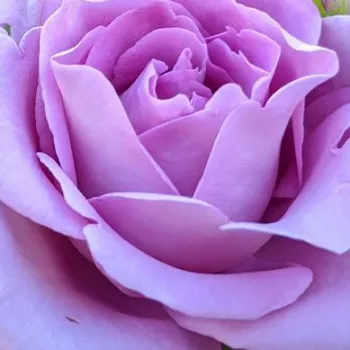
Large, double, cupped blooms with around 26–39 petals, mainly solitary on stems; repeat-flowering with a generous first flush and lighter later blooms through the season in suitable conditions. |
| Colour data and phenology |
Purple to deep violet blooms with a bluish tone and silvery sheen; ARS mau, RHS 77A–76B, colour richest in cool or semi-shaded sites and lightening in strong sun as flowers age. |
| Fragrance and aroma |
Distinctly strong, sweet, spicy rose fragrance, most noticeable in still, humid air and after rainfall; well suited to planting near paths, doors or seating where scent can be appreciated. |
| Hip characteristics |
Hip set is usually low due to the double flower form; any hips produced are small, red, ellipsoid, around 8–12 mm, with limited ornamental or wildlife value compared with simpler-flowered roses. |
| Resistance and winter hardiness |
Hardy to about −23 to −21 °C (RHS H7, USDA 6a, Swedish zone 3); disease resistance is medium to powdery mildew, black spot and rust, needing occasional monitoring in humid seasons. |
| Horticultural recommendations |
Best on well-drained soil with added compost; tolerates partial shade, prefers regular watering in dry spells, and benefits from deadheading and light pruning to maintain shape and repeat bloom. |
INDIGOLETTA – purple climbing rose - Laak offers compact climbing impact, strong fragrance and season-long colour, while its own-root form supports long-term, reliable growth; consider it if you want a characterful yet manageable vertical feature.