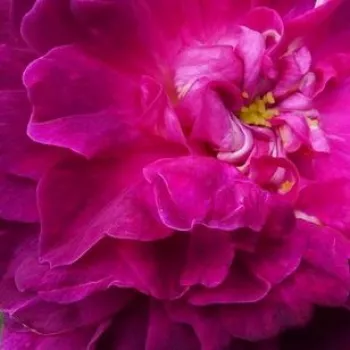
INDIGO – violet historic Portland rose - Laffay
Step into a London front garden after rain and let INDIGO surround you with a sense of balance, its rich violet blooms glowing against mid‑green foliage and strong, far‑carrying fragrance. This historic Portland shrub settles comfortably into small family plots and rain‑aware city borders, coping reliably even where wind and showers meet heavy soils by the pavement. In the first year it quietly builds roots, in the second it pushes confident shoots, and by the third it fills its space with full ornamental character. Low‑maintenance by nature, it needs only simple seasonal care to keep delivering remontant flowering from an own‑root frame designed for long life and steady regrowth.
Usage options
| Target area | Reasoning |
|---|
| Compact London front garden |
The upright, 100–150 cm habit fits narrow terraced-house plots, giving vertical colour without overwhelming the frontage. Historic character and scented blooms frame the doorway with minimal pruning needs, suiting the busy city homeowner seeking ease. |
| Low-maintenance family rose bed |
Good resistance to black spot, mildew and rust means fewer sprays and less worry in changeable UK summers. With basic feeding and deadheading, INDIGO flowers steadily, remaining structurally sound on its own roots for years, ideal for relaxed gardeners valuing reliability. |
| Rainwater‑friendly urban border |
Well suited to slightly heavier front‑garden soils near pavements, it tolerates regular rainfall and typical street‑side exposure when planted with added drainage grit and mulch. It integrates neatly with permeable, sustainable hard landscaping for urban households prioritising resilience. |
| Historic feature shrub in mixed planting |
The velvety violet‑slate flowers read beautifully against grasses and airy perennials, offering period charm without fussy training. Own‑root growth fills out steadily, giving long‑term structure for small city borders where every plant must earn its place for longevity. |
| Fragrant seating‑area focal point |
Strong, far‑carrying scent and repeat flowering make INDIGO ideal beside a bench or patio. Clustered, mid‑sized blooms offer consistent summer presence; simple annual pruning keeps it in bounds, appealing to those who want atmosphere more than intricate gardening. |
| Partial‑shade side passage or alley |
Suitable for partial shade, it still flowers and scents reliably along side returns or between houses, where sun is limited but space is tight. The upright frame guides the eye along paths, suiting homeowners looking to soften awkward passages with character. |
| Large container on balcony or paved area |
In a 40–50 litre pot with quality peat‑free compost and steady watering, INDIGO offers heritage charm where soil is scarce. Its manageable height and strong framework suit balconies, roof terraces and paved courtyards for urban dwellers needing flexible containers. |
| Informal flowering hedge or boundary |
Planted at 90–100 cm centres, it forms a loosely upright, scented line, giving seasonal privacy and colour. Own‑root toughness supports recovery if stems are damaged by pets, children or weather, ideal for family gardens wanting beauty alongside everyday practicality. |
Styling ideas
- Victorian doorstep – Underplant INDIGO with soft Scabiosa and low euonymus in a narrow front bed for a quietly formal, period look – ideal for heritage‑minded terrace owners.
- Rain‑softened ribbon – Thread a line of INDIGO through a permeable gravel strip, interplanted with Stipa tenuissima for movement that copes with wet spells – for urban gardeners managing run‑off stylishly.
- Twilight corner – Combine INDIGO with dusky salvias and dark containers near seating so violet blooms and scent linger into the evening – perfect for after‑work relaxation.
- Heritage micro‑hedge – Plant a low row along a short front boundary, mixing with clipped euonymus for structure and romantic colour – suited to small plots needing gentle enclosure.
- Balcony showpiece – Grow INDIGO in a 50‑litre pot with airy grasses to frame railings and soften brick – aimed at flat‑dwellers wanting classic roses without a ground‑level garden.
Technical cultivar profile
| Parameter | Data |
|---|
| Name and registration |
Historic Portland shrub rose from the Heritage rose collection; commercial name INDIGO – violet historic Portland rose - Laffay; unregistered cultivar with American Rose Society exhibition name Indigo. |
| Origin and breeding |
Bred by Jean Laffay in France around 1844–1845, with unknown parentage; introduced by Laffay in 1844 and maintained as a traditional historical rose type without modern patent registration data. |
| Growth and structural characteristics |
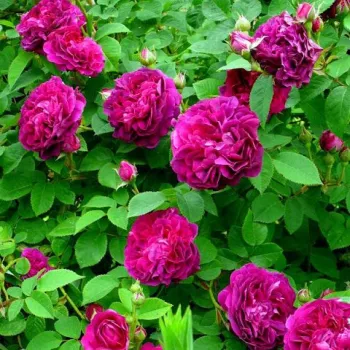
Upright shrub reaching 100–150 cm high and 80–120 cm wide, with dense, mid‑green, slightly glossy foliage (RHS 139A) and moderate prickliness; forms a structured, leafy framework over time on its own roots. |
| Flower morphology |
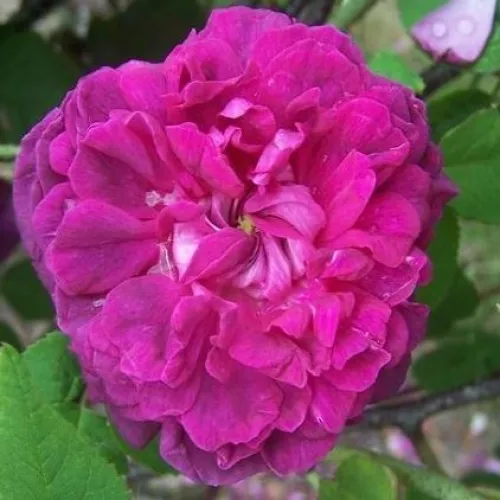
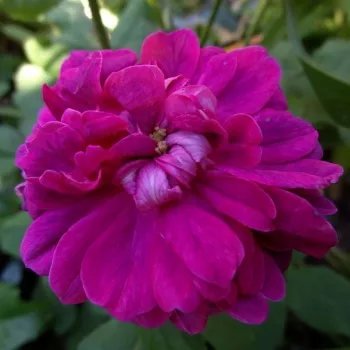
Double, flat, medium‑sized clustered blooms (approximately 1.5–2.75 inches), with 26–39 petals; remontant with a generous second flush, though spent flowers are weakly self‑cleaning and benefit from regular deadheading. |
| Colour data and phenology |
Rich, velvety deep violet blooms (RHS 86A outer, 79A inner) with slate‑grey shading; colour intensifies in cooler weather, softening through lilac‑grey to brownish edges under strong sun as flowers age on the plant. |
| Fragrance and aroma |
Strongly scented rose with far‑carrying perfume typical of historic Portland types; specific fragrance notes are undocumented, but overall effect is powerful enough to mark paths, entrances and seating areas. |
| Hip characteristics |
Hip production is generally low; occasional small spherical hips 10–15 mm may form, coloured orange‑red, adding discreet autumn interest without significantly diverting energy from repeat flowering. |
| Resistance and winter hardiness |
Rated resistant to powdery mildew, black spot and rust; hardy to approximately −32 to −29 °C (RHS H7, USDA 4b, Swedish zone 5), suitable for exposed UK sites with normal winter protection in containers. |
| Horticultural recommendations |
Best in moderately fertile, well‑drained soil with sun or light shade; plant 90–100 cm apart for hedges or 1 plant/m² for beds; water in dry spells and deadhead for repeat bloom; ideal as specimen, bed or cut rose. |
INDIGO offers a compact, strongly scented historic shrub with reliable disease resistance on a long‑lived own‑root framework, well suited to today’s smaller gardens, and deserves consideration if you value enduring, characterful planting.