IMOLA™ – deep pink dwarf miniature rose - Győry
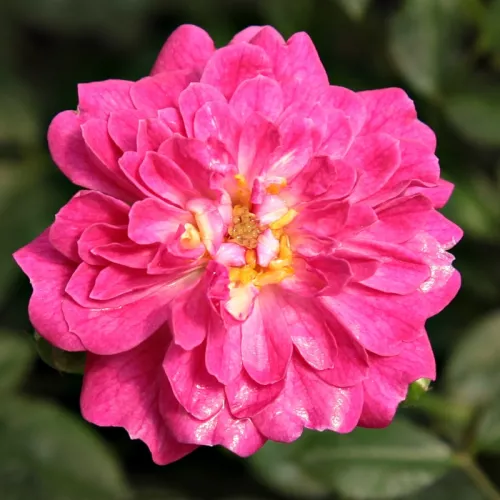
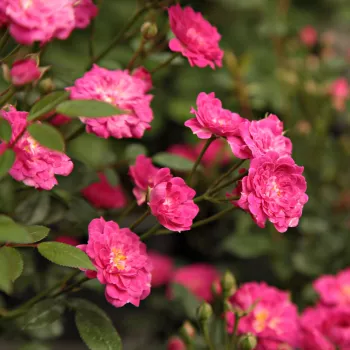
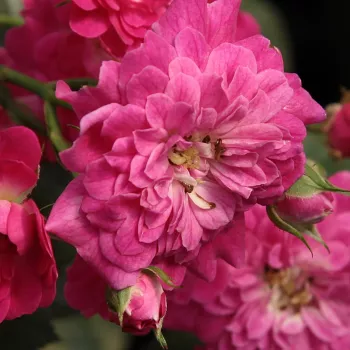
Designed for small, sustainable front gardens and balconies, IMOLA™ combines cheerful colour, compact habit and low-maintenance health for busy city gardeners who still want romance at the front door. Its reliable remontant flowering brings repeated flushes of deep pink, semi-double blooms that soften to silvery rose, creating season-long impact even where space and time are limited. Own-root plants develop steadily, rewarding patient care with a natural progression from establishing roots to building shoots and then achieving full ornamental value over three years, so your planting feels like a quiet investment in long-term balance. The dwarf size suits rainwater-friendly containers and narrow beds, coping well with breezy, exposed spots and heavier soils by supporting dependable performance in showery, wind-prone British weather gardens. Its good drought tolerance and acceptance of higher pH make it an easy partner for urban substrates, while the semi-double flowers still offer accessible nectar, supporting visiting pollinators. Over time, a neat, matt-green dome dotted with vivid pink clusters gives your entrance or patio a sense of living structure, with minimal pruning and straightforward seasonal care that fit neatly around everyday life.
Usage options
| Target area | Reasoning |
|---|
| Front-garden edging for London terraces |
The compact, 20–30 cm habit forms a low, tidy line that frames narrow paths and small front plots without blocking light or views, giving a defined, long-lived edge that is easy to maintain for the time-poor gardener. |
| Balcony and patio containers (40–50 litres) |
Its dwarf size and drought tolerance make it ideal for larger pots where rainwater can be harvested and stored in the compost, creating a resilient, long-lived focal point in restricted spaces for the urban balcony owner. |
| Low-maintenance family beds |
Good resistance to key fungal diseases and modest pruning needs translate into dependable performance with little intervention, keeping weekend workloads low for the busy household gardener. |
| Pollinator-friendly city planting strips |
Semi-double blooms with accessible centres offer moderate nectar value across repeated flushes, adding a helpful, pretty stopping point for bees and hoverflies important to the environmentally minded beginner. |
| Coastal and exposed front gardens |
The dense, compact framework and moderate thorniness help the plant hold its shape in blustery, changeable conditions, suiting breezy, rain-lashed streets typical of many British seafronts for the coastal homeowner. |
| Small-space colour “dots” among perennials |
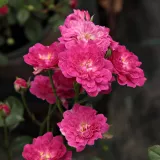
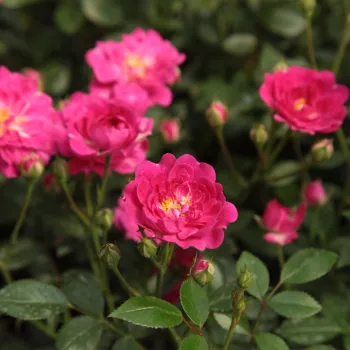
Clusters of bright deep-pink flowers stand out against matt-green foliage, threading strong, repeat colour through hostas or salvias and giving clear visual structure valued by the compact-garden planner. |
| High-pH and clay-leaning urban soils |
This variety tolerates higher pH and copes with heavier ground when basic drainage is provided, making it forgiving in reworked building plots common in cities and new estates for the first-time planter. |
| Long-term, own-root collections in pots |
Own-root growth provides stable character, reliable regrowth after pruning and a naturally long lifespan, complementing sustainable, peat-free composts and the use of harvested rainwater in practical, low-input care for the sustainability-focused buyer. |
Styling ideas
- Terrace-Edge Ribbon – Plant a narrow ribbon along a front path, underplanted with low thyme, to give a bright, structured welcome for design-conscious terraced-house owners.
- Balcony-Jewel Pot – Use a 40–50 litre container with peat-free compost, pairing IMOLA™ with trailing nepeta for soft movement and subtle pollinator support for balcony gardeners.
- Hosta-Contrast Pocket – Tuck three plants among blue-green hostas in a small bed, using the deep pink flowers to punctuate cool foliage for shade-edge family gardens.
- Mini-Rose Grid – Create a geometric 20 cm grid in a tiny front plot, forming a clipped-looking, flowered cushion that stays neat for low-maintenance city homeowners.
- Coastal-Front Mix – Combine IMOLA™ with hardy lavender and dwarf grasses in a gravel mulch to handle wind and rain while keeping care simple for exposed, seaside properties.
Technical cultivar profile
| Property | Data |
|---|
| Name and registration |
Miniature rose group; registered as RYmola, traded as Imola™ Mini - dwarf rose RYmola, exhibition miniature category; commercial type dwarf, mini rose suitable for small gardens and containers. |
| Origin and breeding |
Seedling from an unknown parent crossed with ‘Zsámbék’, bred by Győry Szilveszter around 2000; introduced by PharmaRosa® Ltd. (Hungary) circa 2004 for wider garden use. |
| Growth and structural characteristics |
Compact dwarf shrub reaching about 20–30 cm in both height and spread, moderately thorny, with medium-green, matt foliage forming a neat, rounded dome suited to edging and container planting. |
| Flower morphology |
Semi-double, cup-shaped blooms with 13–25 petals, borne in small clusters; small-flowered (0.5–1.5 in) with abundant, remontant repeat flushes that maintain an attractive display through the season. |
| Colour data and phenology |
Deep, vivid pink with a purplish tint; bud dark almost magenta, newly opened blooms bright pink, lightening to a silvery-rose tone before fading; ARS code DP, RHS 68A outer, 68B inner petals. |
| Fragrance and aroma |
Very weak fragrance with a discreet, classic rose character; scent is barely perceptible in normal garden conditions, so the variety is grown primarily for colour, form and compact structure. |
| Hip characteristics |
Produces moderately abundant, spherical red hips about 5–7 mm across; small fruits add subtle autumn interest and may provide a minor wildlife resource if left on the plant into winter. |
| Resistance and winter hardiness |
Rated H7 RHS, hardy to about −21 to −18 °C, USDA 6b, Swedish zone 3; good heat and drought tolerance, with strong resistance noted for powdery mildew, black spot and rust in typical garden use. |
| Horticultural recommendations |
Best in full sun; plant 15–30 cm apart depending on use, 16–18 plants/m² for massing; low-maintenance with light pruning and supplemental watering only in extended heat or container culture. |
IMOLA™ offers compact structure, reliable colour and durable, own-root growth for long-lived, easy-care containers and front gardens, making it a thoughtful choice if you seek dependable beauty with minimal effort.