HUMMINGBIRD™ – yellow–pink bedding floribunda rose - Tynan
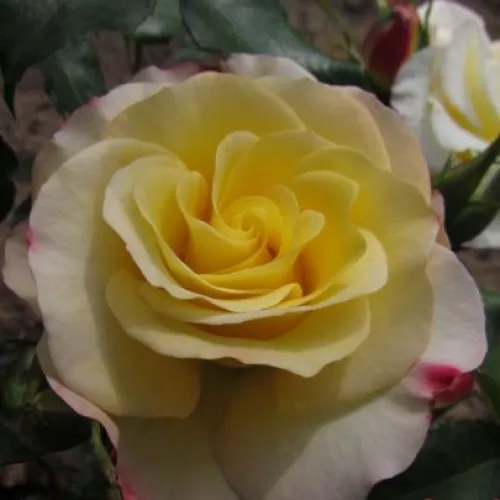
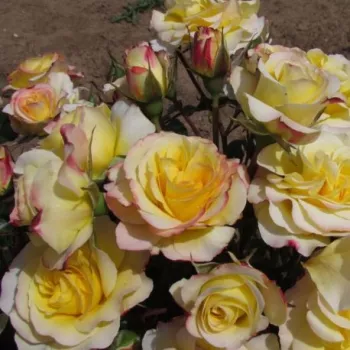
Imagine a narrow London front garden refreshed by rain, where Hummingbird brings soft, cup-shaped clusters of yellow and pink bloom after bloom with reassuring continuity. This compact floribunda fits beautifully into small, busy spaces, thriving in typical British conditions and coping reliably with the sort of persistent showers and breezy spells that often challenge town plots with rainfall. Its semi-double flowers leave the stamens partly visible, offering gentle support to visiting bees and hoverflies for a more balanced city ecosystem. As an own-root plant in our 2‑litre container, it settles in steadily: roots establishing in year one, upright bushy shoots filling out in year two, and by year three offering its full ornamental impact with long, dependable bedding colour. Glossy dark foliage stays neat and bushy, giving a smart, “girly” yet structured look with relatively modest maintenance needs, while moderate fragrance and fine, slender stems suit both casual cutting and relaxed terraces or balconies. Plant once for a long-lived, regenerating shrub that keeps its shape and character, ideal for smaller, sustainable gardens where you prefer simple routines, harvested rainwater and quiet, low-effort enjoyment.
Usage options
| Target area | Reasoning |
|---|
| Small front garden bedding strip |
The compact, bushy habit and 75–105 cm height make it ideal for narrow beds along paths or low railings, giving a defined, colourful edge without overpowering the space, especially appreciated by beginners. |
| Continuous colour in mixed borders |
Strongly repeat-flowering clusters ensure regular waves of bloom through the season, filling gaps between perennials and keeping borders lively even when other plants pause, which supports colour-seeking homeowners. |
| Rain-accented, sustainable city garden |
Performs reliably under the frequent showers and breezy spells typical of many UK gardens, so you can combine it with permeable surfaces and rain-fed planting schemes without fragile prima-donna behaviour, reassuring urban gardeners. |
| Pollinator-friendly family garden corner |
Semi-double flowers expose stamens enough for moderate bee interest, offering gentle support to pollinators while still looking full and decorative, a good fit for wildlife-aware but style-conscious families. |
| Low-effort edging and pathways |
Medium maintenance with a tidy, dense leaf canopy means simple pruning and routine checks are usually sufficient, giving neat definition along paths and drives without complex regimes, suiting time-pressed professionals. |
| Large containers on terraces and balconies |
In a 40–50 litre peat-free container it forms a stable, long-lived shrub with good root room, bringing structured colour to paved spaces and rented homes where planting into the ground is not possible for city-based renters. |
| Cutting for informal indoor arrangements |
Clustered, long-stemmed blooms in soft yellow and pink tones lend themselves to relaxed bouquets and small vases, so you can enjoy the garden’s mood indoors without relying solely on traditional florist roses as keen hosts. |
| Long-term, resilient planting schemes |
As an own-root floribunda it can regenerate from its own wood after setbacks, maintaining shape and colour over many years with less worry about graft failure, appealing to sustainability-minded planners. |
Styling ideas
- Pastel-Pathway – Line a narrow front path with Hummingbird and blue sedge for a soft, feminine edge that stays tidy – ideal for busy London terrace owners wanting low-fuss charm.
- Balcony-Bouquet – Plant three Hummingbird in a 50 litre container with trailing nepeta to create a long-flowering, cut-and-come-again balcony feature – perfect for renters seeking movable colour.
- Rain-Garden-Ribbon – Thread Hummingbird through a gravelled, rainwater-friendly strip with catmint and sage to soak up downpours gracefully – suited to urban gardeners managing runoff elegantly.
- Family-Border – Mix Hummingbird with lavender and nepeta in a small border so children can watch bees visiting soft pink-yellow flowers – great for families encouraging gentle wildlife interest.
- Courtyard-Focus – Use a trio of Hummingbird as a central mound in a small courtyard bed, underplanted with low ornamental grasses – for homeowners wanting structure without heavy maintenance.
Technical cultivar profile
| Aspect | Data |
|---|
| Name and registration |
Floribunda bedding rose; registered as TYNpam, marketed as HUMMINGBIRD™ – yellow–pink bedding floribunda rose - Tynan; ARS exhibition name Hummingbird; collection: Bedding rose. |
| Origin and breeding |
Bred by Marilyn Tynan from ‘Sexy Rexy’ × ‘Mem’; introduced 2006 via Ford Roses in New Zealand and from 2014 by Style Roses in the UK; breeding year recorded as 2003. |
| Awards and recognition |
Awarded the Silver Star at the Palmerston North New Zealand Rose Trials in 2005, recognising its garden performance, flowering and presentation under independent trial conditions. |
| Growth and structural characteristics |
Bushy, compact shrub reaching about 75–105 cm high and 50–70 cm wide, with dense, glossy dark green foliage and moderate prickles, forming a rounded shape suitable for beds and edging. |
| Flower morphology |
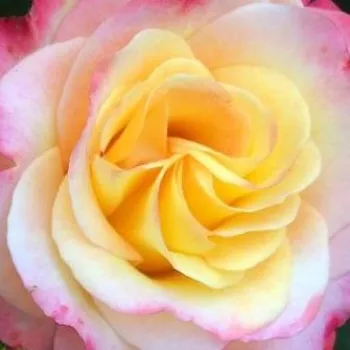
Semi-double, cupped blooms with roughly 13–25 petals, borne in clustered inflorescences; large flower size around 2.75–3.95 inches across and strongly remontant, giving a generous second flush. |
| Colour data and phenology |
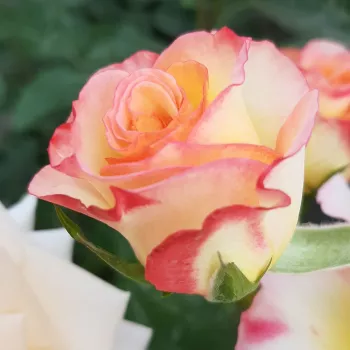
Light pastel yellow base with strong deep pink edging; buds cream-yellow with bright pink tips, colours shifting from lemon and mauve-pink to softer ivory and rosy tones as the blooms mature and fade. |
| Fragrance and aroma |
Fragrance is mild with a pleasant, soft character, noticeable at close range but not overpowering, allowing versatile use near windows, seating areas and entrances without dominating other scents. |
| Hip characteristics |
Produces hips in moderate quantities; rounded fruits about 8–12 mm in diameter, adding seasonal interest in late season if some spent flowers are left uncut rather than deadheaded. |
| Resistance and winter hardiness |
Rated to approximately –21 to –18 °C, RHS H7 and Swedish zone 3; disease resistance generally medium for black spot, powdery mildew and rust, benefiting from standard preventative care in humid sites. |
| Horticultural recommendations |
Suited to beds, pots, edging and cutting; spacing 35–65 cm depending on use, with 5.7–6.5 plants/m² for mass planting; prefers reasonably drained soil and responds well to moderate feeding and pruning. |
HUMMINGBIRD™ offers compact, repeat-flowering colour, moderate pollinator interest and long-lived own-root resilience, making it a thoughtful choice if you would like reliable structure and bloom from a single, sustainable planting decision.