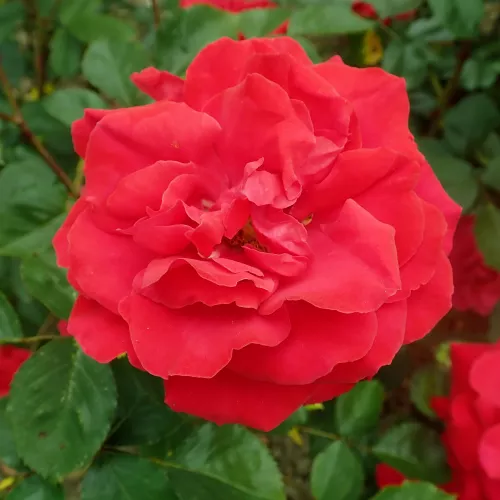
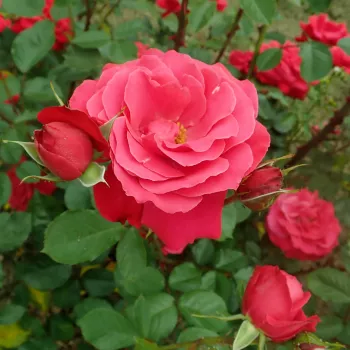
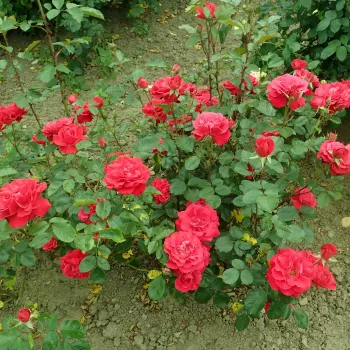
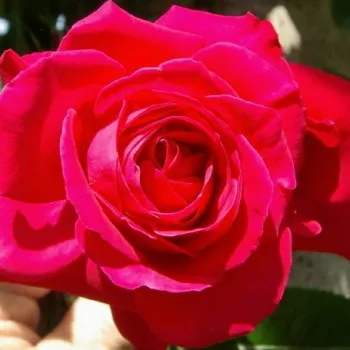
Vivid carmine-red inner surface, with a slightly lighter rose-pink shade on the outer side. - climber, climbing rose - mild, subtle scented rose - rosy character
– Classic carmine-red clusters, richly repeating.
– Vigorous upright climber for arches and walls.
– Glossy dark green foliage for refined structure.
– Mild rosy fragrance for close-up enjoyment.
– Proven ADR performance and show successes.
– Special feature: Historic Kordes classic from 1959, uniting climber power with shrub rose elegance.
In harmony with nature – Refined garden style
eleanorROSE® ORIGINAL 2-litre own-root potted rose
18,30 £
Unfortunately, we are currently unable to ship to the United Kingdom; we only deliver to countries within the European Union. For more information, please contact us!
4(6091)
GRUSS AN HEIDELBERG® – carmine red climbing rose – Kordes
Step out after rain and follow a narrow path framed in carmine blooms as GRUSS AN HEIDELBERG® clothes arches, railings and walls with reliable, upright growth and neatly self-cleaning clusters. This classic Kordes climber offers medium maintenance with strong winter hardiness, coping well with cool, damp British spells and breezier, coastal-style gardens. Own-root planting gives reassuring long-term stability, so the plant can regenerate from below ground and hold its shape for many years. In a typical family front garden it settles steadily, from root establishment to full ornamental value over three seasons, bringing subtly rosy fragrance that feels both traditional and quietly modern, especially where sustainable drainage and thoughtful rainwater management are part of the design.
Closed bud of Gruss an Heidelberg® climbing rose
Gruss an Heidelberg® in different opening phases, from deep carmine bud to softer rose-red bloom.
Usage options
Target area
Reasoning
Front-garden rose arch by a terraced-house doorway
The strong carmine-red clusters and upright frame create a welcoming, classic arch that reads beautifully from the street. Medium maintenance suits busy households wanting reliable structure and colour without complex pruning, ideal for the urban gardener.
South- or west-facing house wall with training wires
Dense foliage and a 2–3 m height range make it excellent for greening brick or render, while own-root vigour supports a long-lived, stable framework when tied to horizontal wires, reassuring for the long-term homeowner.
Rainwater-conscious front garden with permeable paving
Planted into a well-drained strip beside permeable paths, its established root system copes well with heavy showers followed by cooler, breezy spells typical of wetter regions, supporting greener design choices for the sustainability-minded.
Family seating corner with pergola or screen
Repeat-flowering, double, rosy-scented blooms soften pergolas and privacy screens, giving colour through the season without overwhelming fragrance, comfortable for mixed-age households and especially appreciated by the family gardener.
Climbing feature in a small to medium back garden
Its moderate height and dense, glossy foliage allow a strong vertical accent without dominating limited space, while remontant flowering extends interest over months, supporting the needs of the compact-garden owner.
Partially shaded side return or alleyway
Tolerance of partial shade lets it flower respectably where light is filtered for part of the day, so even narrow north–south passages gain colour and softness, encouraging use by the city homeowner.
Large container (minimum 40–50 litres) on a balcony or patio
In a generous pot with a sturdy obelisk or trellis, its manageable height and medium water needs work well for container culture, giving a long-lived focal point if regularly fed, rewarding the attentive balcony gardener.
Specimen climber at the end of a lawn or path
As a single, well-trained specimen on a pillar or tall stake, its repeat waves of carmine-red blooms and ADR-recognised performance create a quietly refined focal point, particularly satisfying for the beginner enthusiast.
Styling ideas
Heidelberg-Arch – Train over a slim metal arch, underplant with lavender and nepeta for scented edging – ideal for time-poor front-garden owners.
Rain-Garden – Combine with low grasses and Coreopsis around permeable paths to soften hard surfaces – suited to sustainability-focused city households.
Classic-Courtyard – Fan-train against brick with clipped box and dwarf artemisia at the base – appealing to lovers of traditional, tidy structure.
Soft-Screen – Use on a pergola with sage, geraniums and hemp-agrimony nearby for a relaxed, semi-wild feel – perfect for informal family spaces.
Balcony-Pillar – Grow in a 50-litre container on an obelisk, paired with trailing thyme and violas – attractive for renters and balcony gardeners seeking vertical colour.
Technical cultivar profile
Parameter
Data
Name and registration
Climbing rose, large-flowered climber; registered as KORbe, marketed as Gruss an Heidelberg® Climbing rose; ARS exhibition name ‘Heidelberg’; classic shrub rose show category.
Origin and breeding
Bred by Reimer Kordes, W. Kordes’ Söhne, Germany, from ‘World’s Fair’ × ‘Floradora’; introduced 1959 in Germany; unregistered cultivar in terms of formal registration.
Awards and recognition
Holds the ADR award (ADR-Sorte) in Germany from 1960, plus multiple American Rose Society classic shrub rose show awards, underlining enduring garden and exhibition value.
Growth and structural characteristics
Upright climbing habit reaching about 200–320 cm high, 120–200 cm wide; dense, dark green glossy foliage; canes strongly thorned; partial shade tolerant with medium self-cleaning.
Flower morphology
Double, cup-shaped blooms with 26–39 petals, large 7–10 cm clusters on branching stems; remontant with generous second flush; flowers borne mostly in clusters rather than singly.
Colour data and phenology
Carmine-red inner petals with lighter rose-pink outer sides; RHS 46A, 53A; colour lightens toward petal edges as blooms age, shifting to rose-red while centres retain deeper carmine depth.
Fragrance and aroma
Subtle, rosy fragrance of mild strength, noticeable at close range without being overpowering; primarily appreciated along paths, seating areas and entrances rather than as a strong scent rose.
Hip characteristics
Hip set generally sparse due to double flowers; occasional small, spherical red hips 6–10 mm diameter may appear, adding discreet late-season interest without heavy seeding.
Resistance and winter hardiness
Rated to about −29 to −26 °C, RHS H7, USDA 5a, Swedish Zone 4; resistant to powdery mildew and rust, medium resistance to black spot; moderate heat tolerance with regular watering needed.
Horticultural recommendations
Best on arches, pergolas, walls and fences at 140–225 cm spacing; medium maintenance with some deadheading; ensure good drainage and regular feeding, especially in containers over 40 litres.
GRUSS AN HEIDELBERG® offers reliable carmine-red flowering, compact upright climbing growth and proven hardiness on a durable own-root framework, a thoughtful choice if you seek a long-lived vertical accent in your garden.
Detailed product attributes
Product Identification Data
Product Name:
GRUSS AN HEIDELBERG® – carmine red climbing rose - Kordes
Product Type:
eleanorROSE® ORIGINAL - 2-litre own-root potted rose
Competition and Show Awards:
Mid-Michigan Rose Society Show – American Rose Society „Classic Shrub Rose” exhibition award (2000); Thumb Rose Society Show – American Rose Society „Classic Shrub Rose” exhibition award (2001); Olym – American Rose Society „Classic Shrub Rose” exhibition
Flower Colour Description:
Vivid carmine-red inner surface, with a slightly lighter rose-pink shade on the outer side.
Closed Bud:
Deep carmine-red tone with a subtle burgundy shimmer in the light.
Newly Opened Flower:
Intense carmine inside, with paler red tones on the petal veins.
Full Bloom:
Uniform crimson red, gently lightening to a rosy red towards the petal edges.
Before Fading:
Gradually fading rose-red, with a carmine-red depth at the centre.
Colour Fading Description:
The carmine red colour moderately fades during opening; it lightens at the edges, shifts to rose‑red before the end of flowering, while the centre remains carmine.
Our product is a rose grown with pharmaROSA®’s unique cultivation technology!
2-litre, own-root, potted rose.
With a shoot system appropriate to the season.
With a root system that thoroughly permeates the growing medium.
Quality compliant with the requirements of the E.N.A. (European Nurserystock Association).
Supplied in unique packaging that prevents damage.
Can be planted during frost-free periods.
True-to-variety rose bush with a unique identifier.
The pharmaROSA® own-root potted rose is a well-rooted plant that supports reliable establishment when planted and cared for properly, so it can be planted whenever the soil is not frozen.
Crop overview: several varieties and growth stages in a short crop section.Shoot system: intensive growth of fresh basal shoots on a young plant.Root system: demonstration of a vigorous root system permeating the growing medium, by removing the pot.Balance: mature plant with root system and shoots in harmony with each other.
Information about the videos
The video series is not a “seasonal showcase”; it illustrates the essence of pharmaROSA® own-root cultivation in a tangible way: how the plant is built up, what the root system is like and how the shoot system regenerates. The recordings were therefore made at different times and with plants at various stages of development, so mixed foliage levels and differing stages of growth may appear in the videos. They are not a ‘sample’ of the batch dispatched, but a visual explanation of how the technology works. The current condition of the rose available to order — typical for the given period and similar to what you can expect to receive in the parcel — is shown in the upper part of the product page.
Pages for private customers Garden roses for the family garden, with minimal care → ORIGINAL® Premium garden roses – instant impact, a truly showpiece garden → EXTRA® Pages for professionals and private customers Roses for public spaces – large areas, sustainable maintenance → NATURAL® Roses for projects – hedge and row planting, fast implementation → RAPID® For professional partners only Production – propagation material for garden roses, wholesale → NEONATAL®
Company details
PharmaRosa Ltd. Company registration number: 01-09-717479 VAT number: 13075314-2-43 Plant health registration no.: HU130721 Bank account (IBAN): HU85117631891388688400000000 BIC (SWIFT): OTPVHUHB Bank name: OTP Bank Nyrt.