GREENSLEEVES – pink-green bedding floribunda rose - Harkness
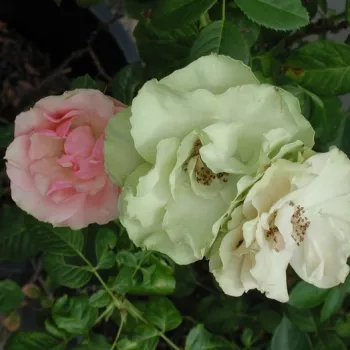
Imagine your front garden after summer rain: droplets on glossy foliage, pastel blooms opening in soft pink and settling into calm green tones, while bees move freely through the simple flowers. Greensleeves has been bred for reliability and robust health, so you can enjoy long, steady performance in a typical family plot without specialist knowledge. Its upright habit and moderate height make it ideal for narrow London terraces and compact borders where you want elegance without fuss, and it responds well to regular rain, coping gracefully with breezy, wetter coastal conditions and heavier soils when drainage is sensibly improved. As an own-root rose, it offers long-lived stability and easy regeneration, building roots in the first year, stronger shoots in the second, and full ornamental presence by the third. The single blooms draw in pollinators, while the tidy shrub structure keeps maintenance minimal for busy urban gardeners.
Usage options
| Target area |
Reasoning |
| Front garden focal point |
Use as a compact, upright feature near your front door or along a path where its unusual pink-to-green tones can be appreciated at eye level. Simple, occasional deadheading keeps the shrub neat for busy urban gardeners. |
| Low-maintenance flower bed |
Plant in a mixed bed with good drainage and you gain a long-flowering, low-intervention shrub with reliable disease resistance, ideal when you want colour but little ongoing work for time-pressed beginners. |
| Pollinator-friendly planting strip |
The single flowers offer easy access to stamens, encouraging bees to visit repeatedly through the season; use in narrow soil strips or rainwater-fed beds to combine ornament and ecology for environmentally minded homeowners. |
| Small rose hedge or border edge |
Set in a line at the recommended spacing to frame a path or lawn; the upright habit and even height provide a gentle, not overpowering, green-pink edge that stays attractive over years for family garden planners. |
| Feature rose in large container |
In a 40–50 litre peat-free container, Greensleeves becomes a tidy, repeat-flowering feature on balconies or paved front yards, provided with regular watering and feed, suiting space-conscious city dwellers. |
| Mixed perennial and shrub border |
Combine with soft perennials to let its pastel green blooms act as a calming link between foliage textures, while own-root durability ensures the rose remains a stable anchor plant for long-term garden planners. |
| Rain-aware urban planting |
Position in beds that collect roof or path run-off, where improved but moist soil supports steady growth, and its good health tolerates breezier, wetter weather typical of exposed sites for sustainability-focused gardeners. |
| Cut-flower corner for casual bouquets |
Grow a small group to harvest stems of clusters; the shifting porcelain pink to green shades lend informal arrangements a distinctive, modern look, rewarding even simple pruning know-how for creative home florists. |
Styling ideas
- Pastel Pathway Border – Line a narrow front-garden path with Greensleeves and underplant with lavender or nepeta for soft scent and bee activity – ideal for urban families wanting gentle structure.
- Modern Courtyard Pot – Place a single plant in a 50-litre charcoal-grey container with trailing thyme to highlight the green blooms – suited to contemporary terrace or balcony owners.
- Romantic Rain-Garden Strip – Combine with low heuchera and cypress spurge in a slightly damp, free-draining strip that receives roof run-off – perfect for sustainability-minded town gardeners.
- Soft Hedge Frame – Create a low hedge along a front boundary, interspersed with sage or dwarf grasses, to frame the garden without blocking light – best for those shaping welcoming entrances.
- Pollinator Ribbon Bed – Weave a sinuous line of Greensleeves through a small lawn, infilled with bee-friendly perennials like catmint – for nature-loving households wanting wildlife interest.
Technical cultivar profile
| Parameter |
Data |
| Name and registration |
Floribunda bed rose; registered as HARlenten, marketed as Greensleeves Bedding rose HARlenten; exhibition floribunda (spray) type suitable for both garden and show use. |
| Origin and breeding |
Bred by Jack L. Harkness (R. Harkness & Co. Ltd., Hitchin, UK); complex floribunda lineage combining ‘Rudolph Timm’, ‘Arthur Bell’, ‘Pascali’ and others; introduced in the United Kingdom in 1980. |
| Growth and structural characteristics |
Compact upright shrub, around 75–105 cm tall and 85–115 cm wide, with moderately dense, glossy dark green foliage and moderate prickliness; forms a structured, balanced plant for beds and borders. |
| Flower morphology |
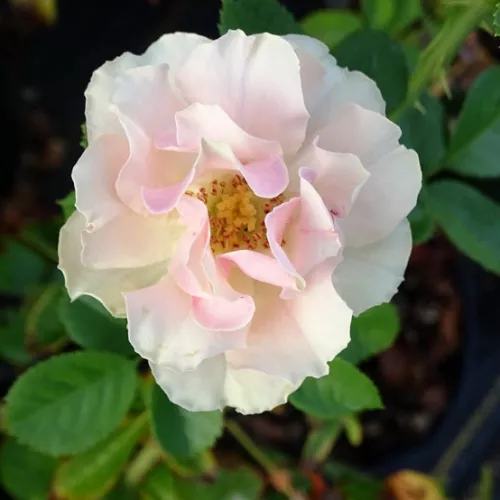
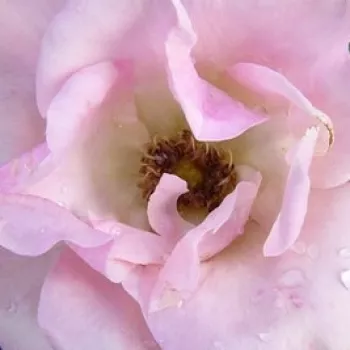
Single, flat blooms with 5–12 petals, medium-sized clusters on floribunda sprays; remontant habit giving initial flush followed by abundant repeat flowering, especially in a sunny, open position. |
| Colour data and phenology |
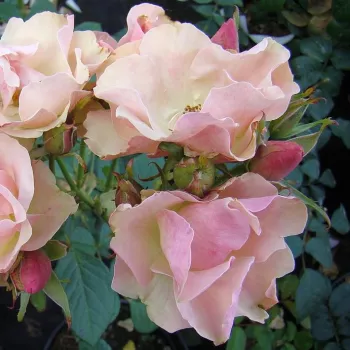
Unusual pink-green blend: pale pink buds shift to porcelain pink and creamy greenish-white, then to pastel green with silky cream; very good colour retention, though strong sun hastens fading to softer tones. |
| Fragrance and aroma |
No noticeable fragrance; chosen primarily for its distinctive colour play, flower form and garden performance rather than scent, making it useful where visual effect and pollinator value are the priorities. |
| Hip characteristics |
Produces only slight quantities of hips; small spherical red hips around 10–14 mm, offering modest late-season interest without significantly diverting the plant’s energy from repeat flowering. |
| Resistance and winter hardiness |
Rated H7, hardy to approximately −21 to −18 °C (USDA 6b); good resistance to powdery mildew and black spot, moderate rust susceptibility; performs best with regular watering in prolonged heat or drought. |
| Horticultural recommendations |
Suited to beds, borders, low hedging, specimen and cutting; prefers sunny sites with improved drainage; low maintenance with occasional deadheading and feeding, planted roughly 60–100 cm from neighbouring roses. |
GREENSLEEVES offers long-season clusters of unique pink-green single blooms, reliable disease resistance and durable own-root growth, making it a thoughtful choice for understated, low-effort colour in family gardens.