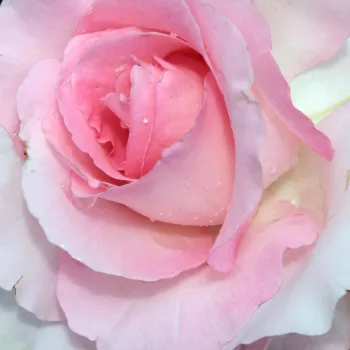
GRAND SIÈCLE™ – pink hybrid tea rose – Delbard
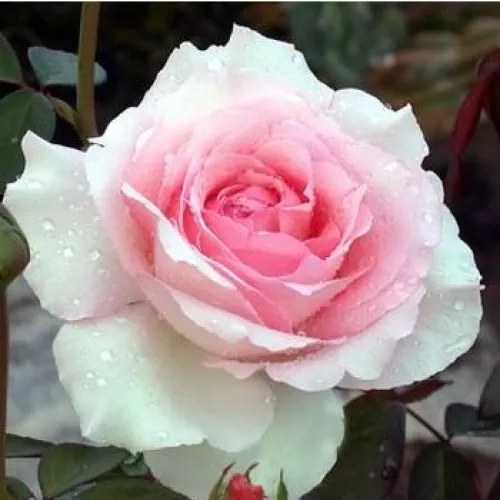
Step out to a front garden that feels quietly composed: balance in the clear, pastel-pink blooms of GRAND SIÈCLE™, a classic Delbard hybrid tea bred for strong fragrance and reliable rebloom. Its bushy, medium-sized habit suits compact London terraces, where you can rely on resilience in damp, breezy conditions even on heavier soils and in areas with frequent rain and fungal pressure. As an own-root rose it offers long-term stability, regenerating from the base if top growth is damaged, supporting a long lifespan with only moderate care. In a 40–50 litre container or a narrow border, it delivers refined colour and cut flowers for the house while your garden quietly grows in harmony.
Usage options
| Target area | Reasoning |
|---|
| London terraced-house front garden |
Bushy, upright growth and medium height make GRAND SIÈCLE™ ideal for a narrow front strip, where its pastel-pink flowers read clearly from the pavement without overwhelming the space, perfect for a neat, welcoming entrance for the busy urban gardener. |
| Rainwater-friendly container on balcony or patio |
Planted in a 40–50 litre peat-free container with good drainage, this own-root rose forms a stable framework over several seasons, coping well with periods of wet followed by drying winds, making it suitable for those who want low-fuss structure and scent in small outdoor rooms. |
| Cut-flower corner in a family garden |
The hybrid tea form with solitary stems and fully double blooms is well suited to vases, while remontant flowering gives several waves of harvest; space-efficient planting distances help homeowners create a productive yet orderly cutting patch enjoyed by family flower-lovers. |
| Feature rose in mixed planting |
A compact, bushy habit with dark, slightly glossy foliage provides a calm vertical accent among perennials and grasses, and its even proportions make it easy to underplant without shading neighbours, supporting gardeners seeking a simple, balanced focal point. |
| Clay or chalky suburban border |
Once established in improved but heavier soils, its moderate disease resistance to black spot and powdery mildew supports stable performance in changeable, often damp weather, suiting householders on typical UK plots aiming for reliable flowering with modest intervention. |
| Low-maintenance specimen by the front path |
Expect a steady development arc as roots settle in the first year, top growth builds in the second, and full ornamental effect appears from year three onwards, giving a graceful, long-lived presence that appeals to time-pressed owners wanting predictable results. |
| Formal pair flanking steps or doorway |
Symmetrical planting, supported by its balanced, medium height and regular flower form, creates a classic, tidy frame to an entrance; repeat flushes refresh the display through summer, attractive for those who like traditional formality without intensive pruning knowledge. |
| Small show or exhibition display garden |
Bred as a hybrid tea suitable for exhibition, with well-formed, evenly coloured blooms and a strong, fruity-rose scent, it offers dependable show-quality flowers in a modest footprint, appealing to enthusiastic amateurs exploring basic exhibiting alongside everyday garden use. |
Styling ideas
- Pink-Perfumed Welcome – Plant GRAND SIÈCLE™ by a front gate with Alchemilla mollis at its feet to catch raindrops, giving a soft green skirt below pastel-pink, scented blooms – ideal for terrace homeowners who value a charming first impression.
- Elegant Balcony Duo – Use a pair of 50 litre containers with this rose underplanted with trailing bellflower to spill over the edges, combining structure and movement – perfect for urban balcony gardeners wanting easy elegance and fragrance.
- Romantic Cutting Strip – Line a sunny fence with evenly spaced plants and intersperse with slim spires of lavender, giving armfuls of flowers and complementary scent – suited to hobby gardeners who enjoy bringing home-grown bouquets indoors.
- Calm Clay Border – In heavier soil, set GRAND SIÈCLE™ ahead of airy grasses and nepeta, using mulch and rainwater to keep maintenance low while the bushy outline anchors the planting – for families upgrading a typical suburban front garden.
- Formal Step Accent – Flank steps with matching specimens edged by low sage, echoing the rose’s refined form and pastel tones in a structured layout – attractive to beginners seeking a classic look that stays tidy with moderate care.
Technical cultivar profile
| Parameter | Data |
|---|
| Name and registration |
Hybrid tea rose, registered as DELegran, traded as GRAND SIÈCLE™ Highly Scented DELegran; also known for exhibition as ‘Great Century’, belonging to the Hybrid Tea commercial group. |
| Origin and breeding |
Bred by Georges Delbard, France, from a complex Hybrid Tea lineage including ‘Queen Elizabeth’ and ‘Madame Antoine Meilland’; bred 1976 and introduced commercially by Georges Delbard SA in 1977. |
| Awards and recognition |
Gold Medal winner at the Concours International de Roses Nouvelles de Bagatelle in 1976, confirming ornamental merit, fragrance and garden performance under formal European trial conditions. |
| Growth and structural characteristics |
Bushy, upright shrub reaching around 75–105 cm in height with 60–90 cm spread, moderately thorny, and carrying dense, dark green, slightly glossy foliage that supports a neat, medium-sized outline. |
| Flower morphology |
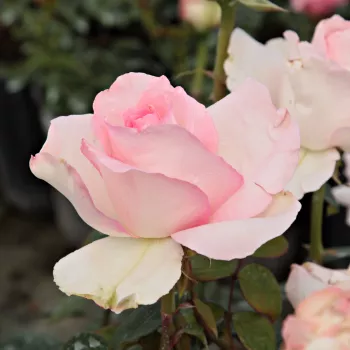
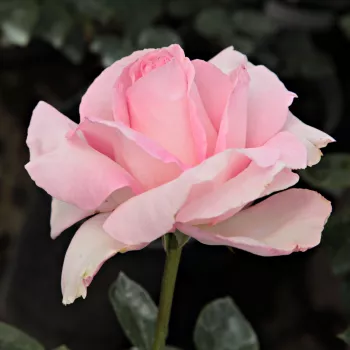
Fully double, cup-shaped hybrid tea blooms with 26–39 petals, produced mainly as solitary flowers on stems of medium length, with remontant, abundant repeat flushes through the main growing season. |
| Colour data and phenology |
Pearlescent pastel pink with creamy tones; outer petals RHS 65D, inner 62C; buds are cream flushed pink, blooms lighten as they age to a soft cream with faint pink before final fading. |
| Fragrance and aroma |
Strong, sweet, fruity-rose perfume noticeable at some distance, giving a traditional scented-rose experience; double flowers limit pollen access, so it is primarily ornamental rather than pollinator-supporting. |
| Hip characteristics |
Occasional ovoid hips, 12–18 mm long, orange-red in colour, forming after successful pollination and adding a modest seasonal accent without being a major ornamental feature of the variety. |
| Resistance and winter hardiness |
Hardy to approximately −21 to −18 °C (RHS H7; Swedish Zone 3; USDA 6b), with good resistance to powdery mildew and black spot, and moderate susceptibility to rust in humid or sheltered situations. |
| Horticultural recommendations |
Best in full sun with fertile, well-drained soil; plant 40–80 cm apart depending on use, in borders or 40–50 litre containers, with medium maintenance needing occasional pruning and routine disease checks. |
GRAND SIÈCLE™ combines strong fragrance, graceful balance and reliable rebloom on a long-lived own-root framework, making it a thoughtful choice for gardeners seeking enduring scent and structure with measured, sustainable effort.