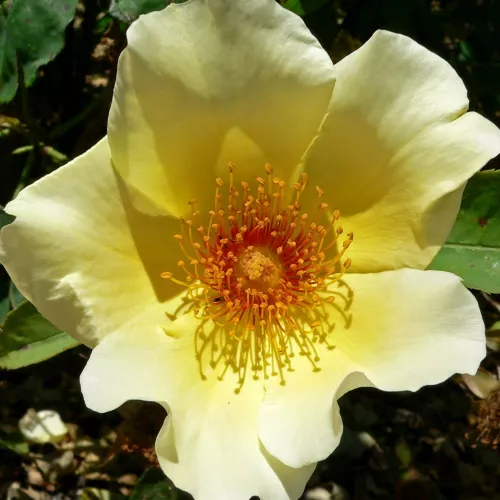
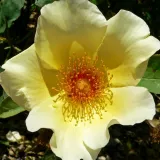
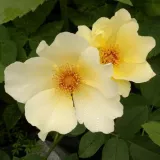
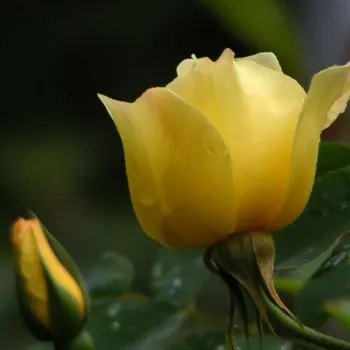
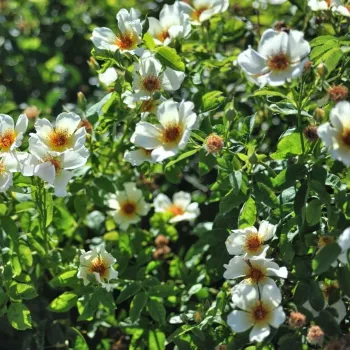
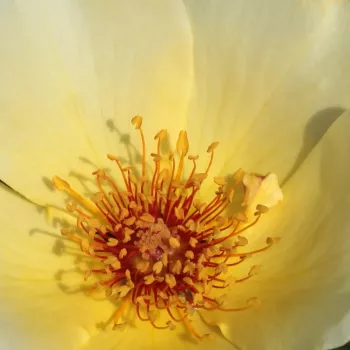
GOLDEN WINGS – yellow wild rose – Shepherd
Step out after rain and this tall, airy shrub greets you with open, golden blooms that feel both calm and uplifting – a natural choice for a small London front garden where good air flow helps it cope serenely with humid, disease-prone conditions. Its single flowers offer generous pollen, so bees and butterflies quickly discover this reliable source of food, while the bushy habit and glossy foliage keep the planting looking full with very little fuss. As an own-root rose it matures steadily, building long-term strength below ground for dependable top growth above. In a typical garden it settles in gently – roots in year one, shoots in year two, then full ornamental presence by year three – giving you time to shape a sustainable, easy-care space. Whether you choose a hedge, specimen or mixed bed, this rose brings a feeling of quiet balance and lasting structure to your design, its pollinator-friendly flowers combining with low-maintenance pruning, self-cleaning blooms and good hardiness to support relaxed, rainwater-wise urban gardening.
Usage options
| Target area | Reasoning |
|---|
| Front-garden specimen by the path |
An upright, gently arching shrub to 150–220 cm creates a light, welcoming screen without overwhelming a narrow terraced-house front garden, giving height, privacy and all-season framework for those wanting structure. |
| Pollinator-friendly mixed border |
Large, single golden flowers with exposed stamens provide easy access to nectar and pollen, drawing bees and butterflies through the season and supporting urban biodiversity for gardeners who value pollinator. |
| Low-maintenance family planting |
Good self-cleaning means most spent blooms drop away by themselves, so the shrub stays tidy with minimal deadheading, suiting busy households who prefer simple, once-a-year pruning and genuinely low effort. |
| Rainwater-wise, permeable front garden |
Deep roots and medium maintenance needs suit a mulched, well-drained bed that copes with UK downpours yet avoids waterlogging, supporting sustainable drainage and relaxed care for environmentally aware gardening. |
| Informal flowering hedge |
Planting at 90 cm intervals forms a semi-transparent hedge that softens boundaries, offers occasional orange hips, and gives a long-lived, woody backbone for those seeking dependable garden balance. |
| Urban bed with fungal pressure |
With black spot resistance and reasonable overall disease tolerance, it performs steadily where air can feel damp after rain and wind, fitting small city plots cared for by time-pressed hardiness. |
| Medium-height structural backdrop |
The tall, upright habit and dense, light-green foliage frame lower perennials, lending rhythm and depth through winter and summer alike, ideal for gardeners who design around lasting plant structure. |
| Wildlife-friendly family play space |
Sparsely thorned stems and open, wildlife-attracting flowers suit relaxed, child-friendly gardens, where a robust shrub can be enjoyed close-up by curious, nature-minded pollinator. |
Styling ideas
- Golden-Drift – Underplant with Calamintha nepeta ‘Blue Cloud Strain’ to create a soft, bee-filled carpet beneath the open yellow blooms – ideal for busy families wanting relaxed pollinator support.
- Sunny-Hedge – Line a front boundary at 90 cm spacing and allow informal arching, pairing with low lavender for a fragrant, low-effort screen – suited to homeowners seeking structure without fussy clipping.
- Urban-Meadow – Combine with Monarda didyma ‘Jacob Cline’ and ornamental grasses in a permeable gravel bed for rainwater-wise colour – perfect for city gardeners focused on sustainability and easy care.
- Calm-Corner – Place a single specimen by a bench, adding nepeta and soft pink perennials for a balanced, reflective seating area – good for those wanting gentle height and year-round framework.
- Clay-Glow – On improved heavy clay, let this upright shrub rise behind spring bulbs and groundcovers to keep interest after they fade – useful for gardeners who need dependable impact with modest maintenance.
Technical cultivar profile
| Feature | Data |
|---|
| Name and registration |
Golden Wings – Park / shrub, wild rose type; ARS exhibition name ‘Golden Wings’. Registered cultivar name and trade name coincide; unregistered as a formal registration entry. |
| Origin and breeding |
Bred by Roy Eustace Shepherd in the USA, introduced 1956 by Bosley Nursery. Parentage: ‘Soeur Thérèse’ × (R. pimpinellifolia ‘Altaica’ × ‘Ormiston Roy’); belongs to the Hybrid Spinosissima shrub group. |
| Awards and recognition |
Holds the American Rose Society Gold Medal (1958) and the Royal Horticultural Society Award of Garden Merit (1993), confirming long-term garden performance and reliability in a range of conditions. |
| Growth and structural characteristics |
Upright shrub 150–220 cm high and 130–200 cm wide, with dense, light green glossy foliage and sparse prickles. Well suited as a specimen, backdrop or informal hedge in average-sized gardens. |
| Flower morphology |
Large, flat, single to semi-double flowers with 5–12 petals, borne in clusters. Repeats well after the main flush with an abundant second flowering, and most spent blooms fall away naturally. |
| Colour data and phenology |
Radiant golden-yellow flowers, ARS Ly; RHS 11A outer, 11B inner. Buds deep golden-yellow, opening vivid then lightening to creamy pale yellow in strong sun, maintaining a soft, luminous effect in the border. |
| Fragrance and aroma |
Noticeable but gentle rose fragrance that complements the wild-flower look without becoming overpowering. Scent level is generally mild, adding a subtle sensory layer along garden paths and seating areas. |
| Hip characteristics |
Produces moderate numbers of egg-shaped, 14–22 mm orange hips when not deadheaded. Hips add late-season colour and wildlife interest, accentuating the naturalistic, lightly wilder style of planting. |
| Resistance and winter hardiness |
Hardy to about –29 to –32 °C (RHS H7, USDA 4b, Sweden zone 5). Good heat and moderate drought tolerance; black spot resistant, with medium resistance to powdery mildew and rust in typical garden settings. |
| Horticultural recommendations |
Best in full sun with well-drained soil; suitable for flowerbeds, hedges, parks and urban green spaces. Space at 90–165 cm depending on use; grows well in large containers of at least 40–50 litres. |
Golden Wings offers tall, structural growth, bee-friendly single blooms and self-renewing own-root vigour, making it a thoughtful choice for those planning a long-lived, low-effort family garden.