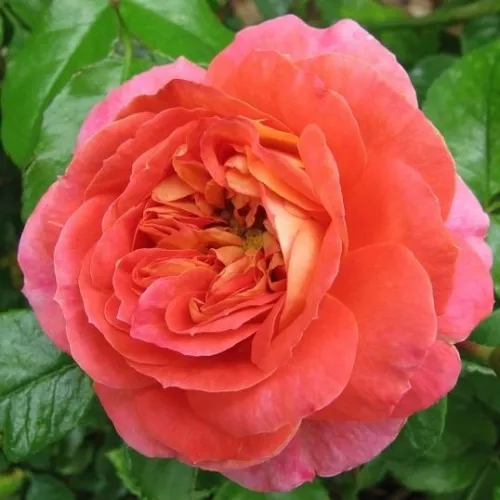
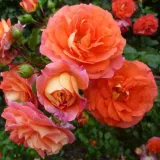
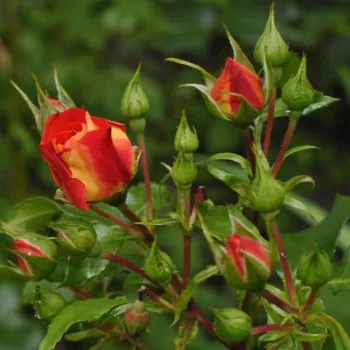
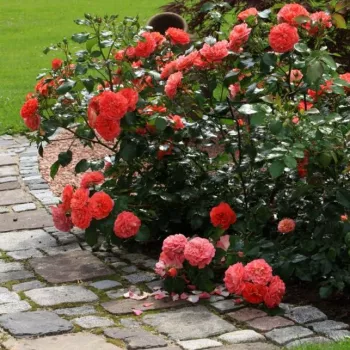
GEBRÜDER GRIMM® – orange bedding floribunda rose
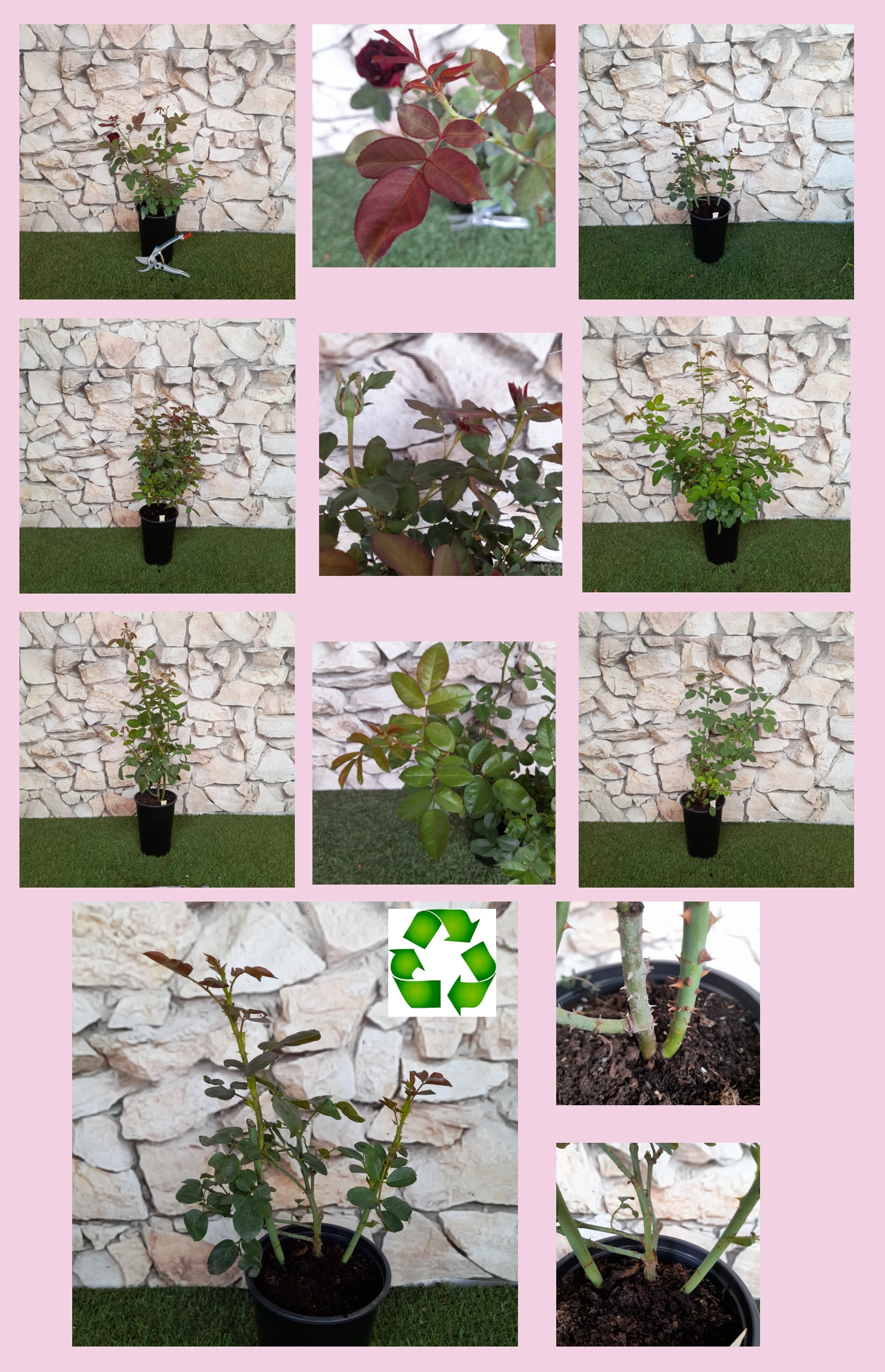
With its fairy‑tale clusters of orange and golden blooms, GEBRÜDER GRIMM® brings colour and cheerful structure to compact family gardens, especially where front beds must cope with wet spells and drainage challenges after heavy rain. This MärchenRosen® floribunda forms a dense, upright shrub with glossy foliage that keeps its shape neatly, ideal for low hedges or repeated groups along a London terrace. Planted as an own‑root rose, it establishes steadily, building roots in year one, more shoots and flowering in year two, and full ornamental impact by year three with reassuring longevity and the ability to regenerate from the base. Moderate self‑cleaning and remontant flowering make garden maintenance simple, while its compact size suits containers and small spaces aiming for a sustainable, rainwater‑friendly design.
Usage options
| Target area | Reasoning |
|---|
| Front garden bedding in small urban plots |
Dense, upright growth and compact spread keep paths clear while delivering a long season of warm, storybook colour, helping a narrow terrace frontage feel finished without crowding other plants, well suited to the busy homeowner gardener |
| Low flowering hedge along boundary or path |
Uniform height and branching allow it to line up neatly for a low hedge, repeating the same vibrant tones all summer and reducing the need to replace gaps, offering reliable structure and screening for a practical family boundary planner |
| Rainwater‑conscious mixed border on heavier soils |
This variety copes reliably where rain and wind leave beds slow to dry, giving stable ornamental value in typical clay‑based UK gardens when combined with sensible soil preparation and mulching, a reassuring option for climate‑aware householders |
| Feature groups in sustainable urban planting schemes |
Clustered flowering creates impact from a distance, so small drifts or triangles of plants quickly read as a single glowing block of colour, supporting a strong design statement in compact, low‑input city landscapes for design‑focused owners |
| Large containers on balconies, patios and roof terraces |
Its upright habit and moderate size suit 40–50 litre pots, where the own‑root form settles gradually and offers many seasons of use, avoiding frequent replanting and fitting neatly into long‑term, low‑waste container plans for urban residents |
| Family seating areas and play‑adjacent spaces |
The restrained, fruity fragrance and medium height sit comfortably near seating while not overwhelming small spaces, providing gentle scent and colour for adults to enjoy without dominating the practical layout of family gardens for relaxed users |
| Medium‑maintenance rose beds with seasonal interest |
Moderate disease resistance and partial self‑cleaning keep care requirements reasonable; occasional deadheading and light plant protection are usually sufficient to maintain a presentable bed across the season for time‑pressed garden beginners |
| Mixed perennial plantings with complementary companions |
Its warm orange‑gold blooms pair beautifully with cool blues and whites from plants like nepeta or obedient plant, helping create a balanced, biodiverse border that still feels coordinated and easy to manage for style‑conscious planting enthusiasts |
Styling ideas
- Fairy‑tale frontage – Plant a low hedge of GEBRÜDER GRIMM® along a terrace path, underplant with soft lavender and nepeta to cool the fiery blooms – ideal for transforming a small London front garden into a storybook welcome for visitors.
- Sunset containers – In a 50‑litre terracotta pot, combine this rose with trailing thyme and silvery sage for year‑round structure and gentle scent – perfect for balcony or patio owners wanting long‑lived colour with modest upkeep.
- Playful ribbon – Weave short rows of this rose through a mixed bed with blanket flowers and ornamental grasses to form a glowing orange ribbon – suited to families who want a cheerful, informal feel without complex maintenance.
- Courtyard focus – Use three plants as a triangle in a small paved courtyard, surrounded by low catmint, to create a warm focal point that looks good from upstairs windows – attractive for urban dwellers seeking maximum effect in minimal space.
- Rain‑wise border – In clay‑based front gardens, raise the bed slightly and combine this rose with hardy perennials that enjoy similar moisture, creating a resilient, colourful strip that copes with wet winters – ideal for climate‑aware city gardeners.
Technical cultivar profile
| Parameter | Data |
|---|
| Name and registration |
MärchenRosen® floribunda bred as KORassenet, marketed as GEBRÜDER GRIMM® with verified authenticity and ARS exhibition name Gebrüder Grimm for shrub rose classifications. |
| Origin and breeding |
Bred by Wilhelm Kordes III in Germany from ‘Bernsteinrose’ and complex seedling parentage, introduced by W. Kordes’ Söhne in 2001 after selection for garden performance. |
| Awards and recognition |
Highly decorated rose with ADR 2002 and medals from BUGA Potsdam, Kortrijk, Rome, plus TOPROOS Netherlands and RNRS Trial Ground Certificate for proven ornamental value. |
| Growth and structural characteristics |
Upright shrub 85–115 cm tall and 40–60 cm wide, with dense, glossy dark green foliage and moderate prickles, forming compact, uniform plantings suited to beds and edging. |
| Flower morphology |
Very double, rosette‑shaped clusters of medium flowers, generally 40+ petals, blooming in trusses with strong remontant character that ensures a generous second flush in season. |
| Colour data and phenology |
Fiery orange‑red outer petals with golden‑yellow centres shifting to softer pink‑orange tones; colour lightens faster in strong sun yet maintains a warm, glowing overall effect. |
| Fragrance and aroma |
Mild, slightly sweet fruity fragrance noticeable near the plant but not overpowering, adding gentle sensory interest suitable for seating areas and smaller, enclosed gardens. |
| Hip characteristics |
Hip set is usually sparse due to very double blooms, though occasional small spherical orange‑red hips 6–10 mm across may develop for late‑season decorative interest. |
| Resistance and winter hardiness |
Rated to about −29 to −32 °C (RHS H7, USDA 4b), with moderate resistance to black spot and powdery mildew, good rust resistance, and solid heat tolerance when watered. |
| Horticultural recommendations |
Best at 35–70 cm spacing depending on use; thrives in beds, hedges or large containers with regular watering in dry spells and basic care to support flowering and foliage. |
GEBRÜDER GRIMM® offers compact structure, season‑long colour and dependable performance in an own‑root form that matures steadily into a durable feature, making it a thoughtful choice for long‑term family gardens and urban spaces.