GAARD UM TITZEBIERG – lilac-pink park rose - Boudolf
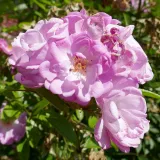
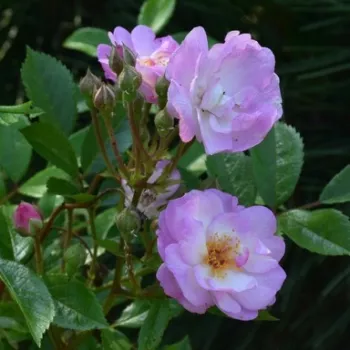
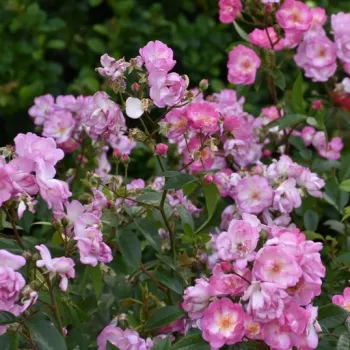
Bred in Belgium by Lens Roses, GAARD UM TITZEBIERG is a gracefully upright Hybrid Musk shrub that brings balance to compact, rainwater-wise front gardens and small urban plots, coping reliably even where clay soils need careful drainage and thoughtful planting. Its semi-double lilac-pink blooms with a soft white eye offer gentle fragrance and easy stamen access, giving bees and other pollinators a valuable stop along their daily path. As an own-root shrub it quietly builds a long-lived framework, regenerating well from the base and maintaining stable ornamental value for many seasons with only moderate care. Planted in good peat-free compost and watered mainly with collected rainwater, it responds with abundant clusters of flowers and autumn hips, settling first into roots, then shoots, before reaching its full garden presence by the third year.
Usage options
| Target area | Reasoning |
|---|
| London terrace front garden hedge |
This upright shrub forms a soft, shoulder-height line of lilac-pink clusters that frames a narrow front garden without overwhelming it, giving year-round structure and privacy with minimal pruning for the time-pressed homeowner. |
| Pollinator-friendly mixed border |
Semi-double blooms with readily accessible stamens provide useful forage through a long season, while the gentle musk scent and light colour sit comfortably among perennials, supporting bees for the environmentally minded beginner. |
| Rainwater-conscious park-style grouping |
Planted in groups at around 1 plant per square metre, this variety creates a relaxed park effect, working well where heavier soils call for careful drainage and mulching, suiting sustainability-focused gardeners. |
| Informal flowering fence line |
Its upright habit and moderate spread lend themselves to planting along fences, softening hard boundaries with repeating waves of lilac-pink flowers and ornamental hips that appeal to birds and nature-friendly families. |
| Large container for paved front garden |
In a 40–50 litre pot of quality peat-free compost, this own-root shrub offers rose-garden impact on small paved spaces, needing only routine watering and light shaping, a practical choice for busy urban residents. |
| Low-input “girly” pastel scheme |
The soft lilac-pink palette pairs naturally with catmint or daisies, giving a romantic, feminine feel without demanding high maintenance, so colour and charm appear reliably even for cautiously experimenting newcomers. |
| Wildlife-friendly autumn interest strip |
After flowering, numerous small orange hips extend the display into autumn while feeding birds, allowing a narrow bed or side return to feel lively and useful to local wildlife-conscious neighbours. |
| Long-term structural shrub in family garden |
Once established, this own-root rose builds a durable framework that recovers well from pruning or weather damage and flowers on year after year with moderate care, offering reassurance to long-horizon planning owners. |
Styling ideas
- Pastel-Hedge – Plant in a loose row near the pavement, underplant with Erigeron karvinskianus for a soft pink-and-white haze – ideal for London terrace families wanting gentle frontage.
- Musk-Border – Place two or three shrubs mid-border with Nepeta x faassenii at their feet, letting lilac-pink blooms float above blue mounds – suited to hobby gardeners seeking a relaxed cottage look.
- Rain-Garden – Combine with sedums and fine grasses in a slightly raised bed to manage downpipes and splash zones – perfect for urban owners designing a rainwater-friendly entrance.
- Courtyard-Pot – Grow one specimen in a 50 litre container by the front door, surrounded by low herbs, for fragrance and colour near eye level – good for busy professionals with paved spaces.
- Wildlife-Strip – Line a side path with these shrubs and let hips develop fully, mixing in self-seeding daisies to feed bees and birds – appealing to nature-focused beginners.
Technical cultivar profile
| Parameter | Data |
|---|
| Name and registration |
Hybrid Musk shrub rose, registered as VELverd and marketed as Gaard um Titzebierg Park - shrub rose VELverd; approved exhibition name Gaard um Titzebierg. |
| Origin and breeding |
Bred in Belgium by Ann Velle Boudolf of Lens Roses from Hybrid Musk, Rosa × moschata lines; introduced and registered in 2005 by Lens Roses and Pépinières Louis Lens. |
| Growth and structural characteristics |
Upright shrub reaching around 120–170 cm in height and 80–130 cm spread, with moderately dense, mid-green foliage, a slightly glossy leaf surface and relatively sparse prickles on the stems. |
| Flower morphology |
Semi-double, small cup-shaped flowers, typically 13–25 petals, carried in clusters; remontant habit with particularly abundant second flush providing a long, intermittently repeating season of display. |
| Colour data and phenology |
Pale lilac-rose-pink shades (RHS 65C, 155D), buds purplish-pink, opening pastel and lightening through silvery-pink to almost white centres; colour retention very good with gentle, even fading in sun. |
| Fragrance and aroma |
Mild yet distinct honeyed, musky perfume typical of Hybrid Musk roses; best appreciated in still, humid air and close planting positions such as near paths, doors or seating, without becoming overpowering. |
| Hip characteristics |
After flowering, forms many small, spherical orange hips about 6–9 mm diameter; decorative into autumn and a useful additional food source for garden birds, extending seasonal wildlife interest. |
| Resistance and winter hardiness |
Hardy to approximately -21 to -18 °C (RHS H7, Swedish zone 3, USDA 6b); disease resistance moderate to common fungal issues, benefiting from good air movement and standard preventative care. |
| Horticultural recommendations |
Best in sunny positions, planted 90–180 cm apart depending on use; suitable for hedges, groups, borders, containers and cut stems, with moderate maintenance and occasional pest or disease checks. |
GAARD UM TITZEBIERG offers long-season lilac-pink clusters, wildlife-friendly hips and durable own-root growth, making it a thoughtful, low-fuss choice for those planning a resilient family garden.