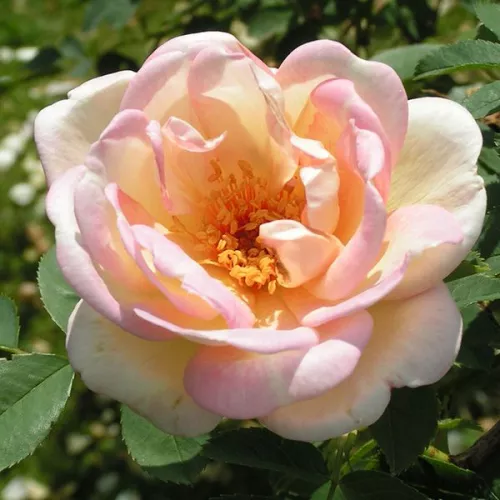
FRÜHLINGSDUFT – cream-yellow wild rose – Kordes
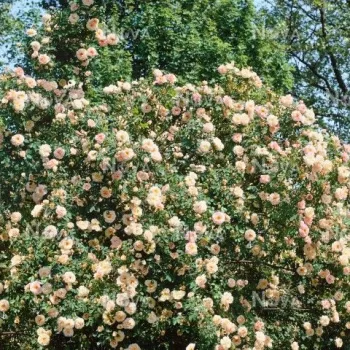
Step outside after rain and meet Frühlingsduft, a classic Kordes shrub rose whose arching stems and foaming clusters of creamy flowers bring a sense of balance to small urban plots and family gardens alike. Bred in 1949, it offers a rare combination of very strong fragrance and relaxed, naturalistic character, ideal for “girly”, rainwater-conscious London front gardens where managing heavy, moisture-retentive soil and exposed, damp conditions matters as much as beauty. Once established, its tall, fountain-like habit can define a boundary, soften a wall, or frame a path with one glorious, spring flush. As an own-root rose, it is grown for longevity, quietly building roots in the first year, strength and height in the second, and full ornamental presence by the third, so it copes well with family-life bumps and light pruning mistakes. The non-remontant, early-summer flowering pattern suits gardeners who prefer one spectacular performance and then easy-going greenery rather than ongoing deadheading. Dense matt foliage, good cold resilience and moderate self-cleaning make it an easy-care choice for those who want impact, not fuss, while its gently double, open-centred blooms remain moderately pollinator-friendly, particularly on warm, still days. In larger containers (at least 50 litres) or open ground, this own-root wild rose offers relaxed, sustainable structure and scent that reward patient, low-input gardening.
Usage options
| Target area | Reasoning |
|---|
| Front garden focal shrub |
Use as a single, tall, arching shrub to greet you and your visitors with a dramatic spring display and intense fragrance, then provide soft green structure for the rest of the year – ideal for the time-pressed homeowner. |
| Informal flowering hedge |
Plant at the recommended spacing for a loose, country-style hedge that screens the street, shrugs off cold winters, and needs only occasional trimming once flowering is over – perfectly suited to relaxed family gardens. |
| Wall-trained or along railings |
Guide the long, flexible, thorny stems along railings or a sunny wall to blur hard lines, enjoy strong scent at nose height, and get maximum effect from limited ground space – a smart choice for urban gardeners. |
| Rain-conscious clay or chalk borders |
Once established in improved soil, its deep roots and robust growth habit cope reliably with cool, wet spells and heavy, moisture-retentive ground typical of many UK plots – reassuring for sustainability-minded beginners. |
| Low-input, breathable planting schemes |
Combine with perennials and grasses for a relaxed, “breathable” layout that relies on structure, scent and foliage rather than intensive spraying, supporting reduced chemical use for eco-aware city-dwellers. |
| Part-shaded side passages |
Its tolerance of partial shade lets you brighten tricky side paths or north-east aspects, where a single spring flush of light, reflective blossom can lift the whole space – appealing to busy householders. |
| Large feature container (50L+) |
In a generously sized, well-drained, peat-free container, it becomes a movable, scented feature for patios or paved front gardens, combining spring glamour with easy seasonal maintenance – ideal for balcony-focused residents. |
| Pollinator-aware cottage planting |
Although not the most nectar-rich rose, its moderately open doubles sit well among herbs and nectar plants, creating a gentle, bee-friendly cottage effect with reduced upkeep – attractive to environmentally conscious hobbyists. |
Styling ideas
- Romantic-entrance – Underplant by the front gate with lady’s mantle and soft grasses so the arching, fragrant blooms spill elegantly over the path – for homeowners wanting a welcoming first impression.
- Cottage-ribbon – Run a loose row along a low fence with feverfew and nepeta in front for a fluttering, storybook look – for beginners who like informal but coordinated schemes.
- Pastel-pergola – Train stems over a light timber arch with fragrant peonies nearby for layered spring scent and soft creams and pinks – for urban gardeners creating an intimate seating nook.
- Clay-comfort – In heavy-soil borders, team with hardy geraniums and sage to knit around its base, hiding bare stems and helping manage surface moisture – for practical, sustainability-minded garden owners.
- Balcony-vignette – In a 50–70 litre container, pair with trailing thyme and compact lavender for a scented, wildlife-aware corner – for city-dwellers greening small terraces or paved fronts.
Technical cultivar profile
| Property | Data |
|---|
| Name and registration |
FRÜHLINGSDUFT cream-yellow wild rose – Kordes; Botanical rose collection; shrub, wild and Hybrid Spinosissima group; trade name Frühlingsduft, ARS exhibition name Fruhlingsduft, unregistered cultivar. |
| Origin and breeding |
Bred by Wilhelm J. H. Kordes II in Germany from ‘Joanna Hill’ × Rosa pimpinellifolia L; introduced by W. Kordes’ Söhne in 1949 as a vigorous, fragrant, botanical-style shrub rose. |
| Growth and structural characteristics |
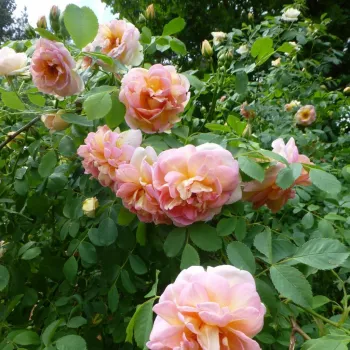
Bushy, arching shrub reaching about 176–275 cm high and 128–200 cm wide, densely thorned with matt mid-green foliage; moderate self-cleaning, forming a substantial, fountain-like garden presence over time. |
| Flower morphology |
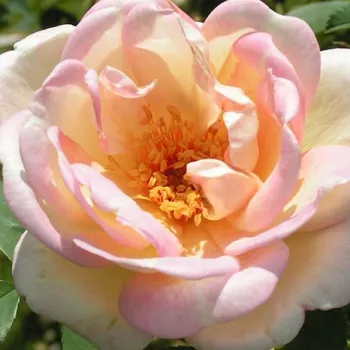
Large, double, flat flowers with roughly 26–39 petals, borne in clusters; a once-flowering, non-remontant shrub delivering a single, generous main flush rather than repeated blooms through the season. |
| Colour data and phenology |
Cream-yellow buds open to pale creamy blooms with buttery centres and delicate pink edges, then fade to near white with a faint blush; good colour retention across the flowering period in typical garden conditions. |
| Fragrance and aroma |
Very strong, room-filling scent with a classic rosy character; best appreciated where air movement carries the perfume along paths, near seating, or close to doors and windows for everyday enjoyment. |
| Hip characteristics |
Rose hips are generally sparse; when present they are small, spherical, and green, usually 9–15 mm in diameter and not reliably ripening or adding significant ornamental value in most seasons. |
| Resistance and winter hardiness |
Hardy to around −29 to −26 °C (RHS H7, Swedish zone 4, USDA 5a); good heat tolerance with watering in prolonged drought; moderate resistance to mildew and black spot, with good rust resistance. |
| Horticultural recommendations |
Suited to specimen, hedge, pergola or wall use with about 130–210 cm spacing; prefers improved, well-drained soil; needs occasional pruning and, in tougher seasons, some plant protection for best display. |
FRÜHLINGSDUFT offers one magnificent spring display, powerful fragrance and durable, own-root strength that steadily builds into a long-lived feature, making it a thoughtful choice for gardens that favour character over constant maintenance.