FORTUNA® – pink bedding floribunda rose – Kordes
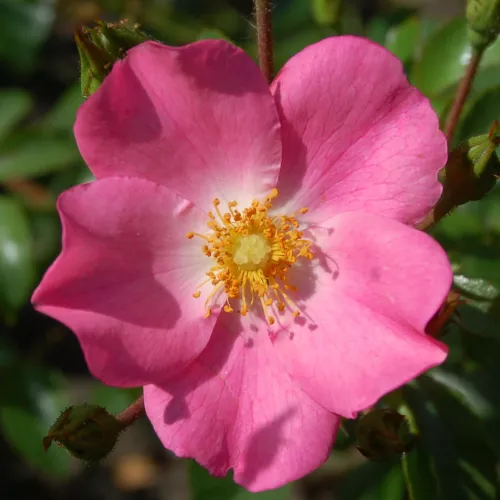
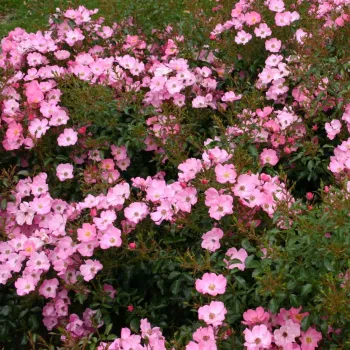
Step out after rain into a front garden that feels quietly balanced, where clusters of single salmon-pink blooms on compact bushes catch the light yet cope calmly with rain and wind, keeping their colour and neatness with almost no deadheading. FORTUNA® is bred by Kordes for reliable, remontant flowering, so you can enjoy waves of blossom from early summer into autumn while bees work the open centres undisturbed. As an own-root rose it offers long-term stability, regrowing evenly from the base for a long lifespan and steady shape in small London front gardens. In its first year it concentrates on roots, the second on building shoots, and by the third year it settles into full ornamental value with dense, glossy foliage that fills narrow beds and rainwater-friendly planting strips with sustainable, low-fuss colour.
Usage options
| Target area | Reasoning |
|---|
| Small front-garden beds and narrow borders |
The naturally compact, bushy habit and moderate height make it ideal for tight spaces along paths, bay windows or low railings, giving tidy structure without swamping neighbouring plants, well suited to the beginner urban gardener. |
| Pollinator-friendly, low-maintenance planting |
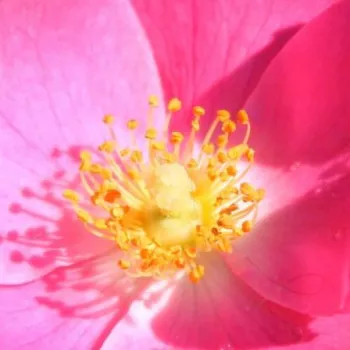
Single, open flowers with prominent stamens offer easy access for bees over a long season, while good self-cleaning means little deadheading, supporting wildlife without adding to your gardening workload, ideal for the time-poor city resident. |
| Rainwater-managed, sustainable front gardens |
Rain-resistant blooms and sturdy foliage cope well with exposed pavements and downpipe run-off, suiting front gardens that slow and soak rain rather than paving over, an attractive option for the environmentally conscious homeowner. |
| Containers on steps, balconies and patios |
Its neat, upright growth and repeat flowering perform reliably in a large 40–50 litre pot with good drainage, creating a long-season feature where soil is limited, particularly rewarding for the balcony or terrace gardener. |
| Easy-care family borders |
Moderate maintenance, good self-cleaning and own-root resilience mean it settles in steadily with basic care, giving dependable colour in mixed borders without complex pruning, reassuring for the busy family garden owner. |
| Long-lived, resilient planting schemes |
As an own-root shrub it regenerates well from the base and avoids graft failure, building a durable structure that stays true to type over many years, making it a sound choice for the quality-conscious planner. |
| Mass bedding and edging for cohesive colour |
Dense foliage, uniform habit and close planting distances allow you to create smooth, salmon-pink groundcover and crisp edging lines that look deliberate rather than fussy, appealing to the design-focused home gardener. |
| Exposed and coastal-influenced sites |
The sturdy structure, good rain resistance and dependable colour make it suitable where wind and wet weather are frequent, maintaining ornament even in challenging conditions, helpful for the coastal-climate garden owner. |
Styling ideas
- Soft-Edged Border – Plant in a loose line along a front path, underplanting with Nepeta or low sage for hazy blue contrast – suited to the relaxed, wildlife-minded city dweller.
- Terrace Statement Pot – Grow a single plant in a 40–50 litre container with fine-textured grasses such as Stipa tenuissima for movement and airy structure – ideal for space-conscious balcony owners.
- Pollinator Ribbon – Mass plant along a sunny fence with lavender and chives to create a bee-luring ribbon of pink, purple and soft green – perfect for families wanting informal, nature-friendly colour.
- Rain-Garden Strip – Combine with parsley, nepeta and ornamental grasses beside a drive or downpipe to soften hard edges and cope with irregular moisture – suited to sustainability-focused front-garden renovators.
- Neat Hedge Line – Use close spacing to form a low, flowered hedge that defines boundaries without blocking light, pairing with evergreen box balls for year-round shape – appealing to order-loving townhouse owners.
Technical cultivar profile
| Attribute | Data |
|---|
| Name and registration |
Floribunda shrub rose from the RigoRosen® collection; registered as KORatomi and marketed as Fortuna® RigoRosen® KORatomi, recognised in shows under the exhibition name Fortuna. |
| Origin and breeding |
Bred by Tim-Hermann Kordes at W. Kordes’ Söhne in Germany, with breeding completed in 2001 and the cultivar introduced and registered internationally in 2002 for garden and landscape use. |
| Awards and recognition |
Highly decorated variety, including ADR award 2002 and multiple gold and silver medals at European and international trials such as Baden-Baden, The Hague, Kortrijk, Tokyo, Paris and Potsdam. |
| Growth and structural characteristics |
Bushy, upright and dense habit, typically 50–70 cm high and 40–60 cm wide, with glossy dark green foliage, moderate prickles and good self-cleaning as most spent flowers fall naturally. |
| Flower morphology |
Bears small, flat, single flowers with 5–12 petals in generous clusters; strongly remontant, giving two or more main flushes and scattered blooms between, especially in warm, sunny summers. |
| Colour data and phenology |
Warm salmon-pink buds open to soft salmon blooms with a white throat, then fade towards pastel pink; colour holds well in rain and lightens in strong sun while maintaining an attractive contrast. |
| Fragrance and aroma |
Fragrance is very light and unobtrusive, with only a faint, hard-to-define scent close up, making it suitable where strong perfume is not desired or where fragrance will come from companion plants. |
| Hip characteristics |
Forms small, spherical red hips around 7–10 mm across in moderate numbers after flowering, adding discreet autumn interest and potential wildlife value without dominating the plant’s appearance. |
| Resistance and winter hardiness |
Hardy to approximately −23 to −21 °C (RHS H7, USDA 6a, Swedish Zone 3); moderate resistance to black spot and powdery mildew and good rust resistance, may need routine monitoring in damp spells. |
| Horticultural recommendations |
Best in full sun with well-drained soil; suitable for borders, groundcover, edging, containers and urban schemes, using 30–55 cm spacing and roughly 8–9 plants per m² where mass effect is desired. |
FORTUNA® offers compact, repeat flowering, pollinator-friendly colour on a resilient own-root framework that settles in for a long, steady life in your garden, making it a thoughtful choice for understated, sustainable planting.