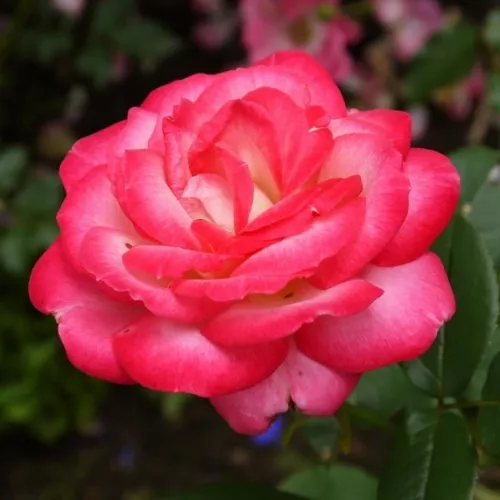
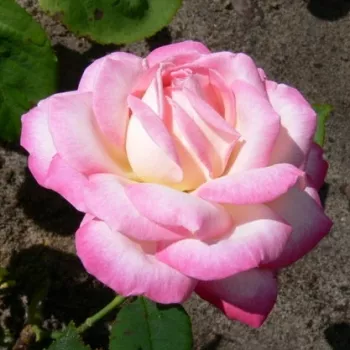
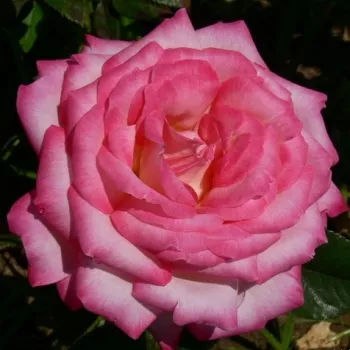
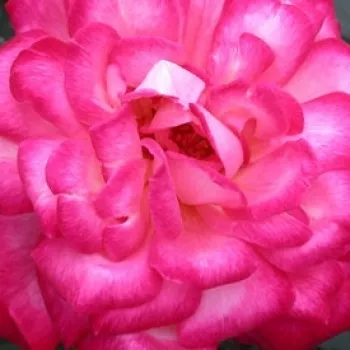
Flushing Meadow – cream-pink hybrid tea rose
Step from busy pavement into a quietly balanced front garden with Flushing Meadow, a compact hybrid tea rose whose cupped, creamy blooms are framed by a fine scarlet rim and held on neat, upright stems ideal for cutting after summer showers have passed and breezes have died down in typical British changeable weather. Its mid‑green, slightly glossy foliage forms a tidy backdrop, while the very double flowers open in elegant succession, offering a buttery glow that softens to gentle pastel tones as each bloom matures. Brought to you as an own‑root, 2‑litre plant, it is bred for steady longevity and reliable regeneration, building a discreet but resilient framework that suits small London front gardens and narrow beds. Given reasonable drainage and simple seasonal care, you can expect a calm development from strong roots in the first year, increased flowering shoots in the second, and full ornamental presence by the third, supporting a sustainable approach to an urban garden where you can cut subtly scented stems for the home.
Usage options
| Target area |
Reasoning |
| Narrow London front garden bed |
The upright, compact habit and 70–95 cm height make Flushing Meadow easy to place in slim beds along paths or railings, keeping a tidy outline with medium maintenance for busy urban gardeners. |
| Feature rose in a “girly” entrance border |
Cream blooms edged in scarlet-pink bring a softly feminine, dressy look beside steps or doorways, combining well with pastel perennials to frame the entrance for style-conscious homeowners. |
| Cutting-and-enjoying vase corner |
Large, very double, solitary flowers on upright stems are ideal for indoor arrangements; planting one or two bushes provides a summer supply of exhibition-style blooms for home flower lovers. |
| Rainwater-conscious front garden scheme |
Medium watering needs and moderate drought tolerance suit rainwater-fed barrels and permeable, mulched beds where you can direct roof run-off, appealing to sustainability-minded households. |
| Mixed shrub and rose border |
Dense, mid‑green foliage and repeat flowering give continuous structure among shrubs like Japanese spirea, ensuring the rose remains visually engaging through the season for family gardeners. |
| Formal edging or low hedge |
Recommended spacings of 55–65 cm allow rhythmic, low hedging beside paths, combining floriferous hybrid tea elegance with a clear outline appreciated by neat-border enthusiasts. |
| Large container on terrace or balcony |
Flushing Meadow adapts well to a 40–50 litre pot with good drainage and regular watering, delivering upright, colourful blooms close to seating areas for balcony and patio owners. |
| Seasonally tidy family play garden |
Medium disease resistance and straightforward pest control routines keep the plant presentable around family spaces with just periodic deadheading and checks for time-poor beginners. |
Styling ideas
- Soft-Entrance Border – Combine Flushing Meadow with pale pink geraniums and airy grasses for a quietly romantic front path that stays neat around steps – ideal for style-conscious homeowners.
- Cutting-Nook Trio – Plant three bushes near a back door with low herbs at the base, creating a handy spot to snip exhibition-type stems for the vase – perfect for home flower lovers.
- Rain-Smart Forecourt – Set roses in gravel-mulched pockets between permeable pavers, channelling downpipe water through planting to keep roots moist yet free-draining – suited to sustainability-minded households.
- Pastel-Hedge Line – Use a single row at 55–65 cm spacing along a path, underplanting with lavender or catmint for a scented, low hedge effect – good for neat-border enthusiasts.
- Balcony-Rose Pot – Grow one plant in a 50 litre terracotta container with dwarf sage and pebbles on the surface for tidy moisture retention – designed for balcony and patio owners.
Technical cultivar profile
| Property |
Data |
| Name and registration |
Hybrid tea rose, commercial type hybrid tea; registered as DORnapa, marketed as Flushing Meadow hybrid tea rose DORnapa, ARS exhibition name Flushing Meadow. |
| Origin and breeding |
Bred by François Dorieux II, Dorieux Pépinières, Montagny, France; parentage unknown; introduced and registered in 1988 via Pépinières Jacques Briant. |
| Growth and structural characteristics |
Compact, upright bush reaching about 70–95 cm high and 55–80 cm wide, with moderately thorny stems and dense, mid‑green, slightly glossy foliage providing a tidy framework. |
| Flower morphology |
Large, cupped, very double flowers with over 40 petals, borne mainly singly on stems; remontant, with a plentiful second flush following the main summer flowering period. |
| Colour data and phenology |
Cream inner petals edged bright scarlet, ARS code RB; RHS 45A outer, 11D inner; buds deep red, flowers fade towards pink and buttery yellow tones as the contrast gently softens. |
| Fragrance and aroma |
Mild, sweetish fragrance with a subtle, refined character; enough scent for close enjoyment in small gardens or when cut for the vase, without overwhelming nearby seating areas. |
| Hip characteristics |
Produces small numbers of spherical orange-red hips, about 12–18 mm in diameter, adding discrete seasonal interest if some flowers are left uncut towards the end of the season. |
| Resistance and winter hardiness |
Hardy to approximately −21 to −18 °C (RHS H7, USDA 6b, Swedish zone 3); resistant to powdery mildew and black spot, medium for rust, with moderate heat tolerance needing watering in drought. |
| Horticultural recommendations |
Best in full sun with fertile, well-drained soil; plant 55–100 cm apart depending on use; medium maintenance with occasional pest and disease control plus deadheading to keep displays smart. |
Flushing Meadow offers compact structure, elegant cuttable blooms and steady repeat flowering on a durable own-root framework, making it a thoughtful choice if you would like lasting beauty from a manageable hybrid tea rose.