PENELOPE – pale pink park rose - Pemberton
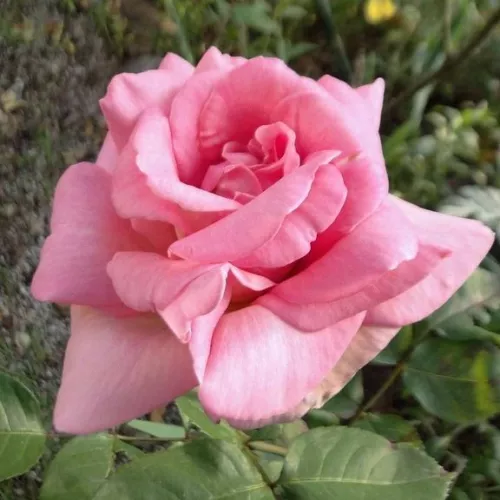
Step through your front gate and along a narrow path lined with Penelope, where each creamy blush bloom releases a muscat sweetness after rain and the semi-double flowers invite gentle pollinators. This classic Hybrid Musk shrub rose settles into busy urban gardens with reassuring ease, coping reliably with cool summers, blustery showers and typical British humidity and fungal pressure. As an own-root plant it offers quiet longevity, rebuilding from its base if cut back hard and maturing into a graceful, arching presence. In its first year it concentrates on roots, in the second on leafy shoots, and by the third it delivers its full veil of soft, repeat-flowering charm.
Usage options
| Target area | Reasoning |
|---|
| Front-garden feature shrub |
Penelope forms a tall, bushy shrub with dense, glossy foliage and soft pastel blooms that read beautifully from the pavement, giving character to narrow London front gardens without demanding intricate care, ideal for the busy urban gardener |
| Low-maintenance flowering hedge |
Planted at 90 cm intervals, its arching growth and repeat flowering create a semi-informal hedge that screens bins or parked cars while needing only light shaping, suiting those who want structure and privacy with minimal fuss, perfect for the time-poor homeowner |
| Rainwater-friendly mixed border |
Its good heat and moderate drought tolerance once established mean it partners well with free-draining, mulched borders that soak up downpours rather than shedding them, supporting a resilient, soakaway-style planting scheme for the sustainability-minded gardener |
| Pollinator-supporting cottage strip |
Semi-double clusters expose pollen-rich centres between flushes, especially when combined with salvia, nepeta or phlox, giving bees and hoverflies a steady resource through summer without intensive deadheading, reassuring for the wildlife-conscious beginner |
| Own-root long-term specimen |
As an own-root shrub it ages gracefully, with shoots emerging from below ground rather than relying on a graft, so if winter, pruning or accidents cut it back, it regrows true to type, a comfort for the long-view garden planner |
| Partial-shade side passage |
Suitable for partial shade, it still flowers well along north- or east-facing boundaries where many roses struggle, making use of awkward side-return spaces and easing the pressure to find full sun, attractive for the space-limited city dweller |
| Cut-flower and fragrance corner |
Medium, cupped, muscat-scented blooms carried in clusters are easily cut for vases without stripping the shrub, giving a steady supply of delicately coloured, strongly perfumed stems for the house, appreciated by the home fragrance lover |
| Clay and chalk-tolerant family border |
Once established in improved soil, its robust root system copes with heavy clay or chalky ground typical of many UK plots, provided drainage is reasonable after heavy rain, offering reliability to the practical family gardener |
Styling ideas
- Romantic-hedge – Plant a loose row along a low front fence, underplant with lavender and catmint to soften the base and echo the pastel palette – ideal for terrace owners wanting gentle privacy.
- Pathway-veil – Position a single shrub by a narrow garden path, letting the arching branches lean in amongst nepeta and dwarf sage for a fragrant, brushed-past experience – suited to small urban gardens.
- Muscat-nook – Create a seating corner with Penelope as the backdrop, flanked by phlox and Japanese anemone for layered late-season colour and scent – perfect for evening readers outdoors.
- Front-door-frame – Use two shrubs either side of a townhouse entrance, with clipped box or thyme at their feet, to frame the doorway in soft, repeat-flowering pink – good for design-conscious homeowners.
- Cutting-patch – Dedicate a sunny bed with Penelope at the centre and bee balm and annuals around, providing a steady flow of scented stems and pollinator activity – appealing to creative flower arrangers.
Technical cultivar profile
| Property | Data |
|---|
| Name and registration |
Penelope, a Hybrid Musk park/shrub rose used as a tall shrub for beds or hedging; ARS exhibition name ‘Penelope’; unregistered cultivar used long-term in traditional gardens. |
| Origin and breeding |
Bred by Rev. Joseph Hardwick Pemberton in the United Kingdom, 1924, from ‘Ophelia’ × an unnamed seedling; introduced by Hazlewood Bros. Pty. Ltd. and now widely grown as a heritage shrub. |
| Awards and recognition |
Gold Medal, National Rose Society, United Kingdom (1925); Royal Horticultural Society Award of Garden Merit (1993), confirming reliable performance and ornamental value under UK conditions. |
| Growth and structural characteristics |
Bushy, arching shrub 160–250 cm tall and 120–200 cm wide, with dense, dark green glossy foliage and moderate prickles; partly self-cleans, many spent flowers forming decorative hips if left untrimmed. |
| Flower morphology |
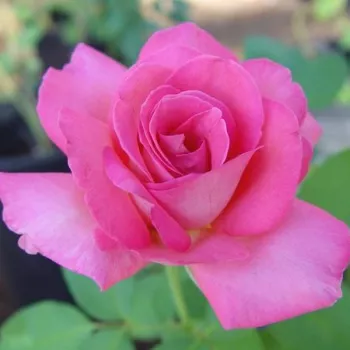
Semi-double, cupped blooms with 13–25 petals, medium-sized and borne in clustered trusses; remontant, with a strong first flush and a generous second wave of flowering under normal garden care. |
| Colour data and phenology |
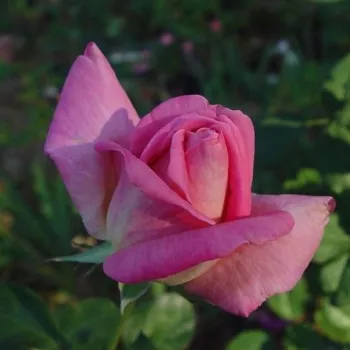
Pale, translucent pink over creamy white (RHS 65C, 155D); buds mauve-pink, opening pastel and lightening towards near white in heat; soft yellow stamens provide a warm focal point in each cluster. |
| Fragrance and aroma |
Strong, clearly perceptible scent with a muscat character, especially noticeable in humid, still air after rain; fragrance carries well around paths and seating areas when several shrubs are planted together. |
| Hip characteristics |
Produces occasional spherical orange-red hips, 10–15 mm across, mainly where spent flowers are not removed; hips can add light seasonal interest but are generally sparse rather than heavily decorative. |
| Resistance and winter hardiness |
Hardy to approximately -26 to -23 °C (RHS H7; USDA 5b), with moderate resistance to black spot, mildew and rust; tolerates UK heat and, once established, moderate drought and exposed conditions. |
| Horticultural recommendations |
Best in well-prepared soil with good drainage; suitable for clay or chalk once improved. Plant at 90–165 cm, water with captured rain where possible, and allow space to mature for long-term, low-input impact. |
Penelope offers a tall, fragrant, repeat-flowering shrub with good long-term structure, and in own-root form it builds a resilient framework for years of low-effort beauty, making it a thoughtful addition to a sustainable family garden.