TAPIS PERSAN – red bedding floribunda rose – McGredy
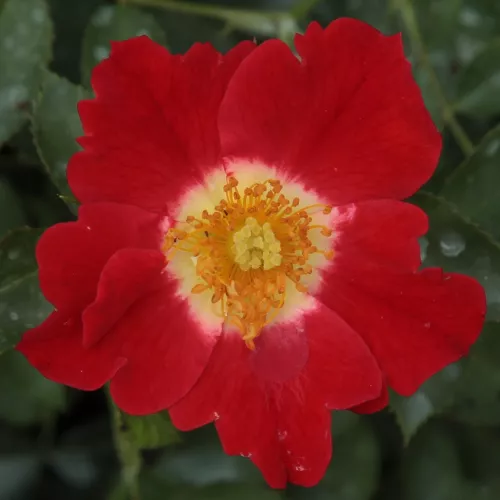
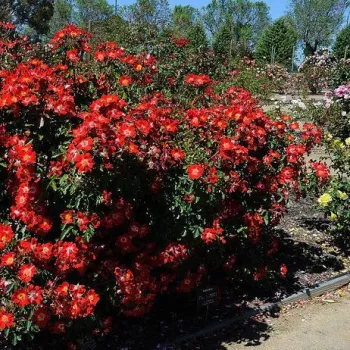
Step from pavement to garden and TAPIS PERSAN greets you with bold, painterly blooms that look freshly rinsed by rain, a reliable focal point in typical British front gardens where heavy soil and unpredictable showers are the norm, helping manage excess water by thriving where lawns might struggle. This hand‑painted floribunda forms a slightly spreading, bushy shrub that flowers repeatedly, its single, open blooms offering easy-access pollen to visiting bees right through the season. As an own‑root plant in a practical 2‑litre pot, it settles in steadily, supporting a long, low‑maintenance life in compact city spaces. In larger, well‑drained containers of at least 40–50 litres on a terrace or balcony, its vivid red and cream flowers create instant colour drama without complex pruning. Over its first three years it quietly builds roots, then structure, then full ornamental impact, so you can enjoy increasing balance and a relaxed sense of green sustainability in even the smallest urban plot.
Usage options
| Target area |
Reasoning |
| Front-garden bedding and borders |
Compact height and bushy habit let TAPIS PERSAN slot neatly into narrow London-style front beds, giving long seasonal colour with minimal shaping or staking for beginners and busy homeowners, especially urban garden owners. |
| Pollinator-friendly city planting |
Single, open flowers with accessible stamens make it particularly attractive to bees, so even a small patch or balcony container contributes to urban biodiversity while remaining neat and easy to live with for sustainability-minded gardeners. |
| Low-maintenance family flowerbed |
Moderate self-cleaning means fewer deadheading rounds, yet the plant keeps repeating in clusters; regular watering and light deadheading are usually enough for reliable flowering, which suits time-pressed family gardeners. |
| Rainwater-friendly, heavier soils |
Performs well in typical British conditions when planted in improved, free-draining soil, using moisture from wet spells rather than fighting it, making it a practical choice where clay dominates for realistic home gardeners. |
| Containers and balcony planters |
Own-root stability and a moderately spreading habit work well in 40–50 litre pots, where roots establish first, then shoots, then full display over three seasons, rewarding patient balcony and terrace owners. |
| Colour-focused specimen or focal point |
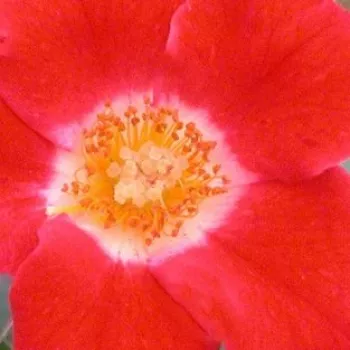
Its vivid scarlet-red petals and contrasting cream eye read strongly from the pavement, so a single shrub near the front door or gate instantly lifts kerb appeal with painterly character, ideal for design-conscious beginners. |
| Informal low hedge or rhythm planting |
Regular spacing along a path or boundary creates a loose, flowering line without strict clipping; own-root longevity supports a stable edge that regenerates from the base if cut back, reassuring long-term planners. |
| Mixed sustainable border with perennials |
Works well among drought-tolerant partners like lavender, sage or nepeta once established, sharing water wisely and providing repeating colour between perennial flushes, a good strategy for eco-aware hobby gardeners. |
Styling ideas
- Painterly carpet – Mass-plant TAPIS PERSAN in a small front bed with gravel mulch for a vivid “Persian rug” effect – ideal for design-led homeowners wanting instant impact.
- Bee ribbon – Run a loose line of plants along a front path, threaded with nepeta and low sage, to create a soft, pollinator-friendly welcome – perfect for wildlife-focused families.
- Balcony gallery – Grow one shrub in a 50‑litre pot with trailing thyme and violas for colour and scent at railing height – suited to flat-dwellers seeking easy balcony greenery.
- Rainwise corner – Position near a downpipe in improved soil, with companion grasses to catch splashes, turning runoff into a mini rain garden – great for eco-conscious city gardeners.
- Evening focus – Place by the front door with white asters and pale echinacea so the cream flower centres catch dusk light – appealing to commuters who mainly see the garden after work.
Technical cultivar profile
| Characteristic |
Data |
| Name and registration |
Floribunda shrub rose, registered as MACeye, marketed as TAPIS PERSAN in the Hand-painted collection; also exhibited as Eye Paint in floribunda cluster-flowered show classes. |
| Origin and breeding |
Bred by Samuel Darragh McGredy IV from ‘MACyeleye’ × ‘Picasso’; raised and introduced by McGredy Roses International in New Zealand, with registration completed in 1976. |
| Awards and recognition |
Recognised with a Gold medal at Baden-Baden and a Merit certificate in New Zealand in 1976, plus Belfast awards for best cluster-flowered rose and a further merit diploma in 1978. |
| Growth and structural characteristics |
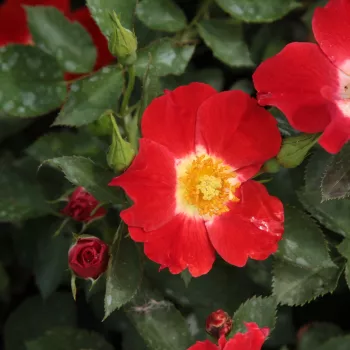
Bushy, slightly spreading habit, around 120–180 cm tall and 65–95 cm wide with moderately dense dark green foliage and moderate prickliness; performs well as a bed, border or specimen shrub. |
| Flower morphology |
Single, flat blooms with 5–12 petals, produced in clusters on a remontant plant; small flowers around 0.5–1.5 inches across, with abundant second flush following the main early summer display. |
| Colour data and phenology |
Vibrant scarlet-red petals (RHS 46A) with a contrasting cream-white eye (RHS 11C); colour lightens as blooms age but central contrast generally remains, providing strong visual impact in full bloom. |
| Fragrance and aroma |
Fragrance is very weak and barely perceptible, making the cultivar a good choice where strong scent is not desired; emphasis is firmly on colourful display and pollinator-friendly open flower form. |
| Hip characteristics |
Produces moderate quantities of egg-shaped hips, approximately 11–15 mm in diameter; hips are typically RHS 33B in colour, adding modest late-season interest when spent blooms are left on the plant. |
| Resistance and winter hardiness |
Hardy to approximately −21 to −18 °C (RHS H7, USDA 6b, Swedish zone 3); medium overall disease resistance, with good tolerance to powdery mildew and rust but only moderate black spot resistance. |
| Horticultural recommendations |
Plant 50–55 cm apart in well-drained soil; partial shade is tolerated. Water regularly in dry periods and allow air movement in humid courtyards; deadhead to support continuous flowering through the season. |
TAPIS PERSAN offers vivid long-season colour, pollinator-friendly single blooms and steady own-root longevity in pots or borders, making it a thoughtful, low-fuss choice for your next garden planting.