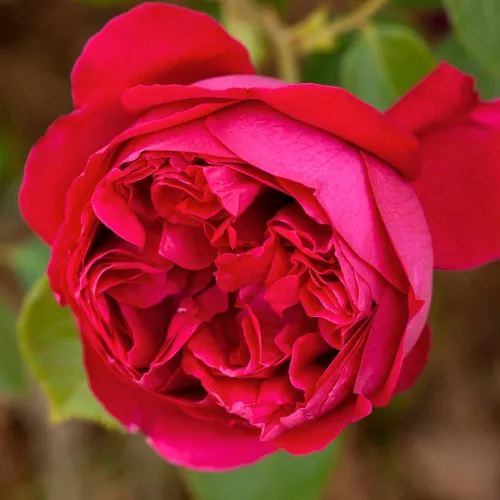
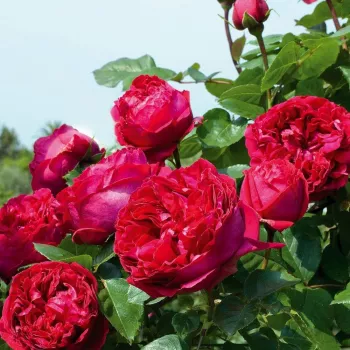
ERIC TABARLY® – dark red climbing rose – Meilland
Step out after rain to the rich damask fragrance of ERIC TABARLY®, a Romantica® climbing rose that turns a narrow London front garden into a sheltered, scented passageway. Its deeply cupped, velvety blooms repeat reliably through summer, while its vigorous own-root growth promises a long, secure presence on pergolas, house fronts and archways. You gain enduring structure from strong canes and dense foliage, yet day‑to‑day care remains manageable, with simple pruning and occasional deadheading. In typical British conditions it copes steadily with wind and summer showers, offering reassuring performance even where heavy soil means you must consider drainage and thoughtful planting. Over time an own‑root ERIC TABARLY® matures gracefully: year‑one it concentrates on rooting, year‑two on building flowering shoots, and by year‑three it delivers full ornamental impact with abundant blooms and long‑lasting colour that anchors a sustainable, low‑waste garden scheme.
Usage options
| Target area | Reasoning |
|---|
| Terraced-house front façade |
Perfect where space is tight but you want maximum visual impact: ERIC TABARLY® climbs vertically, clothing brickwork or railings with dense foliage and large, dark red rosettes that read clearly from the pavement for the busy urban gardener. |
| Pergola or arch walkway |
Its vigorous canes and repeat flowering create a long tunnel of scent and colour over a simple pergola or arch, giving you that “post‑rain path” feeling without needing constant pruning for the romantic front‑garden owner. |
| Balcony or patio in a large container |
In a 40–50 litre pot with good drainage, this own‑root climber offers vertical drama and strong fragrance on balconies or patios, while its long lifespan makes container investment worthwhile for the space-conscious city dweller. |
| Feature rose on a sturdy fence |
ERIC TABARLY® quickly forms a leafy screen along fences, combining structural height, generous flowering and long-lived own‑root reliability, so you replant less often and keep boundaries attractive for the low-maintenance homeowner. |
| Mixed, romantic front garden |
Clustered rosette blooms deliver a classic, “girly” romantic note above perennials; the strong colour holds well through changeable weather, quietly supporting soft planting schemes for the cottage-style enthusiast. |
| Cutting corner for home arrangements |
Large, full flowers on long, sturdy stems suit home cutting; repeat flushes give you vases through summer without stripping the plant, ideal for the home flower arranger. |
| Rainwater-aware urban bed |
Planted into improved heavy soil with care for surface run‑off, its extensive own‑root system stabilises structure and uses natural rainfall efficiently in a street‑side setting where heavy clay means you must consider drainage for the sustainability-minded gardener. |
| Seasonal focal point near seating |
The strong, classic damask scent and rich colour draw focus around a small seating area; you enjoy long evenings framed by fragrance without needing complex shrub combinations for the relaxed evening sitter. |
Styling ideas
- Romantic Archway – Train ERIC TABARLY® over a narrow metal arch, underplant with soft pink nepeta and white sage to echo its velvety blooms – ideal for terrace entrances seeking instant romance.
- Period Façade – Pair against pale render or London stock brick with lavender at the base; the structured climber adds height and long-lived character – perfect for townhouses aiming for classic elegance.
- Balcony Screen – Grow in a 50 litre trough with airy grasses and herbs to soften railings, using strong canes for vertical privacy – suited to flat dwellers wanting greenery without losing floor space.
- Evening Perfume Corner – Place near a bench with white hydrangeas and silver foliage plants so the dark red blooms and fragrance stand out at dusk – for those who unwind outdoors after work.
- Statement Fence Run – Repeat‑plant along a sunny fence, interspersed with clematis for extended interest, creating a single bold ribbon of colour – for homeowners wanting an easy, unified look.
Technical cultivar profile
| Name and registration |
ERIC TABARLY® Romantica® MEIdrason, large-flowered climbing rose; registered cultivar name MEIdrason, ARS exhibition name Eric Tabarly, classified within the climbing rose commercial group. |
| Origin and breeding |
Bred by Alain Meilland (Meilland International SA) in France from ‘Cappa Magna’ × ‘Ulmer Münster’; protected 2002 (EU), 2004 (US PP15052), introduced after 2004 via Meilland Richardier. |
| Awards and recognition |
Recognised in exhibition circles as a quality climber; notably awarded the Los Angeles Rose Society Climber Award in 2005, confirming its suitability as a show and display rose. |
| Growth and structural characteristics |
Strong, climbing habit reaching around 300–500 cm in height and 200–300 cm spread, with dense mid-green foliage, slightly glossy leaves and abundant prickles; manual support and training are required. |
| Flower morphology |
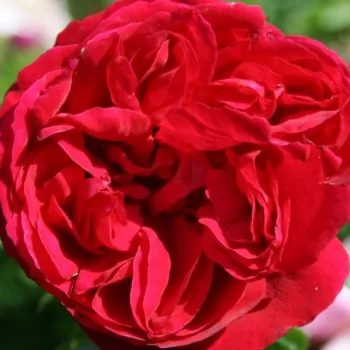
Very full, rosette-shaped, XL blooms with more than 40 petals, borne mainly in clusters; remontant habit with a generous second flush, giving striking, large decorative flowers well suited to cutting. |
| Colour data and phenology |
Deep, velvety dark red blooms with subtle crimson tones; buds dark burgundy, opening rich red and deepening toward purplish, outer petals sometimes showing muted blackish hues, with only slight fading in strong sun. |
| Fragrance and aroma |
Classic, strong damask fragrance with good persistence around seating areas or paths; suitable for gardeners who value scent in evening gardens rather than purely visual displays of climbing roses. |
| Hip characteristics |
Occasional spherical hips, approximately 12–18 mm, coloured red (RHS N45A); decorative in autumn but not usually produced in large quantities due to the highly double flower form. |
| Resistance and winter hardiness |
Hardy to about −23 to −21 °C (RHS H7, USDA 6a, Swedish Zone 3); medium resistance to black spot, mildew and rust, performing steadily with basic hygiene and occasional preventive care. |
| Horticultural recommendations |
Suited to pergolas, fences and façades, also as a specimen or cut flower; plant 145–270 cm apart depending on effect, allowing robust support, regular watering in drought and light pruning for shape. |
ERIC TABARLY® rewards patient training with enduring colour, strong fragrance and reliable structure in an own-root form that settles for decades, making it a thoughtful choice for long-term garden planners.