ELIANE GILLET™ – white with red-edged petals nostalgia rose - Massad
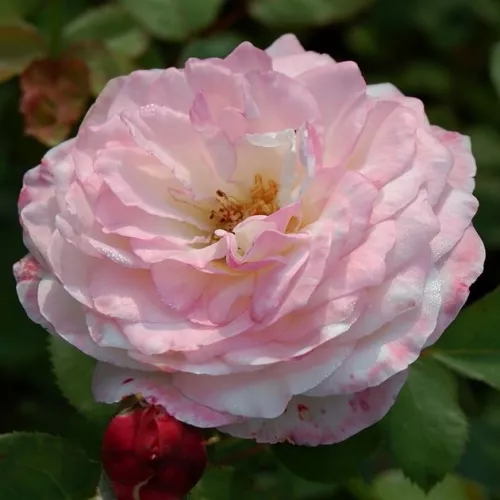
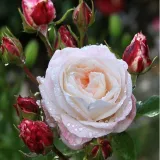
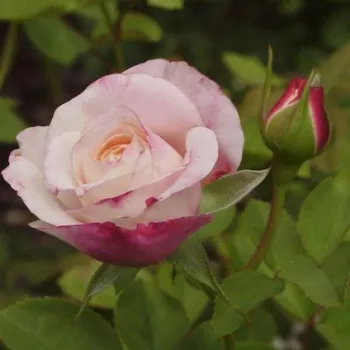
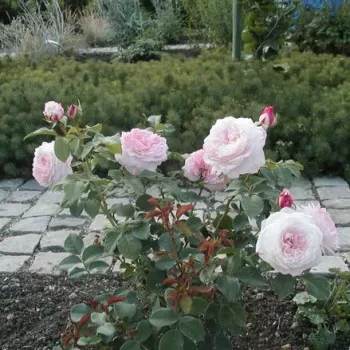
Step through your front gate and imagine a narrow path framed by romantic clusters of creamy blooms edged in raspberry red, shimmering after rain yet coping well with typical British weather and occasional coastal winds. This nostalgia-style shrub rose offers a balanced, bushy shape for compact London front gardens, while its own-root stability gives you a long-lived plant that can quietly regenerate if stems are damaged. In a 2-litre container it settles in easily, ideal for beginners who prefer gentle maintenance and a calm, sustainable garden mood. Plant once, then let strong roots focus on Year 1 establishment, Year 2 framework growth, and by Year 3 you enjoy full ornamental impact with cupped, very double flowers perfect for relaxed home bunches.
Usage options
| Target area | Reasoning |
|---|
| Small London front garden bed |
The bushy, mid‑green foliage and medium height make it ideal for narrow front garden strips, giving structure without overwhelming the space, while its nostalgic blooms add charm viewed from the pavement or bay window, suiting beginners. |
| Low, informal hedge along a path |
Planted at 60 cm spacings, its dense, glossy foliage knits into a soft boundary that guides the eye and subtly separates the path from the rest of the garden, working well for those seeking a gentle sense of order, ideal for homeowners. |
| Feature rose in a mixed border |
Used as a solitary specimen at around 110 cm spacing, it anchors herbaceous perennials and grasses, with its creamy, red‑edged blooms acting as a visual focal point from early summer repeats, appealing to colour‑conscious gardeners. |
| Large container on terrace or balcony |
In a 40–50 litre peat‑free container with good drainage, its compact, bushy habit suits urban terraces where you want maximum flower impact from limited footprint and easy access for light pruning, convenient for busy city‑dwellers. |
| Cut‑flower corner near the house |
The cup‑shaped, very full blooms with classic rose fragrance lend themselves to short‑stemmed indoor arrangements; having a dedicated clump by the back door makes cutting easy on wet days, appreciated by creative arrangers. |
| Part‑shaded side return planting |
Tolerating partial shade, it works along side passages where walls cut light for part of the day, giving colour where many plants fail, supporting the idea of turning overlooked side paths into useful green corridors for urban owners. |
| Rain‑aware front garden with free‑draining soil |
Planted into improved, well‑drained soil, it copes reassuringly with blustery showers and typical British rain, helping you keep a planted, permeable frontage instead of paving, while still looking smart for sustainability‑minded families. |
| Long‑term backbone in a evolving family garden |
As an own‑root shrub, it can reshoot from the base if top growth suffers, giving a durable framework for beds that change around it over the years and reducing the need for replacement, attractive to long‑view planners. |
Styling ideas
- Romantic edging – Line a short front path with ELIANE GILLET™ underplanted with low lavender for scent and soft edging – for homeowners wanting a cottage feel in a tight urban plot.
- Balcony focus – Grow one plant in a 50‑litre pot with trailing nepeta and thyme spilling over the rim – for city‑dwellers seeking a single, reliable statement container.
- Soft nostalgia – Combine with pink phlox and airy baby’s‑breath for a pastel, old‑fashioned border – for gardeners who enjoy cutting relaxed bunches for the kitchen table.
- Front‑garden frame – Plant as a low hedge under a small tree, with shade‑tolerant perennials behind – for families transforming hardstanding into a greener, more welcoming frontage.
- Calm contrast – Set against dark green evergreen shrubs with silver sage at the front – for beginners wanting year‑round structure with seasonal romantic highlights.
Technical cultivar profile
| Parameter | Data |
|---|
| Name and registration |
Romantic shrub rose from the Générosa® collection; registered cultivar name MASelgi, marketed as Eliane Gillet™ Générosa® MASelgi, classified as a nostalgia‑type Romantica shrub rose. |
| Origin and breeding |
Bred by Dominique Massad for Guillot‑Massad, introduced by Roseraies Guillot in France in 1997, with parentage undocumented; developed within the renowned French Générosa® romantic rose programme. |
| Growth and structural characteristics |
Forms a bushy shrub 80–130 cm high and wide, with dense, mid‑green glossy foliage and moderate prickliness; overall habit suits beds, low hedging or feature planting in small to medium gardens. |
| Flower morphology |
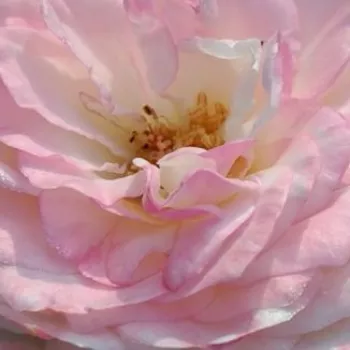
Medium‑sized, very full, cupped blooms with over 40 petals, mainly in clusters; remontant, with a generous first flush and a lighter repeat later in the season, suited to cutting and close viewing. |
| Colour data and phenology |
Cream‑white base with pink‑red petal edges and soft rosy tones, buds ivory with a pink tip; colour holds reasonably well, fading through peach‑rose tones before petals fall cleanly from the bloom. |
| Fragrance and aroma |
Mild, classic rose fragrance best appreciated at close range in still air; subtle enough for front doors and seating areas where a gentle background scent is preferred over strong perfumed varieties. |
| Hip characteristics |
Very double flowers set few hips; occasional small, spherical orange‑red hips 6–10 mm may form, offering modest late‑season interest but not relied upon for wildlife or decorative fruiting displays. |
| Resistance and winter hardiness |
Hardy to about −21 to −18 °C (RHS H7, USDA 6b) with good winter resilience; however, foliage is susceptible to rust and moderately prone to mildew and black spot, so regular protection is advisable. |
| Horticultural recommendations |
Best in fertile, well‑drained soil with full sun or light shade; allow 60–110 cm spacing depending on use, water during prolonged dry spells, and apply a preventative fungicide regime where disease pressure is high. |
ELIANE GILLET™ offers romantic colour, a compact shrub form and enduring own-root resilience, making it a thoughtful long-term choice for gardeners ready to invest in gentle, regular care.