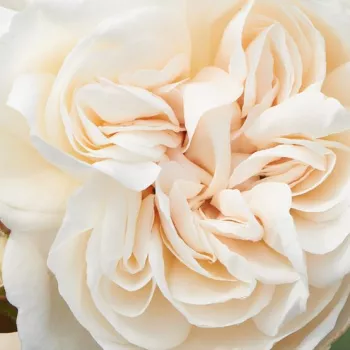
EISA ™ – white climbing rose – Olesen
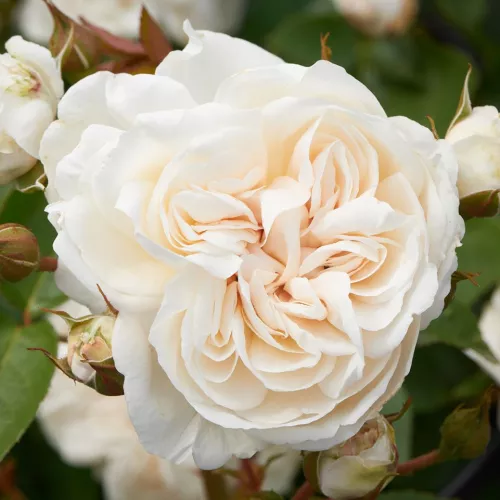
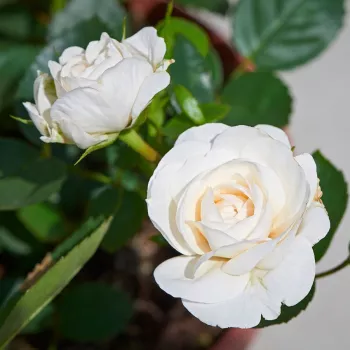
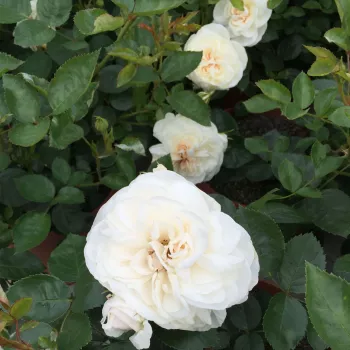
Step out to the glistening pavement after rain and meet the pure white blooms of Eisa, a compact Courtyard® climber that slips easily into small London front gardens while quietly coping with blustery, damp weather and heavier soils in everyday family plots. Its medium-height, creeping habit makes it simple to train on railings, porches and modest pergolas, giving you vertical privacy without overwhelming the space. Densely clothed, glossy foliage provides a deep green backdrop for the snow-white, very full flowers, which appear in generous, repeating flushes for a notably long season. Bred on its own roots, it settles in steadily for a long-lived lifespan, regenerating well and maintaining stable ornamental value year after year. With only medium maintenance needs and modest pest vigilance, you can enjoy reliable flowering on busy weekdays, while a 40–50 litre pot and rainwater make balcony or paved-front planting both practical and sustainable.
Usage options
| Target area | Reasoning |
|---|
| Small terraced-house front garden climber |
Eisa’s moderate 100–200 cm height and 80–140 cm spread give you a well-behaved vertical accent that will not swamp a narrow front plot, yet still creates a soft white curtain effect on railings or a short trellis – ideal for the busy urban garden owner |
| Rainwater-friendly container or large pot |
In a 40–50 litre container with good drainage, this own-root climber establishes steadily and can be watered primarily with collected rain, allowing you to avoid overtaxed mains supplies while maintaining healthy growth – appealing to the sustainability-focused gardener |
| Long-season entrance or porch display |
Remontant flowering, with an abundant second flush, keeps white clusters appearing from early summer into autumn, so a single plant can frame your doorway with changing, yet consistent, colour for months – reassuring for the low-maintenance flower lover |
| Durable own-root feature for long-term schemes |
As an own-root rose, Eisa does not depend on a graft union, so it ages evenly, regenerates well from lower buds and retains its shape, supporting long-lived planting plans in family gardens – valuable for the future-minded homeowner |
| Cottage-style hedge or boundary line |
Planted at 90–100 cm intervals, its dense foliage and flexible, creeping growth habit knit into an informal, flowering boundary that softens fencing and guides views without demanding intricate pruning – helpful for the beginner gardener |
| Partial-shade city side return |
This variety tolerates partial shade, so it will still flower reliably where walls and neighbouring houses limit sun, making awkward side passages or north-east aspects feel lighter and more inviting – encouraging for the light-challenged city gardener |
| Family garden seating area backdrop |
The medium-strength, subtly sweet fragrance and very full, snow-white clusters create a calm backdrop beside a bench or patio set, adding scent and softness without overwhelming colour or thorns – attractive to the relaxed family garden user |
| Coastal or exposed suburban setting |
With medium disease resistance and hardiness down to around –25 °C, this rose matches typical British conditions where wind, humidity and rain alternate through the year, offering dependable structure and flower – reassuring for the weather-exposed gardener |
Styling ideas
- Courtyard Calm – Train Eisa up a slim black metal trellis by the front door, underplant with lavender and Nepeta for soft blues, and let the white flowers read as a clean, modern welcome – ideal for style-conscious city homeowners
- Rainwise Railings – In 40–50 litre pots along terrace railings, pair Eisa with trailing Ajuga and Liriope to catch and use rainwater run-off while keeping planting lush yet manageable – suited to sustainability-focused flat dwellers
- Midsummer Pergola – Use Eisa on a compact pergola over a small seating nook, combining with scented herbs like sage below so fragrance layers gently through the long flowering season – perfect for evening relaxers
- Soft-Edge Hedge – Create a loose, flowering boundary by spacing plants in a staggered row with Campanula at their feet, giving a white-and-violet edge that frames play lawns without rigid formality – great for family gardeners
- Shade-Bright Nook – Brighten a part-shaded side return by fanning Eisa on horizontal wires, then add pale gravel and simple pots to make a cool, reflective space that feels larger than it is – ideal for compact-plot owners
Technical cultivar profile
| Property | Data |
|---|
| Name and registration |
Eisa ™ Courtyard® (POUlcy037), a large-flowered climbing rose from the Courtyard® collection; commercial type classed as climbing and rambler rose, with exhibition category “climbing rose”. |
| Origin and breeding |
Bred by Mogens Nyegaard Olesen for Poulsen Roser A/S, Denmark, from unnamed seedling parents; registered and introduced in 2017, representing modern Scandinavian courtyard-breeding aims. |
| Growth and structural characteristics |
Climbing, creeping habit with dense, glossy medium-green foliage; height typically 100–200 cm, spread 80–140 cm, moderately thorny canes suited to training on trellis, railings or compact pergolas. |
| Flower morphology |
Very full, cup-shaped blooms with 40+ petals, medium-sized clusters on each stem; remontant repeat flowering, with a particularly abundant second flush after the first main summer display. |
| Colour data and phenology |
Flowers open from greenish-white buds to pure snow-white petals (RHS 155C–155D), holding colour well with only slight translucence before fading; overall effect is a clean, even white without cream tones. |
| Fragrance and aroma |
Noticeable, medium-strength fragrance of subtly sweet rose character; scent is most apparent in still, mild conditions around seating areas or entrances, adding refinement without becoming overpowering. |
| Hip characteristics |
Rose hip set is minimal; only occasional, very small hips of about 0–5 mm diameter may form, so decorative fruit effect is negligible and pruning decisions focus mainly on shaping the climber. |
| Resistance and winter hardiness |
Rated to about –26 to –23 °C (RHS H7, Swedish Zone 4, USDA 5b); disease resistance to mildew, black spot and rust is medium, requiring standard monitoring and timely care in humid seasons. |
| Horticultural recommendations |
Suited to pergolas, trellises, containers, hedging and specimen use; plant 90–100 cm apart or 180 cm as solitary, in well-drained soil with regular watering during prolonged drought and occasional pest control. |
Eisa ™ Courtyard® POUlcy037 offers long-season white flowering, compact climbing structure and a durable own-root constitution; consider it where you want a refined, low-fuss vertical accent that will reward patient, steady care.