AUSmak – pink English rose - Austin
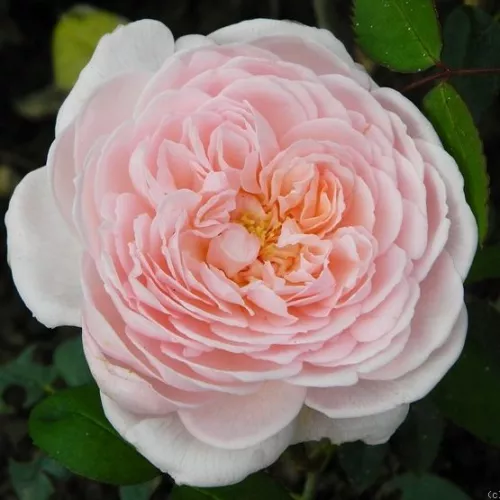
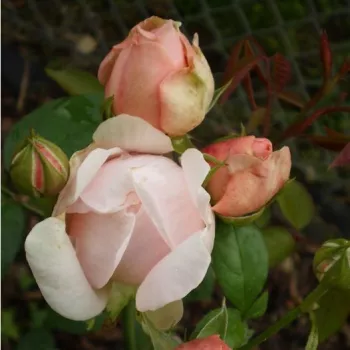
This romantic David Austin shrub rose brings balance to compact London front gardens, with cupped, rosette blooms in soft pastel pink that repeat generously from early summer into autumn. Its bushy, mid-sized habit is easy to site in a typical family garden, while the medium, tea-scented fragrance creates the feeling of walking a narrow path after rain, the air subtly perfumed. Grown on its own roots for long-term stability, the plant matures steadily – roots first, then top growth, then full ornamental value – supporting a long lifespan with reliable regrowth after pruning or weather damage. Once established in well-prepared ground with improved drainage, it copes reassuringly with British rainfall and wind in small, exposed sites, making it well suited to sustainable, rainwater-conscious front gardens. The bushy structure works beautifully in mixed borders or as a soft, flowery hedge, and in larger containers of at least 40–50 litres it offers an accessible, low-care option for busy urban gardeners who want romantic summer colour without complex rose expertise.
Usage options
| Target area | Reasoning |
|---|
| Small family front garden border |
The bushy, mid-height habit creates a soft, structured presence that comfortably fits narrow front beds without overwhelming windows or paths, while repeat flowering keeps entrances welcoming through the season for the time-pressed urban homeowner who values ease. |
| Romantic hedge along a path |
Planted at hedge spacing, the dense foliage and branching knit together into a gently flowing line of pastel pink rosettes, forming a long-lived, informal hedge that responds well to light annual pruning for those planning a garden feature that quietly endures. |
| Large container on a terrace or balcony |
In a 40–50 litre peat-free container with reliable drainage, this variety forms a compact, repeat-flowering shrub that can be watered with collected rainwater, offering sustainable elegance on patios and balconies for city gardeners seeking beautiful roses that remain manageable. |
| Mixed border with perennials |
The soft pink, double rosette blooms blend harmoniously with lavender, nepeta or sage, while the steady flowering rhythm adds continuity between perennial waves, ideal for gardeners who want a coherent, cottage-style scheme that still feels refined. |
| Cutting patch or cutting corner |
Medium-sized, fully double blooms on sturdy stems provide charming, nostalgic flowers for the vase, with a delicate tea-scent that suits indoor spaces; this is attractive for home florists who appreciate reliable stems without cultivating specialist collections. |
| Feature shrub in a lawn or gravel pocket |
Used as a solitary specimen, the rounded silhouette and repeated pastel flushes read clearly from a distance, giving season-long interest with modest care needs, appealing to homeowners wanting a single statement plant that remains visually balanced. |
| Rain-conscious urban front garden |
Once established in improved soil with good drainage, this rose copes steadily with wet, windy spells typical of exposed streets, suiting rainwater-fed planting that supports sustainable streetscapes for eco-aware gardeners who prefer resilient choices that feel responsible. |
| Partially shaded side return |
Its suitability for partial shade allows flowering where many roses struggle, such as side passages with only a few hours of sun, giving colour and fragrance to often-overlooked spaces valued by householders looking to make every corner quietly useful. |
Styling ideas
- Cottage-Front – Combine with lavender and catmint in a narrow bed by the pavement for a soft, traditional streetscape – ideal for terraced-house owners wanting romance without intensive upkeep.
- Soft-Hedge – Plant in a loose line with alternating pink and white perennials to edge a path – suited to families seeking a gentle, child-friendly boundary rather than hard fencing.
- Pastel-Pot – Grow one plant in a 50-litre clay pot with trailing ivy for year-round structure – perfect for balcony and courtyard gardeners with limited soil but reliable access to rainwater.
- Calm-Corner – Underplant with low mounds of sage and thyme in a quiet seating area – appealing to busy professionals who want a restful, scented retreat with minimal gardening demands.
- Heritage-Mix – Pair with foxgloves, hardy geraniums and Cornus ‘Midwinter Fire’ for winter stems – for gardeners who enjoy a historically inspired, characterful border that still behaves predictably.
Technical cultivar profile
| Property | Data |
|---|
| Name and registration |
English shrub rose from the English Rose Collection; registered cultivar name AUSmak, marketed as Eglantyne; classified as a romantic bush rose suitable for garden use and cutting. |
| Origin and breeding |
Bred by David C.H. Austin in the United Kingdom from an unknown seedling crossed with ‘Mary Rose’; introduced and registered in 1994 by David Austin Roses Ltd. |
| Awards and recognition |
Holds the Royal Horticultural Society Award of Garden Merit (2001) and received recognition as a Modern Shrub Rose at the Central Ohio Rose Society Show in 1999. |
| Growth and structural characteristics |
Bushy shrub 90–140 cm high and 80–120 cm wide, with moderately thorny stems and dense, slightly glossy mid-green foliage; forms a rounded, well-furnished outline in borders or hedging schemes. |
| Flower morphology |
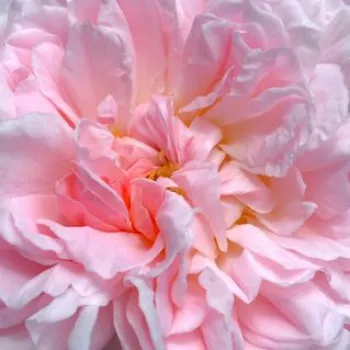
Medium-sized, strongly double rosette blooms with 40+ petals, borne in clusters; flowers repeat freely with a generous second flush, but faded blooms benefit from deadheading to maintain a tidy appearance. |
| Colour data and phenology |
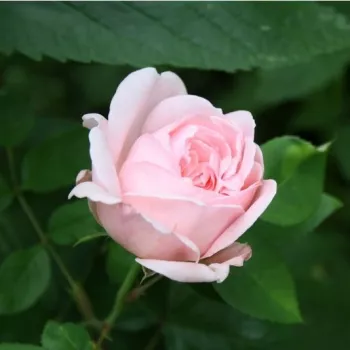
Shell-pink buds open to soft, pastel pink blooms with creamy undertones; colour fades towards white in the centre over time, more rapidly in strong sun and more slowly in cool conditions, extending ornamental interest. |
| Fragrance and aroma |
Medium-strength, clearly perceptible fragrance with a delicately sweet, tea-scented character; scent is noticeable along paths or near seating without becoming overpowering in smaller urban gardens. |
| Hip characteristics |
Rose hips are sparse due to the fully double flower form; occasionally small, spherical orange-red hips 8–14 mm develop, offering modest seasonal interest without significant wildlife feeding value. |
| Resistance and winter hardiness |
Hardy to approximately −23 to −26 °C (RHS H7), with good black-spot resistance and moderate tolerance to mildew and rust; benefits from regular watering in prolonged drought and protection from late spring frosts. |
| Horticultural recommendations |
Suited to beds, borders, hedging and cutting; plant 55–100 cm apart depending on use; tolerates partial shade and requires medium maintenance, including deadheading and occasional plant protection where disease pressure is high. |
AUSmak – pink English rose - Austin offers steady repeat flowering, a compact, bushy habit and dependable longevity on its own roots, making it a thoughtful choice if you would like a romantic yet undemanding garden rose.