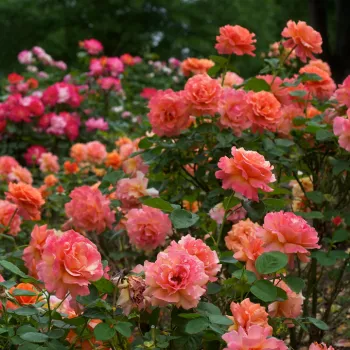
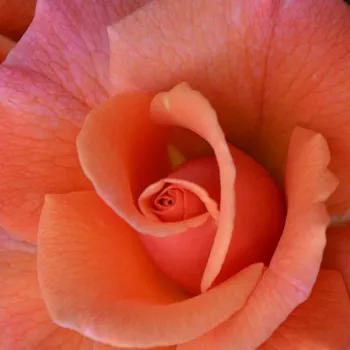
EASY DOES IT – orange bedding Floribunda rose – Harkness & Harkness
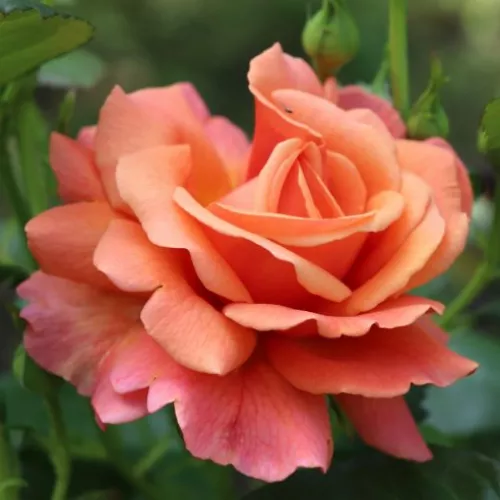
Step into a London front garden after rain and you can almost hear this rose whisper relax: ‘Easy does it’. Bred by Harkness, this floribunda settles happily into typical UK conditions, even where soils are heavier and exposure brings resilience against blustery showers and changeable skies. Its bushy habit and dense, glossy foliage create an easy-going structure for small urban plots, while the ruffled mango-orange blooms give day-long colour with a softly fruity fragrance that feels warm rather than overpowering. Low maintenance and tolerant of occasional neglect, this own-root rose is designed for long-term stability and natural regeneration, maturing from first-year rooting to generous third-year display with quietly assured longevity.
Usage options
| Target area |
Reasoning |
| Front-garden focal point for terraced houses |
Its bushy, upright habit and 90–130 cm height give instant presence without overwhelming a small front garden, providing a long-flowering focal point that looks composed from the pavement for busy urban homeowners who enjoy impact. |
| Low-maintenance floribunda bedding scheme |
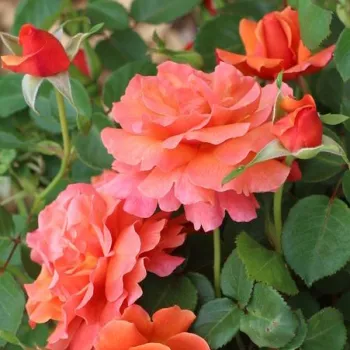
Clusters of mango-orange, peach and creamy-pink blooms repeat throughout the season with modest care, so a small bed stays colourful from early summer well into autumn for time-pressed gardeners who appreciate ease. |
| Own-root, long-lived family garden feature |
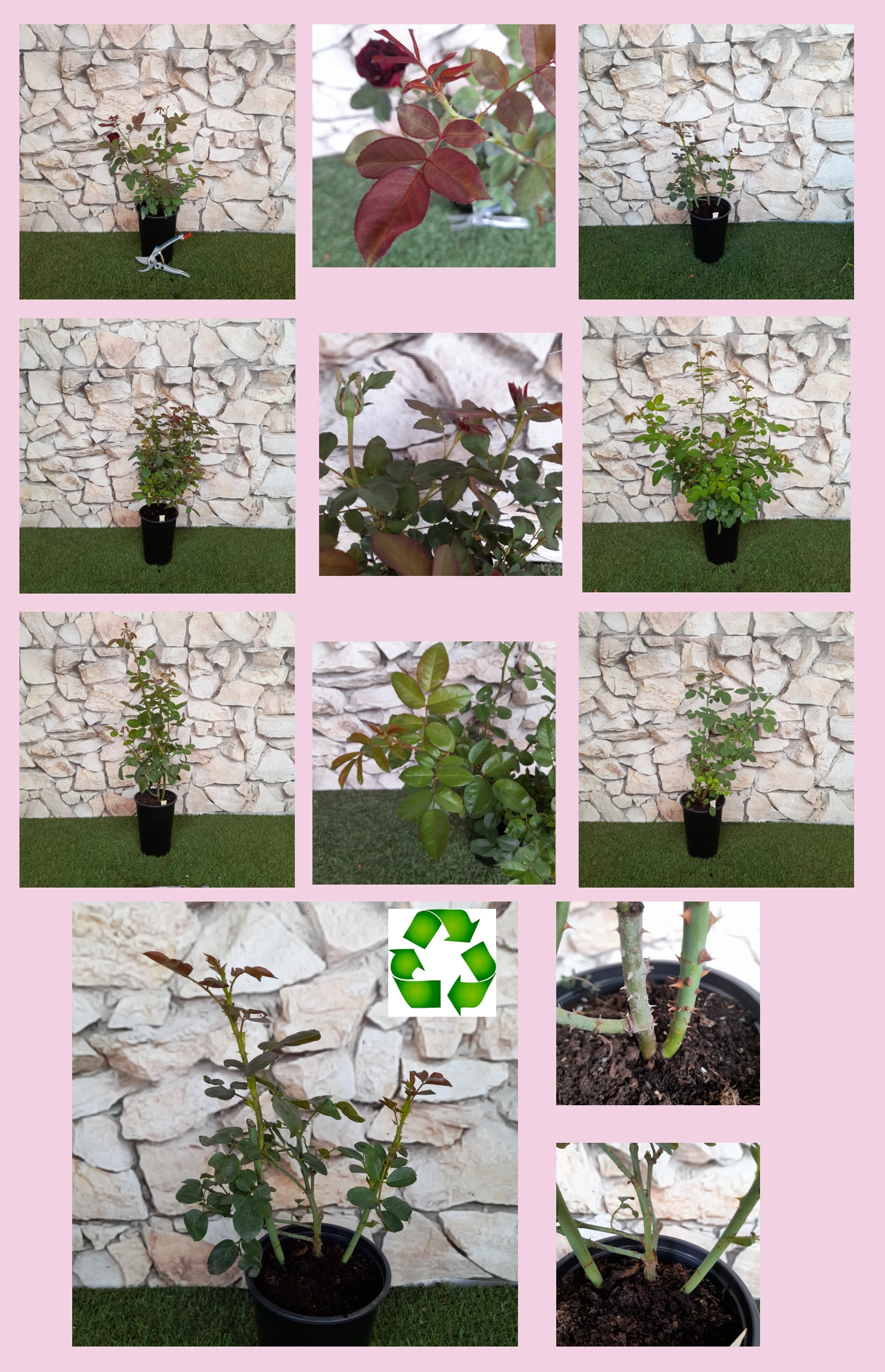
Grown on its own roots, this rose re-shoots reliably from the base, keeping its shape and character over many seasons and recovering well if stems are damaged for householders planning for long-term garden value. |
| Rainwater-conscious, heavy-soil planting |
Performs well where rainfall collects, provided you improve drainage once, then largely leave it to get on with things, supporting a greener, lower-input approach for gardeners interested in sustainable solutions. |
| Container planting on patios and balconies |
Its compact, upright framework works well in a 40–50 litre pot, where dense foliage and repeat flowers give months of colour with limited pruning and watering for balcony and patio users seeking practical compactness. |
| Seasonal fragrance near seating |
The medium-strength, softly fruity scent is noticeable at close quarters without dominating, ideal near a chair or doorstep where you pause briefly during the day for anyone valuing everyday moments of gentle calm. |
| Reliable performer in changeable UK weather |
Good heat and drought tolerance, hardy to approximately -25 °C and resistant to black spot, mildew and rust make it a steady choice for exposed, breezy plots where weather fluctuates for gardeners prioritising plant reliability. |
| Gradual, low-effort garden development |
In year one it concentrates on establishing roots, year two brings stronger growth and more flowers, and by year three it typically shows full ornamental value with minimal intervention for new gardeners who appreciate steady progress. |
Styling ideas
- Sunset-Edge Border – Combine with lavender and blue nepeta for a soft sunset contrast that highlights the orange and peach tones – ideal for homeowners creating a welcoming front path.
- Balcony-Glow Pot – Plant in a 40–50 litre container with trailing thyme for easy summer colour and simple care – suited to urban balcony gardeners with limited watering time.
- Calm-Entry Trio – Repeat three shrubs along a terraced-house frontage, underplanted with low sage for foliage texture – perfect for those wanting structured but undemanding kerb appeal.
- Rain-Garden Ribbon – Set in a free-draining strip with grasses near a downpipe, using gravel mulch to manage rainwater – good for sustainability-minded owners of small city front gardens.
- Family-Relax Corner – Pair with softly coloured perennials like pale pink geraniums to create a gentle, fragrant nook – recommended for family gardens where children and adults share outdoor space.
Technical cultivar profile
| Characteristic |
Data |
| Name and registration |
Floribunda bed rose from the Masterpiece Collection; registered as HARpageant and marketed as Easy Does It, also approved by the American Rose Society under the exhibition name Easy Does It. |
| Origin and breeding |
Bred in Great Britain by Robert B. and Philip A. Harkness from (‘Queen Charlotte’ × ‘Della Balfour’) × ‘Baby Love’, introduced commercially in 2010 following UK breeding work completed in 2006. |
| Awards and recognition |
Recognised as an All-America Rose Selections (AARS) winner in 2010, confirming its strong garden performance, ornamental value and reliability under a range of landscape and climatic conditions. |
| Growth and structural characteristics |
Bushy, upright shrub with dense, mid-green glossy foliage, typically 90–130 cm high and 70–110 cm wide, forming a rounded, well-branched outline suitable for beds, low hedging and specimen use. |
| Flower morphology |
Double, cup-shaped flowers with 26–39 petals, produced in clusters on floribunda-style trusses; large blooms around 7–10 cm, remontant with notably abundant repeat flowering in suitable conditions. |
| Colour data and phenology |
Vivid mango-orange buds (RHS 33A outer) with golden-peach tones open to ruffled blooms blending orange, peach-pink and honey-peach, gradually softening towards pink as the flowers age on the plant. |
| Fragrance and aroma |
Medium-strength fragrance with a softly fruity character, noticeable at close range without being overpowering, making it suitable for seating areas, entrances and regularly used paths or terraces. |
| Hip characteristics |
Due to its very double flowers, hip production is normally modest; when present, it carries small spherical red hips around 10–14 mm in diameter, adding occasional late-season interest. |
| Resistance and winter hardiness |
Classed as resistant to black spot, powdery mildew and rust; hardy to approximately -26 to -23 °C (RHS H7, Swedish zone 4, USDA 5b) and performs well in heat with tolerance of moderate drought. |
| Horticultural recommendations |
Low-maintenance rose needing light annual pruning and moderate watering; suitable for beds, pots, low hedging and cut flowers, with 55–100 cm spacing and planting densities around 2.4–2.7 plants per m². |
Easy Does It offers long-season colour, reliable performance and enduring own-root growth, making it a thoughtful choice for gardeners seeking a relaxed yet rewarding rose to enjoy over many years.