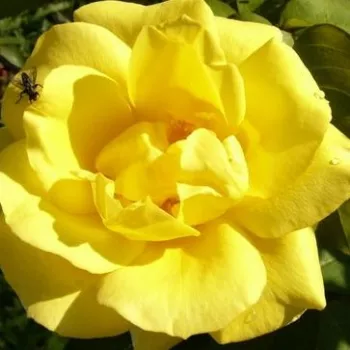
DUNE® – yellow climbing rose – Delbard
Step out to a London terrace front garden after rain and meet the Dune rose: a tall, light-filled climber whose golden blooms and fresh, lemony scent create an easy sense of balance, even where space is tight and paving dominates. Bred by Delbard, this dependable climber brings strong fragrance, plentiful repeat flowering through summer, and a modest footprint at ground level, ideal for training up walls, arches or railings where improved drainage helps on heavier clay in wetter spells. As an own-root plant, it offers excellent longevity and the reassuring ability to regenerate if pruned hard or nipped by frost, supporting a genuinely low-input, sustainable approach in busy, rainwater-conscious city gardens. Its mid-green, slightly glossy foliage frames the yellow blooms neatly, giving year-round structural interest without demanding constant care, while the pharmaROSA® ORIGINAL 2-litre format establishes steadily so you can enjoy reliable growth with minimal effort.
Usage options
| Target area | Reasoning |
|---|
| Terraced-house front wall or railing |
Dune® uses very little ground space yet clothes railings, ironwork or narrow front walls with vertical colour and scent, turning a hard-paved frontage into a softer, more welcoming threshold for the urban homeowner. |
| Small pergola or entry arch |
Its medium vigour and repeat blooming make it ideal for a compact pergola or entrance arch, giving waves of lemon-yellow flowers and fragrance without overwhelming nearby paths, suiting the busy garden beginner. |
| Rainwater-aware side return planting |
Trained flat against a fence or trellis above gravel or planting, it channels interest upwards while allowing space for permeable surfaces and improved drainage on heavier soils, appealing to the sustainability-minded gardener. |
| Family seating nook or balcony screen |
The strong, fresh fragrance and medium-density foliage create a scented privacy screen beside a bench or balcony rail; in large containers of 40–50 litres it performs reliably for the compact-space gardener. |
| Warm, sheltered urban microclimate |
With good hardiness and moderate heat tolerance, this climber suits South-facing or courtyard spots that warm up quickly, providing stable structure and flower performance valued by the low-maintenance seeker. |
| Medium-care family garden feature |
Its medium disease resistance and own-root resilience mean routine checks and occasional treatments are usually sufficient, while growth remains dependable year after year for the time-conscious family. |
| Year‑on‑year development project |
Roots establish in the first year, shoots strengthen and cover the support in the second, and by the third year you can expect its full ornamental impact, which suits the patient new gardener. |
| Coastal or exposed urban sites |
Once trained securely, its climbing habit and flexible canes cope well with breezier spots and variable weather, supporting a reliable display even where wind and rain are frequent for the practical garden planner. |
Styling ideas
- Sunny-Entry Arch – Train Dune® over a slim metal arch by the front door, underplant with lavender or nepeta for cool contrast and scent layering – ideal for fragrance-lovers with compact front gardens
- Golden-Girl Facade – Soften a brick terrace facade with Dune® on trellis, paired with airy Knautia arvensis and soft grasses for a light, “girly” pastel frontage – suited to style-conscious urban homeowners
- Rainwise-Front Strip – Combine Dune® on wall wires with gravel mulch, thyme and dwarf sage to keep the ground permeable while the rose carries colour and scent overhead – perfect for rainwater-aware city gardeners
- Evening-Scent Corner – Place a bench beneath a short pergola clothed in Dune®, with pots of rosemary and nepeta in 40–50 litre containers for extra fragrance – great for relaxation-focused balcony or courtyard users
- Amber-Contrast Screen – Grow Dune® against a fence and echo its gold with Cotinus ‘Royal Purple’ and Tanacetum for bold colour blocking – appealing to confident hobby gardeners wanting a modern statement
Technical cultivar profile
| Parameter | Data |
|---|
| Name and registration |
Climbing rose from the Grand Perfumes collection; registered as DELgrim and marketed as Dune® Grand Perfumes DELgrim, accepted exhibition name Dune in American Rose Society listings. |
| Origin and breeding |
Bred by Georges Delbard in France and introduced in 1993 by Georges Delbard SA; parentage officially unknown, selected for colour, perfume and reliable climbing performance. |
| Awards and recognition |
Holder of three international medals, reflecting consistent show performance and garden merit, although individual competition details are not specified in public records. |
| Growth and structural characteristics |
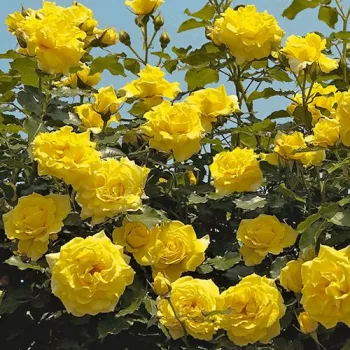
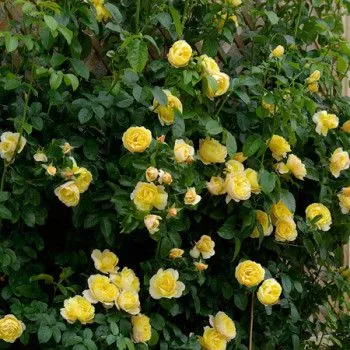
Large-flowered climber with 240–360 cm height and 150–230 cm spread, moderately thorny, with mid-green, slightly glossy foliage and a climbing habit suited to arches, pergolas and trained walls. |
| Flower morphology |
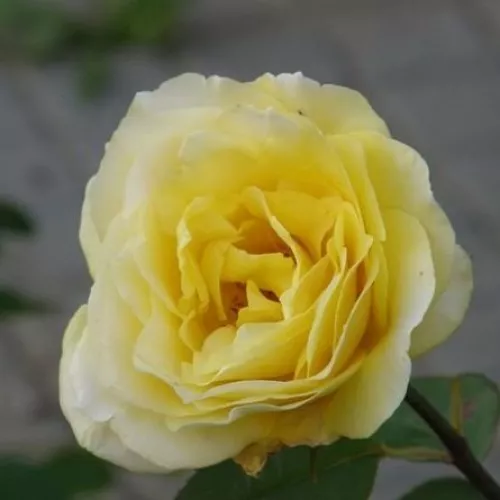
Semi-double, cup-shaped blooms with 13–25 petals, medium-sized at roughly 4–7 cm, borne in clusters, with strong remontancy providing a generous second flush and further blooms into late season. |
| Colour data and phenology |
Radiant sun-yellow blooms; buds glossy golden with greenish tips, deep lemon inside on opening, then softening to buttery pastel shades, ARS DY and RHS 14A/13B, with moderate colour retention in strong sun. |
| Fragrance and aroma |
Strong, noticeable perfume with a fresh, lemony character typical of the Grand Perfumes collection; particularly effective near seating areas, doors or windows where scent can be appreciated. |
| Hip characteristics |
Low rose hip production due to semi-double structure; occasional small, spherical hips 10–14 mm across, vivid red when ripe, adding discreet seasonal interest without significant self-seeding. |
| Resistance and winter hardiness |
Hardy to around –23 °C (RHS H7, Swedish zone 3, USDA 6a); medium resistance to black spot, mildew and rust, generally manageable with good hygiene and occasional protective treatments when needed. |
| Horticultural recommendations |
Best on pergolas, arches, trellises or walls at 170–270 cm spacing; tolerates partial shade, needs regular watering in prolonged drought, and benefits from secure tying-in and periodic renewal pruning. |
Dune® Grand Perfumes DELgrim offers vertical golden colour, strong fragrance and steady own-root longevity; consider it if you would like a lasting, low-fuss climbing feature.