DOUBLE KNOCK OUT® – red landscape shrub rose - Radler
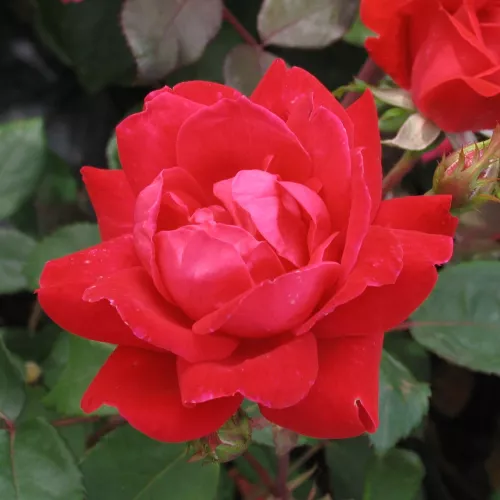
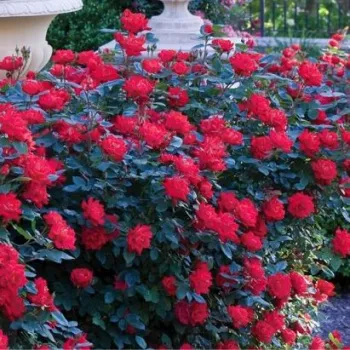
In a compact London front garden or shared urban courtyard, DOUBLE KNOCK OUT® brings reliable colour and easy-care structure to small spaces that must cope with wind, reflected heat and irregular watering. This own-root shrub settles in steadily, giving you quiet confidence that roots establish first, then stronger shoots, and by the third year a full, long-lived display follows with minimal pruning. Its cherry-red clusters are naturally self-cleaning for a tidy border without constant deadheading, and the semi-double blooms still offer moderate pollinator interest. Well suited to clay-based urban soils with sensible drainage after heavy rain and blustery coastal showers, it works just as happily in a generous 40–50 litre container, supporting sustainable, low-input gardens and relaxed city owners.
Usage options
| Target area |
Reasoning |
| Front garden focal shrub |
The bushy, compact habit and cherry-red clusters create an immediate visual anchor near the door, yet remain in scale for narrow terraced-house front gardens; self-cleaning flowers keep the entrance neat for beginners. |
| Low maintenance flowering hedge |
Even, rounded growth and repeat flowering make a reliable, colourful hedge at around fence height, needing only light annual trimming rather than complex pruning, which suits time-poor homeowners. |
| Urban container on balcony or patio |
In a 40–50 litre pot, its dense foliage and continuous bloom give long seasonal interest; own-root stability and moderate drought tolerance support stress-free care for busy city-dwellers. |
| Rainwater-smart clay or chalk bed |
Once established, the shrub copes well with typical British downpours followed by drier spells, provided basic drainage is in place, making it a forgiving choice for mixed borders managed by hobby-gardeners. |
| Pollinator-supporting mixed planting |
Semi-double flowers allow moderate pollinator access while companion plants such as lavender, sage or nepeta can boost nectar value, creating a softer, wildlife-aware display for sustainably minded gardeners. |
| Family-friendly play garden edging |
Its rounded form and steady flowering define play areas and lawns without creating a rigid barrier; good disease resistance reduces the need for sprays around children, reassuring cautious parents. |
| Coastal and exposed sites |
The sturdy framework, dense foliage and proven heat tolerance help it stand up to wind and salt-laden air in open, breezy plots, offering dependable colour for coastal-property owners. |
| Long-term, sustainable planting schemes |
Own-root growth underpins long lifespan and regeneration after hard pruning, so the shrub settles in for years of service with minimal inputs, suiting low-intervention, climate-conscious planners. |
Styling ideas
- Terrace-Chic – Line a short terrace front path with DOUBLE KNOCK OUT® underplanted with low lavender for scent and soft texture – ideal for style-aware city homeowners.
- Rainwise-Border – Combine with nepeta, hardy geraniums and ornamental grasses in a slightly raised bed to manage heavy rain and summer dry spells – perfect for climate-conscious gardeners.
- Family-Frame – Use as a low edging around a small lawn, paired with spring bulbs and compact salvias for season-round interest – suited to young families wanting simple structure.
- Balcony-Bounty – Plant one shrub per 50 litre container with trailing thyme and helichrysum for a tidy, modern look – great for balcony owners seeking reliable colour with little effort.
- Coastal-Glow – Mix with sea holly, stipa and sedums near driveways or front fences for a wind-tolerant, glowing red accent – recommended for coastal and exposed-garden residents.
Technical cultivar profile
| Characteristic |
Data |
| Name and registration |
Modern shrub rose marketed as Double Knock Out®, registered as RADtko, part of the Knock Out® collection; sold as a landscape shrub rose and bed rose for decorative garden use. |
| Origin and breeding |
Bred by William J. Radler in the United States from a ‘Bucbi’ seedling × ‘Razzle Dazzle’ seedling cross; introduced and distributed from 2004 by Conard-Pyle (Star® Roses and Plants). |
| Awards and recognition |
Australian Gold Medal 2004; American Garden Rose Selections Regional Award 2018; A.R.T.S. Master Rose 2019; UC Davis WUCOLS Blue Ribbon™ 2017 for sustainable landscape performance. |
| Growth and structural characteristics |
Bushy, rounded shrub 85–115 cm high and wide, with dense, slightly glossy dark purplish-green foliage and moderate prickliness; naturally forms a compact, full-bodied plant for hedging or beds. |
| Flower morphology |
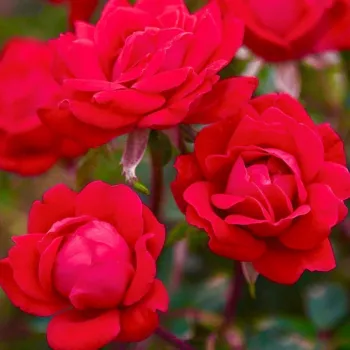
Semi-double, cup-shaped clusters with 13–25 petals and medium flower size; remontant, with abundant first and second flushes, and self-cleaning blooms that fall cleanly to keep plants looking fresh. |
| Colour data and phenology |
Vibrant cherry-red flowers, RHS 53C outer and 53A inner, deepening at the bud; colour may gradually lighten to pinkish tones in strong sun, yet overall effect remains warmly red through the season. |
| Fragrance and aroma |
Very weakly scented rose with a barely perceptible sweet fruity note close up; chosen more for reliable colour and garden effect than for strong fragrance in everyday family or urban settings. |
| Hip characteristics |
Generally sparse hip production, though occasional small spherical orange-red hips 6–10 mm may develop, adding modest late-season interest without significantly affecting flowering performance. |
| Resistance and winter hardiness |
Rated RHS H7, hardy to around −26 to −23 °C, USDA zone 5b; resistant to black spot, powdery mildew and rust, with good heat and moderate drought tolerance once established in the garden. |
| Horticultural recommendations |
Suited to beds, hedges, containers and urban green spaces; plant 60–110 cm apart, 2.0–2.3 plants/m²; thrives in full sun to partial shade with basic drainage and low, routine maintenance needs. |
DOUBLE KNOCK OUT® offers compact structure, long-season colour and dependable disease resistance in an own-root form that builds longevity and resilience over time, making it a thoughtful choice for understated, low-effort gardens.