Flowerbed rose

04-013-1
04-013-2

Dopey

Bedding rose

- – Gerrit de Ruiter

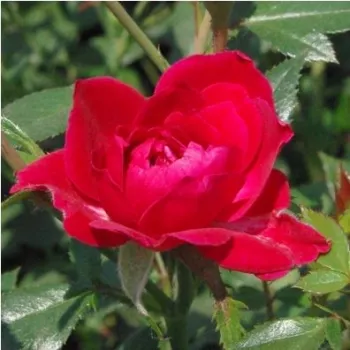
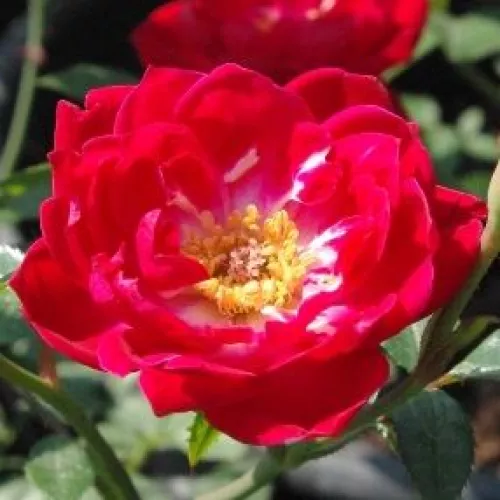
Medium red, rich and uniform shade. - bedding polyantha rose - very weak, barely noticeable scented rose - classic, rose-scented character

– Compact, low-growing habit for neat beds.
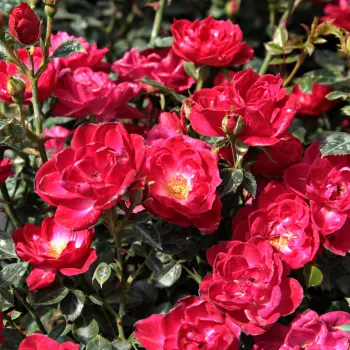
– Rich, uniform medium-red blooms in clusters.
– Reliable repeat flowering with plentiful flushes.
– Glossy dark foliage adds strong structure.
– Good winter hardiness down to –21 °C.
Special feature: Bright red spherical hips extend interest into autumn.
Future-proof garden concept – Neat composition
Dopey
eleanorROSE® ORIGINAL 2-litre own-root potted rose
17,60 £
Unfortunately, we are currently unable to ship to the United Kingdom; we only deliver to countries within the European Union. For more information, please contact us!
3.5 (5336)
facebook   twitter

DOPEY – red bedding polyantha rose – de Ruiter

With its neat, compact habit and continuous flower clusters, Dopey offers an easy way to bring long-season colour into a small front garden or terrace without demanding complex care. The semi-double blooms open in vivid scarlet and drift through rich raspberry tones, giving weeks of dependable display even in unsettled summers with frequent showers and strong winds. As an own-root rose it settles steadily, building a durable framework that can regenerate from the base and support decades of ornamental value. Year by year the plant strengthens – first putting energy into roots, then building shoots, and finally reaching its full visual impact around the third season. Ideal for modest beds, edging and generous containers, it fits rainwater-conscious planting schemes and pairs beautifully with lavender or soft perennials for a gentle, urban-cottage feel. This practical balance of compact habit, colour continuity, regeneration potential, roots-first establishment, easy pairing, cluster flowering, subtle fragrance and lasting structure helps you enjoy roses with minimal effort.


Usage options

Target areaReasoning
Front garden bedding in small city plots The naturally compact height and tidy spread suit narrow London-style front gardens where space is tight but you still want a structured, flower-rich look along paths or railings, especially for the beginner homeowner.
Low-maintenance mass planting or edging Dense, cluster-flowered heads repeat over the season, creating a continuous red ribbon with little deadheading, making it ideal for simple, repeatable planting patterns in family gardens and for time-poor gardeners.
Containers and large terrace planters The shallow, fibrous own-root system adapts well to big pots of 40–50 litres or more, giving stable growth and easy repositioning on balconies or paved front gardens that cannot be fully planted in the ground.
Pollinator-friendly mixed border Semi-double flowers offer limited but useful access to pollen, so when combined with herbs such as lavender or sage they contribute to a softer, wildlife-aware planting that still focuses mainly on ornamental effect.
Rainwater-conscious urban planting strip Suited to small beds beside drives or pavements, this rose partners well with free-draining, amended clay or chalky soils to make better use of roof and path run-off in compact, rainwater-managed front gardens for eco-minded owners.
Family garden play-area backdrop Light prickling and a low, rounded habit can form a colourful boundary near lawns or play spaces without becoming too tall or spiky, helping busy parents keep views open while still enjoying reliable seasonal interest.
Long-term, resilient planting schemes The own-root form supports recovery if stems are damaged by winter, pets or pruning mistakes, slowly rebuilding from the base and giving a reassuringly stable framework over many years for cautious, sustainability-oriented gardeners.
Wind-exposed, coastal or corner beds The compact framework and cluster flowering cope well with blustery, rain-laden conditions typical of many UK gardens, holding their shape and colour where taller, heavier-flowered roses might suffer for coastal householders.

Styling ideas

  • Urban-cottage – Combine Dopey with lavender and nepeta in a gravel-mulched strip by the pavement to soften brickwork – ideal for city homeowners wanting charm with modest upkeep.
  • Scarlet-ribbon – Plant a repeated line along a short path or driveway, underplanting with low thyme for a neat, modern edge – suited to those who prefer structured yet easy-going designs.
  • Balcony-bouquet – Use a single plant in a 50-litre container with airy Verbena hastata ‘Pink Spires’ for height – perfect for flat dwellers greening a small balcony or roof terrace.
  • Playful-pink – Mix with Campanula glomerata and Lychnis viscaria ‘Alba’ for a “girly” red-and-pastel scheme – good for families creating a cheerful, low-fuss front garden.
  • Rainwise-border – Set Dopey in amended clay with a permeable path edge so rain drains into the bed, flanked by drought-tolerant sage – aimed at eco-conscious owners managing runoff attractively.

Technical cultivar profile
PropertyData
Name and registration Polyantha bedding rose, collection “Bedding rose”; registered cultivar name Dopey, current trade name Dopey Bedding rose Dopey; exhibition name Dopey in the polyantha bedding category.
Origin and breeding Bred by Gerrit de Ruiter, Netherlands, 1954; parentage ‘Robin Hood’ × unknown seedling; introduced by Willicher Baumschulen and C. Gregory & Son Ltd. in mid-twentieth-century European markets.
Growth and structural characteristics Compact, bushy habit 30–45 cm high and 30–50 cm wide; dense, glossy dark green foliage with light prickling; forms a neat, low mound suited to beds, edging and containers in small gardens.
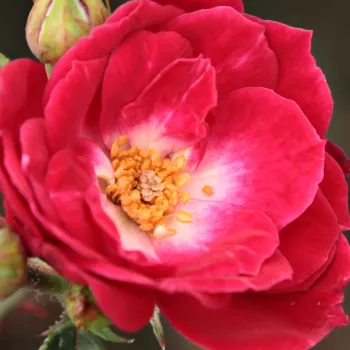
Flower morphology Semi-double, cup-shaped clusters with 13–25 petals; small blooms 0.5–1.5 inches across; repeat-flowering with a plentiful second flush, producing generous trusses over the main growing season.
Colour data and phenology Medium red colour, ARS MR, RHS 46B–46A; buds ruby to burgundy, opening vivid scarlet, then clear mid-red, fading evenly to raspberry red; lightly glossy surface at full bloom, good overall visual uniformity.
Fragrance and aroma Classic rose character but very weak intensity, often barely noticeable in the garden; chosen primarily for colour effect and structure rather than perfume-driven planting schemes or cut-flower use.
Hip characteristics Produces moderate quantities of small, spherical hips, around 5–8 mm, in a bright red shade; adds a light touch of seasonal interest after flowering without overwhelming the compact shrub.
Resistance and winter hardiness Hardy to approximately −21 to −18 °C (RHS H7, USDA 6b, Swedish Zone 3); disease resistance moderate to black spot, powdery mildew and rust; tolerates summer heat with regular watering but dislikes prolonged drought.
Horticultural recommendations Suitable for beds, borders, containers and small parks; plant 25–45 cm apart, 6.3–7.2 plants/m² for massing; thrives in full sun or partial shade with reasonable drainage and standard rose care.

Dopey offers compact, long-season cluster flowering and quietly durable structure in an own-root form that can regenerate over time, making it a thoughtful choice for small, sustainable family gardens.

Detailed product attributes

Product Identification Data

Product Name: DOPEY – red bedding polyantha rose - de Ruiter
Product Type: eleanorROSE® ORIGINAL - 2-litre own-root potted rose
Cultivar Authenticity: Verified:14.10.2025
Item Number: [65] 04-013 (14.02.2026) eleanorrose.co.uk

Name and Registration

Meaning of Cultivar Name: The name refers to Dopey, one of the characters in Snow White and the Seven Dwarfs.

Cultivar Synonym: Eberwein
Current Trade Name: Dopey Bedding rose Dopey
Rose Group: Polyantha
Commercial Type: bedding polyantha rose
Commercial Group: Bed rose
Exhibition Category: exhibition polyantha; bedding rose
Collection: Bedding rose

Origin and Breeding

Initial Distributor: Willicher Baumschulen (Germany); C. Gregory & Son Ltd. (United Kingdom)
Registration Year: unregistered cultivar
Breeder: Gerrit de Ruiter
Breeding Company / Institution: De Ruiter Innovations B.V. (Netherlands)
Breeding Year: Netherlands, 1954
Parentage: 'Robin Hood' × unknown seedling

Growth and Structural Characteristics

Height: 1-1.5ft (30-45 cm)
Spread: 1-1.6ft (30-50 cm)
Growth Habit: compact
Foliage: This variety has dense foliage with glossy, dark green leaves.
Prickliness: lightly thorned
Self-Cleaning Description: No data available on self-cleaning.
Self-Cleaning Intensity: No data on self-cleaning effectiveness.

Flower Morphology

Petal Count: 13-25
Flower Fullness: semi-double
Flower Shape: cup-shaped
Flower Size: S (0,5-1,5 in)
Inflorescence Type: cluster-flowered
Colour Code: ARS code: MR RHS code: 46B, 46A
Repeat Flowering: It is remontant, with a plentiful second flowering.

Colour Data and Phenology

Colour: red
Flower Colour Description: Medium red, rich and uniform shade.
Closed Bud: Dark ruby red on the outside, deep burgundy on the inside.
Newly Opened Flower: The outer surfaces are vivid scarlet red, with a slightly darker tone on the inner petals.
Full Bloom: The surface is a clear mid-red and slightly glossy.
Before Fading: Fades to raspberry red with a uniform loss of colour.
Colour Fading Description: As the bloom opens it fades from a deep ruby red to a clear mid‑red, then to a raspberry red before the flower fades, with an even colour fade.

Fragrance and Aroma

Fragrance Strength: very weak, barely noticeable scented rose
Fragrance Character: classic, rose-scented character
Pollinator Attraction: Semi-double (13–25 petals) flowers moderately attract pollinators; the semi-double bloom form and limited accessibility of the stamens reduce their attractiveness.
Pollinator-Friendly Rating: The descriptions do not explicitly state that they are pollinator-friendly.

Hip Characteristics

Hip Shape: spherical
Hip Colour: red
Hip Comment: Moderately abundant, 5–8 mm in diameter, red, spherical rose hip.

Resistance and Hardiness

Hardiness (°C): -21–-18 °C
Heat and Drought Tolerance Description: Performs well in heat with appropriate watering; does not tolerate prolonged drought.
Disease Resistance: moderate
  • powdery mildew – moderate
  • black spot – moderate
  • rust – moderate

Horticultural Recommendations

Recommended Planting Distance: for mass planting 30 cm, for hedging 25 cm, as a solitary specimen 45 cm
Planting Density: square planting 6,3 plants/m², hexagonal arrangement 7,2 plants/m²
Partial Shade Tolerance: suitable for partial shade
Maintenance Requirement: Maintenance requirement medium; occasionally requires pest and disease control.
Primary Uses: flower bed, border, container, park

Comments

Strengths: Future-proof garden concept – Neat composition
Companion Plants: Verbena hastata ‘Pink Spires’ - dense-flowered verbena pink
Campanula glomerata - clustered bellflower
Lychnis viscaria 'Alba' - Balkan catchfly
Comment: -
DOPEY – red bedding polyantha rose - de Ruiter
Medium red, rich and uniform shade. - bedding polyantha rose - very weak, barely noticeable scented rose - classic, rose-scented character
Online rose purchase - red - Dopey - bedding polyantha rose - (1-1.5ft (30-45 cm))
Inflorescence: cluster-flowered Height: 1-1.5ft (30-45 cm) Flower shape: cup-shaped Winter hardiness: - red - Willicher Baumschulen (Germany); C. Gregory & Son Ltd. (United Kingdom) bedding polyantha rose - Flower size: S (0,5-1,5 in) Flower size: S (0,5-1,5 in) - Height: 1-1.5ft (30-45 cm) Height: 1-1.5ft (30-45 cm) - Flower fullness: semi-double Dopey - Roses in the garden | eleanorROSE® Original - standard Gerrit de Ruiter

We showcase the external appearance of the roses available for online purchase from our webshop.


Which product type is right for you?


Information

In what condition do we send the rose from our online webshop?

Let us ask ourselves the question: What would I like to use the rose for?
Flower? - Location? - Screening? - Fragrance? - Height? - Breeder? - Rose hip?

Information on buying roses
Methods of payment - Delivery costs - Delivery - Complaints handling

Care guide

Our product is a rose grown with the unique PharmaRosa® cultivation technology!

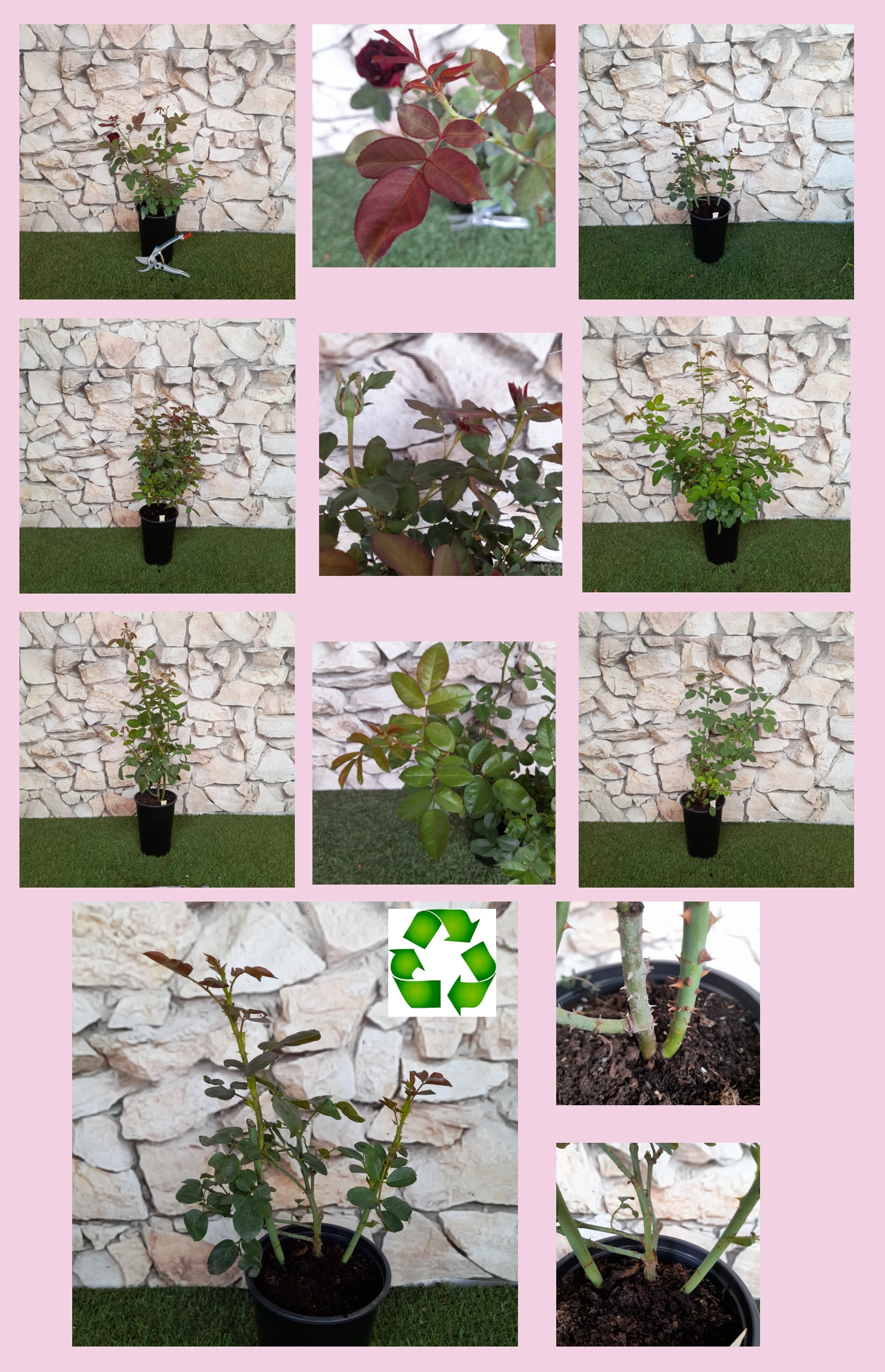
2 litre, own-root, potted rose.
With shoots appropriate to the season.
With a root system that thoroughly permeates the growing medium.
Quality in line with the requirements of the E.N.A. (European Nurserystock Association).
In unique packaging designed to prevent damage.
Can be planted during frost-free periods.
True-to-name rose plant with a unique identifier.

The PharmaRosa® own-root potted rose is a fully rooted plant that guarantees reliable establishment for you, so it can be planted at any time of the year during frost-free periods.


Crop: several varieties at several stages of development in a short crop section.
Shoot system: intensive growth of fresh basal shoots on a young plant.
Root system: demonstration of a vigorous root system that permeates the growing medium, with the pot removed.
Balance: mature plant with the development of the root system and the shoots in harmony.

Information about the videos
This video series is not a “seasonal showcase”, but makes the essence of the PharmaRosa® own-root cultivation tangible: how the plant is structured, what the root system looks like and how the shoot system renews itself. The footage was therefore recorded at several different times on plants at various stages of development, so mixed leaf cover and differing levels of development may appear in the videos. This is not a “sample” of the consignment delivered, but an illustration of how the technology works. The current, season-specific condition of the rose you are purchasing (the state in which you can expect to receive it in the parcel) is shown at the top of the product page.

pharmarosa.compharmarosa.skpharmarosa.ropharmarosa.co.ukpharmarosa.depharmarosa.sipharmarosa.czpharmarosa.atpharmarosa.hrpharmarosa.frpharmarosa.itpharmarosa.plpharmarosa.espharmarosa.nlpharmarosa.bepharmarosa.ptpharmarosa.lupharmarosa.dkpharmarosa.iepharmarosa.grpharmarosa.bgpharmarosa.lvpharmarosa.sepharmarosa.fipharmarosa.ltpharmarosa.eepharmarosa.ru

Product types

Pages for private customers
Garden roses for the family garden, with minimal care  → ORIGINAL®
Premium garden roses – instant impact, a truly showpiece garden  → EXTRA®
Pages for professionals and private customers
Roses for public spaces – large areas, sustainable maintenance  → NATURAL®
Roses for projects – hedge and row planting, fast implementation  → RAPID®
For professional partners only
Production – propagation material for garden roses, wholesale  → NEONATAL®

Company details

PharmaRosa Ltd.
Company registration number: 01-09-717479
VAT number: 13075314-2-43
Plant health registration no.: HU130721
Bank account (IBAN):
HU85117631891388688400000000
BIC (SWIFT): OTPVHUHB
Bank name: OTP Bank Nyrt.