DÉLICIEUSE GOURMANDISE – pale pink climbing rose - Schmitz
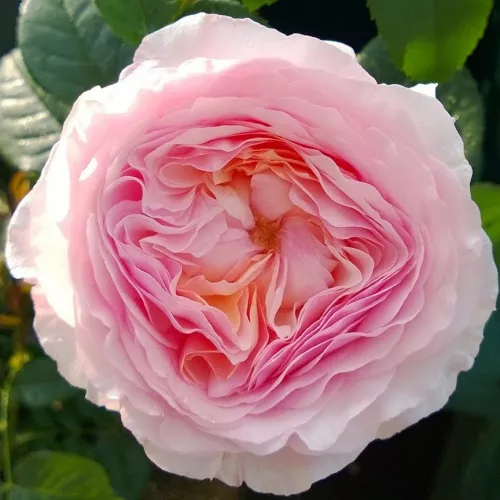
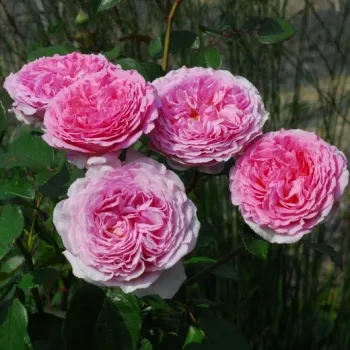
Step out after rain to a curtain of fragrance, as DÉLICIEUSE GOURMANDISE clothes arches, railings and facades in softly glowing, pale-pink rosettes that seem to float above light green foliage. This tall, bushy climber is ideal for narrow front gardens where space is precious yet vertical drama is welcome, coping reliably with typical British breezes and damp spells in heavy soils when drainage is sensibly improved and watering is reserved for longer dry periods. Large, very double blooms appear in flushes, their strong, sweet‑fruity scent creating a sense of indulgence along paths and by front doors. In a 2‑litre own‑root pot, it settles in steadily, building roots, then framework, and by the third year gives you its full ornamental display. Once established on wires or a simple trellis, its bushy habit and dense foliage offer subtle garden privacy, while the restrained hip set keeps the look clean and elegant into autumn. Trained thoughtfully, this rose becomes a long‑lived vertical feature that suits busy homeowners seeking character without constant replanting.
Usage options
| Target area | Reasoning |
|---|
| Terraced-house front wall or railing |
Uses vertical space to deliver abundant, fragrant blooms without sacrificing precious ground area, ideal where you want maximum flower impact from a narrow strip by the pavement – perfect if you are a busy urban gardener |
| Pathway arch or slim pergola |
Long, flexible canes and dense foliage dress an archway in romantic, pale-pink rosettes, creating a sense of arrival and gentle enclosure along a main garden route – ideal if you love atmospheric walkways |
| Feature rose by the front door |
Planted near an entrance and trained on a simple trellis, its strong sweet‑fruity scent and repeat flowering turn everyday comings and goings into a sensory moment – suited to those who appreciate fragrant welcomes |
| Large patio container (40–50 litres+) |
In a generous, well‑drained pot, the own‑root plant establishes steadily and can be repositioned as your space evolves, offering a flexible solution for rented or paved front gardens – ideal for container-focused households |
| Family seating or dining area backdrop |
Once trained along wires, the tall, bushy habit and dense, matt foliage form a soft, flower‑laden screen that adds privacy without feeling heavy or overbearing – a good choice for relaxed family spaces |
| Sunny, improved clay border |
Performs well in typical British conditions when planted in a sunny spot with added organic matter and good drainage, handling breezy, rain‑washed weather once rooted in – reassuring for climate-conscious gardeners |
| Long-term feature on pergolas or pillars |
The own‑root form matures into a stable framework that can be refreshed by pruning from the base, supporting a long planting life without regular replacement – attractive for long-view planners |
| Statement rose in a mixed flower bed |
Its large, double rosettes and clear pale-pink colouring weave easily with perennials, while limited hip formation keeps the display tidy through late season – appealing to lovers of polished borders |
Styling ideas
- Romantic-Frontage – Train along black railings with lavender and nepeta at the base to intensify scent and movement – for homeowners wanting a soft yet structured street presence
- Pastel-Arch – Let canes drape over a slim wooden arch, underplant with pale foxgloves and soft grasses to echo the rose’s delicate tones – for those seeking a storybook entrance
- Courtyard-Screen – Grow in a 50‑litre trough with vertical wires, pairing with evergreen herbs like sage for year‑round texture – for small urban courtyards needing subtle privacy
- Cottage-Ribbon – Thread through a low pergola above a bench, with bearded iris and coneflowers in front to extend interest beyond the main rose flush – for fans of abundant cottage style
- Evening-Nook – Place by a seating corner where evening air carries the strong, sweet‑fruity fragrance, complemented by simple white bedding plants – for people who unwind outdoors after work
Technical cultivar profile
| Trait | Data |
|---|
| Name and registration |
Délicieuse Gourmandise is marketed as a large-flowered climbing rose; it belongs to the climbing rose commercial group, with no separate registered exhibition name recorded to date. |
| Origin and breeding |
Bred by Daniel Schmitz at Roseraie Daniel Schmitz, Malmedy, Belgium; breeding work completed around 2011, with distribution handled directly by the breeder’s nursery. |
| Growth and structural characteristics |
A tall, bushy climber reaching about 220–380 cm high and 110–190 cm wide, with dense, light green, matt foliage and moderately thorny canes suitable for training on supports. |
| Flower morphology |
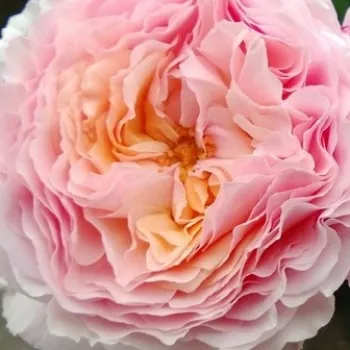
Large, very double rosette blooms with more than 40 petals, typically borne singly on stems, remontant with a generous second flush following the main early-summer flowering. |
| Colour data and phenology |
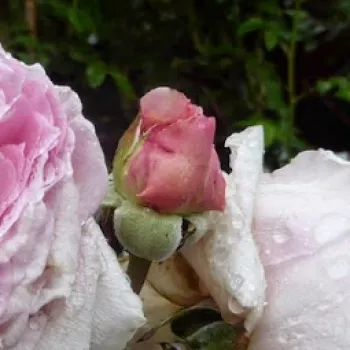
Delicate, milky-translucent pale pink; buds are pastel pink, deepening slightly on opening, then ageing through even pale pink to light creamy-pink tones before the petals finally fade. |
| Fragrance and aroma |
Strong, sweet, fruity perfume clearly noticeable from a distance, giving a classic scented-rose effect around entrances, paths and seating areas, especially in still, humid evening air. |
| Hip characteristics |
Rose hip set is generally low due to the very double flowers; occasional small, egg-shaped red hips around 10–14 mm in diameter may develop late in the season. |
| Resistance and winter hardiness |
Hardy to approximately −21 to −18 °C (RHS H7, USDA 6b), but shows high susceptibility to powdery mildew, black spot and rust, so regular preventative plant protection is recommended. |
| Horticultural recommendations |
Best in sunny positions with improved, well-drained soil; spaced 140–250 cm depending on use, ideal for arches, pergolas or feature training, with attentive care to disease management. |
DÉLICIEUSE GOURMANDISE offers tall, romantic fragrance, space-saving vertical impact and long-term stability from its own-root form, making it a considered choice for entrances, arches and characterful small gardens.