DAUPHINE™ – pink bedding floribunda rose - Gaujard
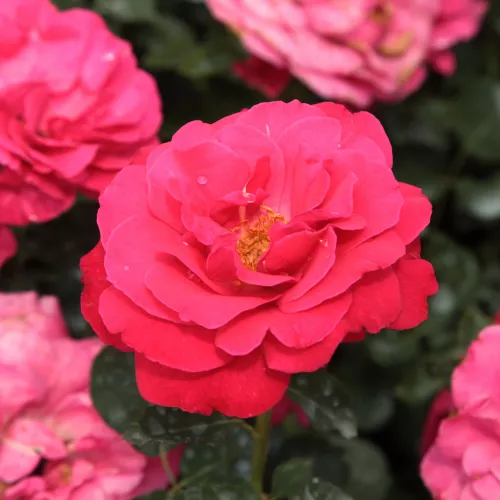
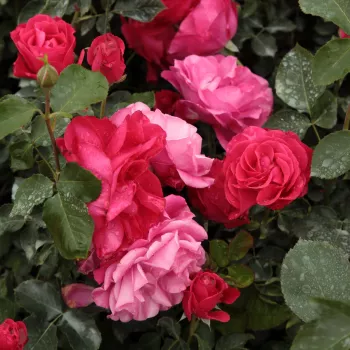
In a compact London front garden or shared urban space, DAUPHINE™ offers an elegantly structured, upright rose that feels instantly at home in beds and larger containers, coping reliably with typical British rainfall and breezy conditions. Its very double, cupped blooms open in generous clusters of vivid pink, giving classic “rose garden” abundance for months with minimal effort from you. As an own-root plant, it builds long-term resilience, quietly regenerating from the base for a longer, steadier display that suits busy households. Plant once in well-prepared soil and allow it to settle; roots establish in the first year, shoots fill out in the second, and by the third year you can expect full, reliable ornament in a sustainable, low-fuss setting.
Usage options
| Target area | Reasoning |
|---|
| Front garden bedding strip |
DAUPHINE™ forms a neat, upright shrub with dense, glossy foliage and richly double pink clusters that read clearly from the pavement, ideal for narrow front beds where every plant must work hard visually for its space, especially for the time-poor homeowner. |
| Small mixed rose border |
Its medium height and bushy habit allow it to sit comfortably mid-border, weaving vivid raspberry-pink blooms between perennials; repeat flowering ensures colour continuity, helping new gardeners avoid bare, uninteresting gaps over summer for the relaxed beginner. |
| Low flowering hedge |
Planted at hedge spacing, DAUPHINE™ knits into a low, flowery line with dark, glossy foliage and repeat blooms, providing soft separation between drive and path while remaining simple to prune into shape, suiting families wanting gentle structure for the practical gardener. |
| Large patio container (40–50 L+) |
In a generous, well-drained pot of 40–50 litres or more, its upright form and clustered flowers create a strong vertical accent beside a doorway; steady own-root growth gives a long service life with simple annual top-dressing, ideal for balcony and patio-focused residents. |
| Clay or chalk-based urban plots |
Once established in improved soil, DAUPHINE™ copes with typical British wet spells and heavier ground while responding well to mulching; this suits small city gardens where drainage is managed rather than perfect, offering reassurance to the sustainability-aware buyer. |
| Formal “girly” planting scheme |
The vivid yet refined pink tones, very double blooms and glossy dark foliage lend themselves to structured, feminine schemes with clipped hollies and soft perennials, delivering a composed, almost Parisian edge to tight spaces for design-conscious urban owners. |
| Season-long colour focus |
With a strong first flush followed by abundant second flowering, this floribunda keeps beds lively over a long season; deadheading encourages fresh clusters, so one well-placed shrub can provide reliable colour for months, reassuring the busy modern household. |
| Low-input long-term planting |
As an own-root rose, DAUPHINE™ matures into a stable, self-renewing shrub less prone to graft failure; with moderate disease resistance, routine care is straightforward and predictable, appealing to those planning a garden that quietly lasts for the thoughtful planner. |
Styling ideas
- Terrace-Entrance Trio – Combine one DAUPHINE™ with compact Ilex crenata and low yarrow in a gravel-mulched bed for structured, feminine colour – ideal for London terrace entrances.
- Raspberry-Ribbon Border – Plant a short line along a path, underplant with lavender and nepeta to soften the edges – suited to families seeking an easy, fragrant walkway.
- Courtyard Feature Pot – Grow DAUPHINE™ in a 50 L clay pot with sage at the rim to contrast glossy foliage and soft pink blooms – perfect for paved city courtyards.
- Elegant Mixed Shrubbery – Pair with Caryopteris ‘Grand Bleu’ and pale grasses to balance strong pink clusters with cool blues and movement – for design-led, low-maintenance schemes.
- Rain-Garden Bed – Position slightly raised in amended clay with gravel channels, then weave in tolerant perennials to manage run-off – well-suited to rainwater-conscious front gardens.
Technical cultivar profile
| Trait | Data |
|---|
| Name and registration |
DAUPHINE™ is a floribunda bedding rose from the Bed rose group, also exhibited as a shrub rose; sold as a consumer own-root plant under the trade name Dauphine™ Bedding rose Gaujard. |
| Origin and breeding |
Bred by Jean-Marie Gaujard at Roseraies Gaujard, Lyon, from an unknown seedling crossed with an ‘Opera’ seedling; introduced in France in the 1955/56 season as an unregistered, but long-established, garden variety. |
| Growth and structural characteristics |
Medium-height upright shrub reaching about 85–115 cm with a 60–80 cm spread, moderately thorny shoots and dense, dark green, glossy foliage, giving a full yet controlled presence suited to beds and front-of-house planting. |
| Flower morphology |
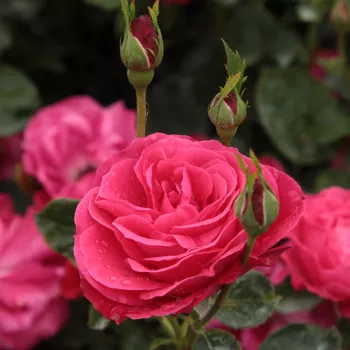
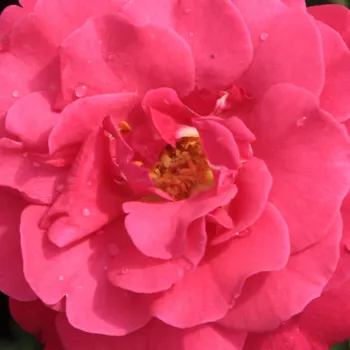
Produces large, 2.75–3.95 inch, very double, cupped flowers with more than 40 petals, carried in clusters; remontant with a strong main flush and abundant secondary flowering; spent blooms generally require manual deadheading. |
| Colour data and phenology |
Vivid cyclamen-raspberry pink overall, ARS code MR, RHS 53A outer and 36C inner; buds deep carmine-fuchsia, softening as they open, with gradual fading to warmer burgundy-raspberry and rose-powdery margins later in the bloom’s life. |
| Fragrance and aroma |
Fragrance is very weak, offering only a delicate rosy character at close range; primarily grown for visual effect and bedding use rather than for scented gardens or cutting where strong perfume would be a key selection criterion. |
| Hip characteristics |
Rose-hip production is light due to the very double flowers; occasional ellipsoidal orange-red hips, around 10–14 mm in diameter, may appear, contributing modest late-season interest without significant self-seeding. |
| Resistance and winter hardiness |
Rated to approximately −21 to −18 °C (RHS H7, Swedish zone 3, USDA 6b); generally resistant to powdery mildew and black spot, with moderate rust susceptibility, and benefits from regular watering during extended hot, dry spells. |
| Horticultural recommendations |
Best in full sun with improved, well-drained soil; plant 40–80 cm apart depending on use, 4–4.6 plants/m² for massing; moderate maintenance with some pest control and regular deadheading for sustained flowering and tidy presentation. |
DAUPHINE™ offers long-season pink clusters, a compact upright habit and durable own-root growth that matures into a dependable feature, making it a thoughtful choice for subtly refined, low-fuss family gardens and frontages.